Real walkie talkies are robust, powerful, and essential communication tools designed for reliable performance in various practical scenarios, unlike toy counterparts with limited range and poor sound quality. They offer measurable, consistent range and crystal-clear audio, even in challenging environments, utilizing specific radio frequencies and power outputs for effective signal transmission. Understanding their technology, such as analog vs. digital and UHF vs. VHF, is crucial for selecting the right device for specific needs, whether for professional use, outdoor adventures, or family coordination.
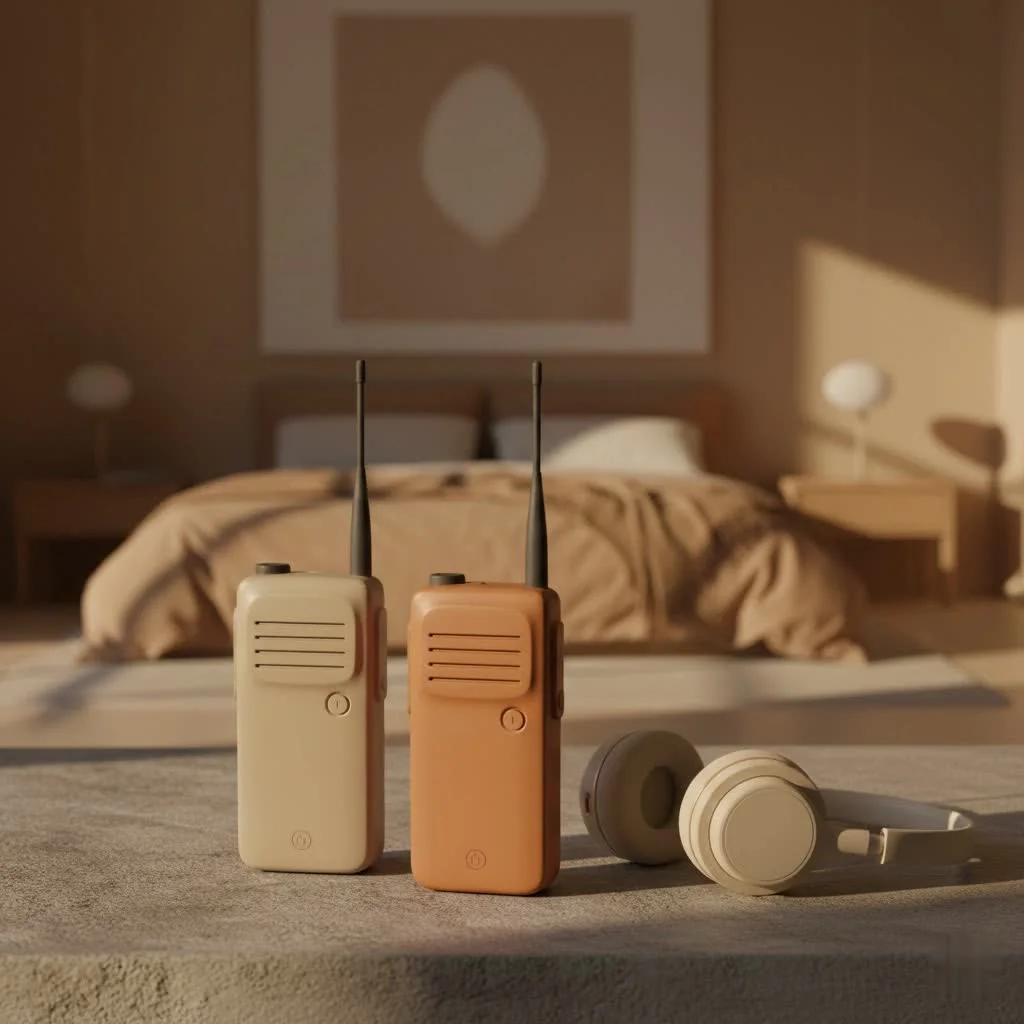
Here at Oqdos.com, we pride ourselves on demystifying the complex world of walkie talkiesSo, let’s dive into what truly sets real walkie talkies apart and how you can harness their power for seamless, instant communication.
Beyond the Toy Box: What Makes a Walkie Talkie “Real”?
The biggest misconception about walkie talkies stems from their toy counterparts. A “real walkie talkie” isn’t just about pressing a button and talking; it’s about performance, durability, and a feature set designed for actual, reliable communication. The distinction is stark, much like comparing a child’s toy car to a rugged off-road vehicle.
Key Differentiators
Real walkie talkies stand out in several critical areas:
- Performance: While toy models often boast fanciful “miles of range” that are purely theoretical, real walkie talkies deliver measurable, consistent range and crystal-clear audio quality, even in challenging environments. They utilize specific radio frequencies and power outputs that allow signals to travel further and penetrate obstacles more effectively.
- Durability: Imagine dropping your communication device from a height or exposing it to rain, dust, or extreme temperatures. Toy walkie talkies would likely crumble. Professional-grade or serious recreational real walkie talkies, however, are built to withstand abuse. They often feature rugged casings, water and dust resistance (indicated by IP ratings), and even military-standard certifications, making them reliable companions in tough conditions.
- Purpose-Built Design: From an emergency services professional needing quick, secure channels to an outdoor enthusiast coordinating a multi-person hike, real walkie talkies are designed with specific use cases in mind. They integrate features like long-lasting batteries, multiple channels, privacy codes, and sometimes even emergency alerts or GPS tracking.
Decoding the Tech: Analog vs. Digital, UHF vs. VHF
The heart of any real walkie talkie lies in its underlying technology. Understanding the fundamental differences between analog and digital radios, and the various frequency bands, is key to choosing the right device.
Analog vs. Digital: The Evolution of Clarity
When we talk about walkie talkie technology, we’re primarily looking at two main types:
- Analog Radios: These are the traditional workhorses. Simple, often more affordable, and universally compatible with older systems, analog radios transmit audio as a continuous waveform. Their signal gradually degrades into static as you approach the edge of their range, giving you an audible warning that you’re losing connection. While dependable, they offer fewer advanced features and are less efficient in their use of radio spectrum.
- Digital Radios (e.g., DMR, P25): The modern solution, digital walkie talkies convert your voice into digital data packets. This means they maintain clear audio quality right up to the very edge of their range, avoiding the crackle and fade of analog systems. Beyond superior clarity, digital radios unlock a host of advanced features: text messaging, GPS tracking, individual calling, and even encryption for secure communications. They also offer better battery life (often 30-40% longer) and more efficient spectrum usage, allowing more conversations on the same bandwidth.
UHF vs. VHF: Choosing Your Frequency Band
|
Our Picks for the Best Walkie Talkies in 2026
As an Amazon Associate I earn from qualifying purchases.
|
||
| Num | Product | Action |
|---|---|---|
| 1 | Wishouse Walkie Talkies Rechargeable for Kids Adults Long Range,Xmas Birthday Gift for Boys Girls 3 4 5 6 7 8 9 10 Year Old,Hiking Camping Gear Games Ideas Toys with Flashlight,VOX,Easy to Use 4 Pack |

|
| 2 | AILOCITAG Kids Video Walkie Talkies, 2 Pack Rechargeable HD Video Walkie Talkie, No WiFi Needed, 1640 ft Outdoor Range, Secure 1-to-1 Channel, 4 Voice Effects for Boys Girls Ages 3–12 |
|
| 3 | Retevis RT68 Walkie Talkies with Earpiece, Portable FRS Two-Way Radios Rechargeable, with 6 Way Multi Unit Charger, Hands Free, Long Range, Rugged 2 Way Radios 6 Pack for Adults School Church |
|
| 4 | Walkie Talkies, MOICO Long Range Walkie Talkies for Adults with 22 FRS Channels, Family Walkie Talkie with LED Flashlight VOX LCD Display for Hiking Camping Trip (Orange 2 Pack) |
|
| 5 | LỖI |
|
| 6 | Retevis RB48 Waterproof Walkie Talkies, Heavy Duty Two Way Radio, Advanced Triple Proof, Vibration Call, USB-C, SOS,2000mAh, NOAA, 2 Way Radio(2 Pack) Yellow |
|
| 7 | pxton Walkie Talkies Rechargeable Long Range Two-Way Radios with Earpieces,2-Way Radios UHF Handheld Transceiver Walky Talky with Flashlight Li-ion Battery and Charger(2 Pack) |
|
| 8 | Retevis RT22 Walkie Talkies Rechargeable Hands Free 2 Way Radios Two-Way Radio(6 Pack) with 6 Way Multi Gang Charger |
|
| 9 | Retevis RT22 Two Way Radio Long Range Rechargeable,Portable 2 Way Radio, USB-C Charging, Handsfree Walkie Talkies for Adults Cruise Hiking Camping(4 Pack) |
|
| 10 | Retevis RB48 Heavy Duty Waterproof Walkie Talkies, Long Range Rechargeable Two Way Radios, Advanced Triple Proof, Vibration Reminder, for Warehousing Construction Contractor(10 Pack) |
|
Radio frequencies come in different bands, and each has its strengths:
- UHF (Ultra High Frequency): Operating between 300 MHz and 3 GHz, UHF radios are excellent at penetrating obstacles like buildings, thick walls, dense foliage, and urban environments. This makes them ideal for indoor use, cities, and wooded areas where line-of-sight communication is frequently interrupted. If you’re working in a multi-story building or deep in a forest, UHF is often your best bet for real walkie talkies.
- VHF (Very High Frequency): Ranging from 30 MHz to 300 MHz, VHF signals travel further in open, outdoor areas with minimal obstructions. Think long, flat terrains, open waters, or sprawling fields. If your primary need is communication across wide, clear expanses, VHF walkie talkies will generally offer better range.
a VHF radio cannot communicate directly with a UHF radio, so ensuring your team uses compatible devices on the same band is paramount.
Understanding Range: The Truth Behind the Numbers
One of the most frequently asked questions about real walkie talkies is, “How far can they reach?” The answer is often more nuanced than the impressive “up to X miles” claims you see on packaging.
Advertised vs. Real-World Range
Most manufacturers advertise an “ideal” range, typically measured in perfectly flat, open, obstruction-free environments – think desert or open water. In the real world, this is rarely the case. The moment you introduce hills, buildings, trees, or even dense air, the effective range of your real walkie talkie decreases significantly. For instance, an FRS radio advertising 30 miles might reliably give you 1-2 miles in varied terrain, sometimes even less in dense urban or mountainous areas. GMRS radios with higher power output will perform better, but still fall short of theoretical maximums.
Factors Affecting Range
Several factors play a crucial role in how far your real walkie talkie can communicate:
- Terrain and Obstacles: Hills, mountains, buildings, and even thick tree cover absorb and block radio signals, dramatically reducing range.
- Power Output: Measured in watts, higher power generally translates to better range. However, higher power also consumes more battery.
- Antenna Quality and Length: A good antenna is vital for efficient transmission and reception. Longer antennas can sometimes improve range.
- Line of Sight: Radio waves travel best in a straight line. The more directly your real walkie talkie can “see” the other unit, the better the connection will be.
- Interference: Other radio signals, electrical noise, and even weather conditions can interfere with communication, reducing clarity and range.
“When it comes to walkie talkie range,” advises Sarah Chen, a senior RF engineer at Oqdos, “always consider the ‘worst-case’ scenario for your environment. Those advertised distances are like highway fuel economy — rarely what you get in city driving. Focus on real-world testing and understanding the limitations of the radio band you’re using.”
FRS vs. GMRS: Licensing and Power Differences
When shopping for real walkie talkies, especially in North America, you’ll frequently encounter FRS and GMRS designations. These relate to the radio service they operate on and have important implications for power, range, and licensing.
- FRS (Family Radio Service): These walkie talkies are typically lower power (0.5 to 2 watts) and are license-free in the US. They are a popular choice for families, short-range recreational use, and small teams that don’t need extensive range. They are simple to use right out of the box, making them a good entry point into real two-way radio communication.
- GMRS (General Mobile Radio Service): GMRS radios are higher power (up to 5 watts for handhelds, more for mobile/base stations) and offer significantly better range and clarity than FRS units. However, using GMRS radios in the US requires an FCC license. This license is relatively inexpensive, lasts for ten years, and covers your entire immediate family, making GMRS an excellent option for more serious recreational users, larger properties, or small businesses seeking enhanced communication capabilities.
- Professional/Business Radios: For commercial operations beyond FRS/GMRS, specific FCC business band licenses are usually required. These radios offer even greater power, more channels, and specialized features tailored to demanding professional environments.
Essential Features for Serious Users
Beyond basic talk and listen functions, real walkie talkies come packed with features that enhance usability, safety, and performance.
- Durability and Weather Resistance: Look for devices with IP (Ingress Protection) ratings (e.g., IP54, IP67) indicating resistance to dust and water. Military standard (MIL-STD) ratings signify extreme ruggedness.
- Battery Life and Power Options: Long-lasting rechargeable batteries are a must. The ability to use standard AA or AAA batteries as a backup can be a lifesaver when off-grid. Many modern real walkie talkies also feature convenient USB-C charging.
- Audio Clarity and Noise Cancellation: In noisy environments like construction sites or crowded events, advanced audio processing and noise-canceling microphones ensure your message gets through loud and clear.
- Privacy Features: While privacy codes (often called CTCSS or DCS tones) don’t encrypt your conversation, they filter out chatter from other users on the same channel, allowing you to only hear those using the same code. Some professional digital radios offer true encryption for secure communications.
- Safety Features: Emergency alert buttons, “man-down” alerts (detecting if a user has fallen), and lone worker functions (requiring periodic check-ins) are critical for personnel operating in hazardous or isolated conditions.
- VOX/Hands-Free Operation: Voice-activated transmission (VOX) allows you to communicate without pressing the push-to-talk (PTT) button, ideal for activities where your hands are busy.
- Multiple Channels and Scan Function: More channels provide options to avoid interference. A scan function lets you monitor multiple channels simultaneously.
Who Needs Real Walkie Talkies? Use Cases and Benefits
The applications for real walkie talkies are vast and varied, far exceeding simple play. They are indispensable tools in many scenarios:
- Construction and Industrial Sites: Instant, reliable communication is vital for safety and coordination among teams, especially where mobile phone signals are weak or prohibited.
- Event Management and Security: Coordinating staff across large venues, ensuring crowd control, and responding to incidents in real-time are all made possible by robust two-way radios.
- Emergency Services: Firefighters, police, and search and rescue teams depend on mission-critical real walkie talkies for encrypted, resilient communication that works even when other infrastructure fails.
- Outdoor Adventures: Hikers, campers, skiers, and hunters rely on them for communication in areas without cell service, providing a crucial safety net and enhancing coordination within groups.
- Family Coordination: On large properties, at theme parks, or during road trips where cars might separate, real walkie talkies keep families connected without relying on cell networks or incurring data charges.
The primary benefits are clear: instant communication, independence from cellular networks, and often, a more cost-effective solution than monthly phone plans for specific use cases.
Choosing the Right “Real” Walkie Talkie for Your Needs: A Checklist
Selecting the perfect real walkie talkie means carefully matching its capabilities to your specific requirements.
- What’s Your Primary Purpose and Environment?
- Professional (construction, security, events): Prioritize durability, advanced features, security, and potentially licensed bands.
- Outdoor Recreation (hiking, camping): Focus on range, weather resistance, battery life, and ease of use.
- Family Use (large property, non-cellular areas): Consider FRS/GMRS, durability, and simplicity.
- How Much Range Do You Truly Need?
- Short-range (a few hundred yards/meters): FRS might suffice.
- Medium-range (1-2 miles/km in varied terrain): GMRS or higher-power FRS models are better.
- Extended range (multiple miles/km): Look at GMRS (licensed) or even professional radio systems with repeaters.
- What’s Your Budget?
- FRS radios are generally the most affordable.
- GMRS radios offer a step up in performance for a moderate investment, plus the license fee.
- Professional digital radios represent a significant investment but provide unparalleled features and reliability.
- Which Features Are Non-Negotiable?
- Do you need waterproofing? Noise cancellation? Emergency alerts?
- Is hands-free operation critical?
- Do you prefer analog simplicity or digital’s advanced capabilities?
- Are You Willing to Get a License?
- If you need the extra power and range of GMRS, the FCC license is a straightforward process and well worth it.
By answering these questions, you’ll be well on your way to selecting a real walkie talkie that genuinely meets your communication demands.
Frequently Asked Questions (FAQ)
What’s the difference between a toy walkie talkie and a real one?
The key differences lie in power output, range, build quality, and intended use. Toy walkie talkies have very limited range (often just a few hundred feet), poor sound quality, and are not built to last. Real walkie talkies, like FRS or GMRS units, offer significantly better range (up to several miles in ideal conditions), clear audio, robust construction, and features designed for reliable communication in various practical scenarios.
Do real walkie talkies need a license?
It depends on the type. FRS (Family Radio Service) walkie talkies do not require a license in the US, making them popular for casual and recreational use. GMRS (General Mobile Radio Service) walkie talkies, which operate at higher power for greater range, require an FCC license in the US. This license covers the licensee and their immediate family for ten years. Professional or business-band radios also typically require specific licenses.
How far can real walkie talkies communicate?
The advertised range is often an “ideal” maximum. In real-world conditions, factors like terrain, obstacles (buildings, trees, hills), and power output significantly affect range. FRS radios might offer a reliable range of 0.5 to 2 miles in varied terrain, while GMRS radios, with higher power, can achieve 2 to 5 miles or more. Dense urban areas or mountains will always reduce effective range.
Can I talk to anyone with a walkie talkie?
While walkie talkies operate on public radio frequencies, using privacy codes (CTCSS/DCS tones) helps filter out conversations from other users on the same channel, so you only hear those using your specific code. However, these codes do not encrypt your conversation, meaning others on the same frequency could potentially listen in. For truly private communication, digital radios with encryption features are necessary.
Are digital walkie talkies better than analog?
In many ways, yes. Digital walkie talkies offer superior audio clarity, maintaining clear sound right up to the edge of their range without the static associated with analog. They also provide advanced features like text messaging, GPS tracking, individual calling, and often better battery efficiency. Digital radios make more efficient use of the radio spectrum, allowing more users on the same bandwidth. While analog radios are simpler and often cheaper, digital technology provides a significant upgrade in performance and functionality for real walkie talkies.
Stay Connected, Whatever Your Mission
Whether you’re organizing a large-scale event, ensuring safety on a sprawling construction site, embarking on a wilderness adventure, or simply keeping your family connected across the neighborhood, the power of real walkie talkies is undeniable. They offer an instant, reliable, and often indispensable lifeline when cell service is unreliable or non-existent.
At Oqdos.com, we are committed to providing you with the most accurate, in-depth, and practical knowledge to help you navigate the world of two-way radios. Don’t settle for anything less than real walkie talkies that deliver on their promise. Explore our comprehensive guides and reviews to find the perfect communication solution that keeps you connected, confident, and always in control.
Frequently Asked Questions
What is the main difference between a toy walkie talkie and a real one?
The main difference lies in power output, range, build quality, and intended use. Real walkie talkies, such as FRS or GMRS units, offer significantly better range (up to several miles in ideal conditions), clear audio, robust construction, and features designed for reliable communication in various practical scenarios, unlike toys with very limited range and poor sound quality.
Do I need a license to operate real walkie talkies in the US?
It depends on the type of radio. FRS (Family Radio Service) walkie talkies do not require a license in the US. However, GMRS (General Mobile Radio Service) walkie talkies, which operate at higher power for greater range, require an FCC license in the US. This license is relatively inexpensive, lasts for ten years, and covers the licensee and their immediate family.
How far can real walkie talkies reliably communicate in practice?
The reliable communication range of real walkie talkies varies significantly based on terrain, obstacles, and power output. While FRS radios might offer 0.5 to 2 miles in varied terrain, GMRS radios, with higher power (up to 5 watts for handhelds), can achieve 2 to 5 miles or more. Advertised ranges are often ideal maximums, not real-world performance.
Can other people listen to my conversations on a walkie talkie?
Yes, others on the same frequency could potentially listen in, as walkie talkies operate on public radio frequencies. While privacy codes (CTCSS/DCS tones) help filter out chatter from other users on the same channel, they do not encrypt your conversation. For truly private communication, digital radios with specific encryption features are necessary.
Are digital walkie talkies generally superior to analog models?
Yes, digital walkie talkies are generally superior in many ways. They offer superior audio clarity, maintaining clear sound right up to the edge of their range without the static of analog. Digital radios also provide advanced features like text messaging, GPS tracking, individual calling, and often better battery efficiency (30-40% longer). They also make more efficient use of the radio spectrum.
Choosing the Right Real Walkie Talkie
Selecting the perfect real walkie talkie involves matching its capabilities to your specific communication requirements and environment.
Consider if your use is professional (construction, security), outdoor recreation (hiking, camping), or family coordination. This will help prioritize features like durability, advanced security, range, and ease of use. For example, professional use might require licensed bands and advanced features, while family use might prioritize FRS/GMRS and simplicity.
Evaluate how much range you genuinely require for your typical operating environment. Short-range needs (a few hundred yards) might be met by FRS radios. Medium-range (1-2 miles in varied terrain) often requires GMRS or higher-power FRS models. For extended range (multiple miles), GMRS (licensed) or professional radio systems with repeaters are usually necessary.
Understand that different types of walkie talkies come at varying price points. FRS radios are generally the most affordable entry point. GMRS radios offer a step up in performance for a moderate investment, plus the FCC license fee. Professional digital radios represent a significant investment but provide unparalleled features and reliability for demanding environments.
List the essential features you cannot do without. This could include waterproofing (e.g., IP54, IP67 ratings), noise cancellation for noisy environments, emergency alerts for safety, or hands-free operation (VOX). Decide if you prefer the simplicity of analog or the advanced capabilities and clarity of digital radios.
Determine if you are willing to obtain a license for enhanced performance. If you need the extra power and range offered by GMRS radios, obtaining an FCC license is a straightforward process and often well worth the investment for its benefits. Professional/business radios also typically require specific FCC licenses.
Get our weekly buyer guide
Practical specs, not advice. Unsubscribe anytime.

Finally, a guide that explains what makes a walkie talkie ‘real’ without all the jargon! I always thought those cheap toy ones were just bad, but now I get why. I needed something reliable for coordinating events at my community center, and understanding the power output and specific radio frequencies helped me choose a much better device. Communication has been so much smoother since.
This was super helpful for figuring out what kind of walkie talkie I actually needed for coordinating with my family at theme parks. The part about UHF vs. VHF was really clear. I ended up getting a UHF set and the signal holds up great even with all the crowds and buildings. My only minor complaint is that the battery life isn’t quite as long as I’d hoped, but it gets us through a full day.
I’ve been using two-way radios for years for hiking and camping, and this guide really helped me understand the difference between analog and digital. My old set was definitely analog and the sound quality was always a bit iffy in the mountains. Just upgraded to a digital model based on the info here and the clarity is amazing, even with some distance between us. Definitely a game changer for our group.
I was looking for something robust for professional use on a construction site. The post mentioned how important consistent range and clear audio are in challenging environments, which is exactly what I need. I picked up a model that was supposed to be top-tier, but I’m finding the range isn’t quite as consistent as I’d hoped when there are a lot of obstructions. It’s decent, but not always crystal-clear like I expected.