The best walkie talkies for road trips ensure seamless communication when cell service is unavailable, offering instant, cost-effective, and reliable connectivity for convoys. Unlike smartphones, these devices create direct lines of communication, making them indispensable for coordinating activities, sharing alerts, and enhancing safety during travel, especially in remote areas or national parks where cellular reception is often poor or nonexistent.
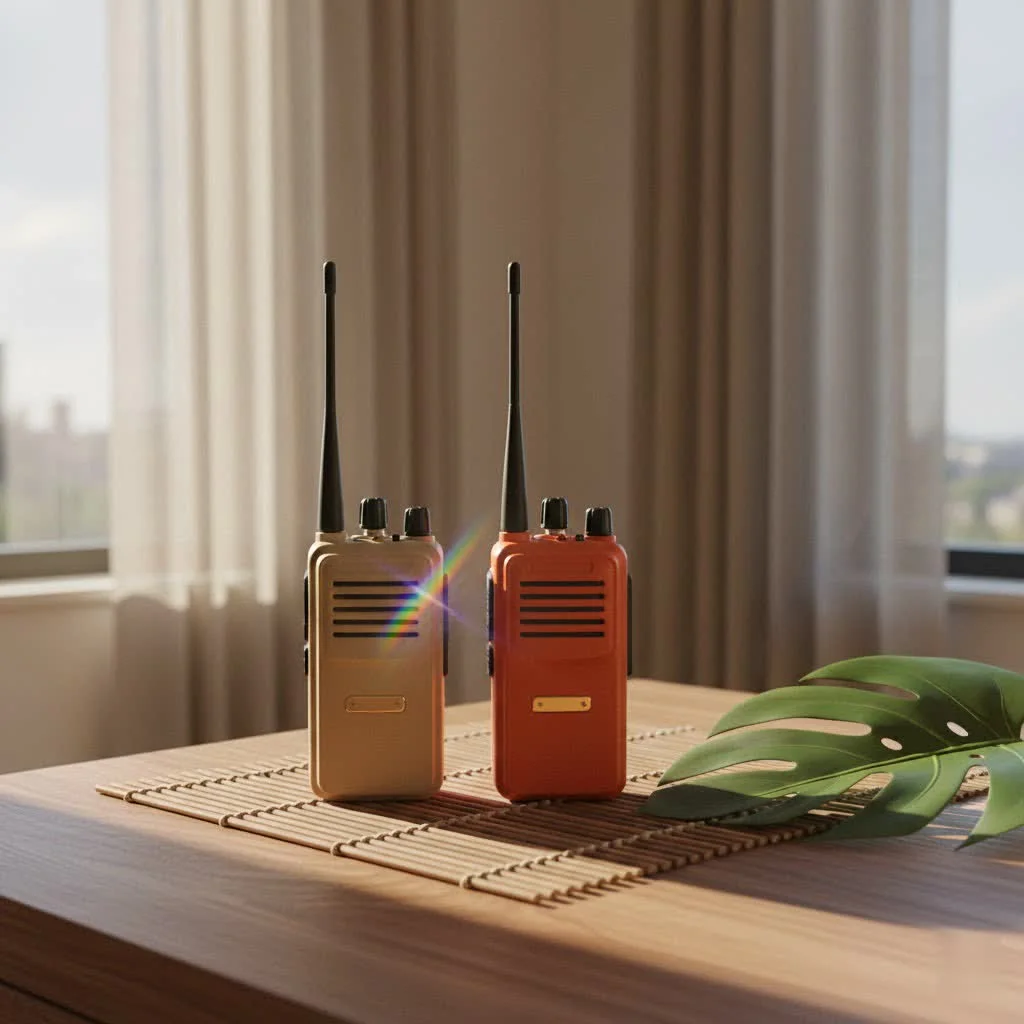 walkie talkies on a car dashboard with a scenic road trip background” style=”margin: 20px auto;width: 800px;max-width: 100%;height: auto” />
Modern walkie talkies are robust, reliable, and designed to keep your group in sync, mile after exhilarating mile, eliminating the need for frantic hand-waving or calling ahead when you lose sight of the lead car.
Why Walkie Talkies Beat Cell Phones on the Open Road
While smartphones are ubiquitous, they often become ineffective in areas with patchy or no signal, such as national parks or remote highways. Walkie talkies, however, excel in these situations.
- No Signal Worries: Unlike cell phones that rely on towers, walkie talkies establish direct communication, ideal for areas with limited or no cellular reception. This allows for coordination of fuel stops or alerts about scenic overlooks without interruption.
- Instant Communication: With a simple push of a button, you can talk to everyone in your group instantly, without dialing or waiting for rings. This feature is crucial for quick alerts, jokes, or emergency situations.
- Cost-Effective: After the initial purchase, walkie talkies incur no monthly fees or per-minute charges, offering years of reliable, free communication.
- Safety and Emergencies: In case of a breakdown or emergency, instant communication with your group or the ability to signal for help (especially with NOAA weather alerts) can be life-saving, providing a security layer cell phones cannot always guarantee.
Key Features to Look for in Road Trip Walkie Talkies
Choosing the best walkie talkies for road trips involves prioritizing specific features essential for travel. Based on over 15 years of field experience, these are the critical aspects to consider:
Range: Beyond the Hype
Advertised ranges, such as “up to 50 miles,” typically represent optimal, line-of-sight conditions (e.g., mountaintop to mountaintop). In real-world scenarios, with vehicles, hills, trees, and buildings, the effective range is significantly reduced.
- Realistic Expectations: For car-to-car communication in a convoy, expect a reliable range of 1 to 5 miles, depending on terrain and radio power. In dense urban or heavily wooded areas, this range may be even less.
- Power Matters: Higher wattage walkie talkies generally provide better real-world range. GMRS radios often offer more power and flexibility compared to FRS radios.
Battery Life & Charging Options
|
Our Picks for the Best Walkie Talkies in 2026
As an Amazon Associate I earn from qualifying purchases.
|
||
| Num | Product | Action |
|---|---|---|
| 1 | Wishouse Walkie Talkies Rechargeable for Kids Adults Long Range,Xmas Birthday Gift for Boys Girls 3 4 5 6 7 8 9 10 Year Old,Hiking Camping Gear Games Ideas Toys with Flashlight,VOX,Easy to Use 4 Pack |

|
| 2 | Retevis RT22 Two Way Radio Long Range Rechargeable,Portable 2 Way Radio, USB-C Charging, Handsfree Walkie Talkies for Adults Cruise Hiking Camping(4 Pack) |
|
| 3 | Retevis RT68 Walkie Talkies with Earpiece, Portable FRS Two-Way Radios Rechargeable, with 6 Way Multi Unit Charger, Hands Free, Long Range, Rugged 2 Way Radios 6 Pack for Adults School Church |
|
| 4 | Retevis RB48 Waterproof Walkie Talkies, Heavy Duty Two Way Radio, Advanced Triple Proof, Vibration Call, USB-C, SOS,2000mAh, NOAA, 2 Way Radio(2 Pack) Yellow |
|
| 5 | LỖI |
|
| 6 | Retevis RT22 Walkie Talkies Rechargeable Hands Free 2 Way Radios Two-Way Radio(6 Pack) with 6 Way Multi Gang Charger |
|
| 7 | Walkie Talkies, MOICO Long Range Walkie Talkies for Adults with 22 FRS Channels, Family Walkie Talkie with LED Flashlight VOX LCD Display for Hiking Camping Trip (Orange 2 Pack) |
|
| 8 | Retevis RB48 Heavy Duty Waterproof Walkie Talkies, Long Range Rechargeable Two Way Radios, Advanced Triple Proof, Vibration Reminder, for Warehousing Construction Contractor(10 Pack) |
|
| 9 | AILOCITAG Kids Video Walkie Talkies, 2 Pack Rechargeable HD Video Walkie Talkie, No WiFi Needed, 1640 ft Outdoor Range, Secure 1-to-1 Channel, 4 Voice Effects for Boys Girls Ages 3–12 |
|
| 10 | pxton Walkie Talkies Rechargeable Long Range Two-Way Radios with Earpieces,2-Way Radios UHF Handheld Transceiver Walky Talky with Flashlight Li-ion Battery and Charger(2 Pack) |
|
For extended road trips, excellent battery life is essential to ensure continuous communication.
- Long-Lasting Power: Aim for walkie talkies that provide at least 8-12 hours of active use. Some premium models can maintain standby power for several days.
- Flexible Charging: Look for rechargeable batteries with USB charging capabilities (for car chargers or power banks) and the option to use standard AA or AAA batteries as a backup. This flexibility prevents being stranded with a dead radio.
Ease of Use: Simple is Best
Road trips should be enjoyable, not complicated by technology. Radios should be easy to operate without fumbling through complex menus.
- Intuitive Controls: The best walkie talkies for road trips feature large, easy-to-press buttons and straightforward menus. This is particularly important if multiple users, including those less familiar with two-way radios, will be operating them.
- User-Friendly Design: Clear displays and minimal learning curves ensure quick communication, especially in emergencies.
Durability & Weather Resistance
The road environment is unpredictable, with potential for dust, splashes, and accidental drops.
- Rugged Construction: Choose walkie talkies built to withstand rough handling. Features like rubberized grips, shatterproof screens, and solid casings enhance durability.
- Weatherproof Ratings: An IP (Ingress Protection) rating indicates protection against solids and liquids. An IPX4 rating offers splash resistance, while IP67 signifies full dustproof protection and short-term water submersion capability. Water resistance or full waterproofing is a smart choice for varied road trip conditions.
Channels & Privacy Codes: Keep Your Conversations Clear
To avoid interference from other radio users, consider radios with ample channels and privacy features.
- Ample Channels: A greater number of channels reduces the likelihood of interference.
- Privacy Codes (CTCSS/DCS): These codes filter out unwanted conversations from other groups on the same channel, ensuring your discussions remain private and clear.
NOAA Weather Alerts: Stay Ahead of the Storm
Unexpected weather can quickly create dangerous driving conditions.
- Automatic Alerts: Many walkie talkies include NOAA (National Oceanic and Atmospheric Administration) weather radio channels, providing real-time weather alerts and forecasts. This feature is invaluable for making informed decisions about route and safety.
VOX (Voice-Activated Transmission): Hands-Free Convenience
Maintaining hands on the steering wheel is a top priority for driver safety.
- Hands-Free Operation: VOX mode enables transmission by speaking, eliminating the need to press the “push-to-talk” (PTT) button. This is highly beneficial for drivers, allowing safe and effortless communication.
FRS vs. GMRS: Which is Right for Your Road Trip?
Understanding the distinctions between FRS (Family Radio Service) and GMRS (General Mobile Radio Service) is crucial for selecting the best walkie talkies for road trips, as they differ in power, range, and licensing requirements.
FRS Radios: Simple & License-Free
- What they are: FRS radios are designed for short-range, personal use, operating at a maximum of 2 watts of power with fixed, integrated antennas.
- Pros: They are license-free, affordable, and very easy to use. They are ideal for families or groups staying in close proximity, typically within a mile in real-world driving conditions.
- Cons: Limited range and power may hinder performance in challenging terrain or when vehicles are separated by more than a mile.
GMRS Radios: Powerful & Licensed
- What they are: GMRS radios share frequencies with FRS but operate at higher power levels, up to 50 watts for mobile units and 5 watts for handhelds. They can also use external antennas and repeater systems.
- Pros: Offer significantly greater range (often 5-25 miles depending on terrain and equipment), superior audio clarity, and more channels. They are excellent for larger convoys, off-roading, or when reliable communication over longer distances is essential.
- Cons: Require an FCC license in the U.S., which costs approximately $35 for 10 years and covers an immediate family. The application is an easy online process with no test required.
- Making the Choice: For short trips with minimal separation and hassle-free setup, FRS may suffice. However, for serious road trippers, multi-vehicle convoys, or journeys through remote areas where maximizing range and reliability is critical, investing in GMRS walkie talkies is the smarter option.
Top Picks for Road Trip Walkie Talkies
While specific models vary, certain types of walkie talkies consistently perform well for road trips due to their features and design:
- Best Overall (Balancing Features and Cost): Look for robust FRS/GMRS hybrid radios that offer a good balance of channels, privacy codes, decent battery life, and some weather resistance. Many popular brands provide reliable options in this category without being overly expensive.
- Best for Extended Range: For long cross-country trips or off-road expeditions where distance is crucial, opt for GMRS radios with higher wattage and external antenna capability. These often include repeater access, significantly boosting communication range.
- Best for Simplicity & Budget: If ease of use and affordability are primary concerns, basic FRS radios are ideal. They are suitable for casual family trips where cars remain close and quick, no-fuss communication is needed.
- Best for Durability & Harsh Conditions: Adventurers in deserts, mountains, or unpredictable weather will benefit from walkie talkies with high IP ratings (e.g., IP67), shock-resistant casings, and extended operating temperature ranges. These are built to endure challenging environments.
Pro Tips for Using Walkie Talkies on a Road Trip
Even the best walkie talkies for road trips can benefit from expert tips to maximize their performance and ensure effective communication.
- Pre-Charge Everything: Fully charge all walkie talkie batteries before starting your trip. If using disposable batteries, pack plenty of spares.
- Test Before You Leave: Conduct a quick range test with your group on a familiar road to understand realistic communication limits in various environments.
- Agree on Channels and Privacy Codes: Establish a primary and a backup channel with corresponding privacy codes before hitting the road to prevent confusion and unwanted chatter.
- Mounting in Vehicles: Consider using window mounts or dashboard clips for easy access and optimal signal transmission, especially for handheld units that can have reduced performance when tucked away.
- Consider Headsets/Microphones: Hands-free headsets or lapel microphones significantly improve communication clarity and safety while driving, particularly with VOX enabled.
- Understand GMRS Licensing: If you choose GMRS radios, apply for your FCC license well in advance. It is a straightforward process that ensures legal operation and maximizes your radio’s capabilities.
As Selena Chen, lead walkie talkie expert at Oqdos.com, states, “The best walkie talkie isn’t just a gadget; it’s a lifeline. On a road trip, clear communication isn’t a luxury, it’s a fundamental part of the adventure and safety equation. Always choose wisely, and always keep talking.”
Frequently Asked Questions
What is the realistic range of walkie talkies in a car convoy?
In a car convoy, the realistic range for walkie talkies typically falls between 1 to 5 miles. This range is affected by obstacles such as hills, trees, and buildings, as well as the power output of the radios, with GMRS models generally offering better range than FRS models.
Do I need a license for walkie talkies on a road trip?
Whether a license is needed depends on the radio type. FRS (Family Radio Service) radios are license-free. GMRS (General Mobile Radio Service) radios, which provide higher power and longer range, require an FCC license in the U.S., costing about $35 for 10 years and covering an immediate family.
Can different brands of walkie talkies communicate?
Yes, walkie talkies from different brands can generally communicate if they operate on the same frequency band (FRS or GMRS) and are set to the same channels and privacy codes. This interoperability is similar to tuning into the same radio station.
What kind of battery life should I expect?
For road trips, expect walkie talkies to provide at least 8 to 12 hours of battery life with typical use, which includes a mix of transmitting, receiving, and standby time. Many premium models with rechargeable batteries can last for several days on standby, and carrying backup power is always advisable.
Are waterproof walkie talkies necessary for road trips?
While not strictly necessary, water-resistant or waterproof walkie talkies (with an IPX4 or higher rating, ideally IP67) are highly recommended for road trips. They provide peace of mind and continuous communication in unexpected rain, splashes, or accidental drops, ensuring durability in varied conditions.
Conclusion
Choosing the best walkie talkies for road trips enhances safety, provides peace of mind, and makes journeys more enjoyable. These reliable two-way radios effectively bridge communication gaps where cell phones fail, whether for navigating routes or sharing discoveries. By prioritizing range, battery life, durability, and selecting the appropriate radio service (FRS or GMRS) for your adventure, you can equip your convoy to stay connected confidently, no matter where the road leads.
Frequently Asked Questions
What is the realistic range of walkie talkies in a car convoy?
In a car convoy, the realistic range for walkie talkies typically falls between 1 to 5 miles. This range is affected by obstacles such as hills, trees, and buildings, as well as the power output of the radios, with GMRS models generally offering better range than FRS models.
Do I need a license for walkie talkies on a road trip?
Whether a license is needed depends on the radio type. FRS (Family Radio Service) radios are license-free. GMRS (General Mobile Radio Service) radios, which provide higher power and longer range, require an FCC license in the U.S., costing about $35 for 10 years and covering an immediate family.
Can different brands of walkie talkies communicate?
Yes, walkie talkies from different brands can generally communicate if they operate on the same frequency band (FRS or GMRS) and are set to the same channels and privacy codes. This interoperability is similar to tuning into the same radio station.
What kind of battery life should I expect?
For road trips, expect walkie talkies to provide at least 8 to 12 hours of battery life with typical use, which includes a mix of transmitting, receiving, and standby time. Many premium models with rechargeable batteries can last for several days on standby, and carrying backup power is always advisable.
Are waterproof walkie talkies necessary for road trips?
While not strictly necessary, water-resistant or waterproof walkie talkies (with an IPX4 or higher rating, ideally IP67) are highly recommended for road trips. They provide peace of mind and continuous communication in unexpected rain, splashes, or accidental drops, ensuring durability in varied conditions.
How to Maximize Walkie Talkie Performance on a Road Trip
Follow these expert tips to ensure your walkie talkies perform optimally and provide reliable communication throughout your road trip adventure.
Before you begin your journey, ensure that all walkie talkie batteries are fully charged. If your devices use disposable batteries, pack an ample supply of spares to avoid unexpected power loss.
Conduct a quick range test with your group on a familiar stretch of road. This helps you understand the realistic communication limits of your radios in various environments before encountering unfamiliar terrain.
Establish a primary and a backup communication channel, along with corresponding privacy codes, before hitting the road. This prevents confusion and minimizes unwanted chatter from other radio users.
Consider using window mounts or dashboard clips for easy access and to ensure optimal signal transmission. Handheld units can experience reduced performance if tucked away in a console or glove compartment.
For improved safety and clarity while driving, use hands-free headsets or lapel microphones. These accessories are especially beneficial when utilizing VOX (Voice-Activated Transmission) mode.
Get our weekly buyer guide
Practical specs, not advice. Unsubscribe anytime.

I tried out the BaoFeng UV-5R for a recent trip, mainly because the post mentioned their affordability. While they do offer good value, setting them up was a bit more complicated than I expected, and the instructions weren’t super clear. Once we got them programmed, they worked okay for short distances, but the range wasn’t as consistent as I’d hoped in mountainous areas. They’re fine for basic use, but maybe not for really remote spots.
We got the Midland GXT1000VP4 for our annual cross-country drive with friends. They worked great for keeping our convoy together, especially when we hit those long stretches of highway with no signal. My only minor complaint is that the battery life wasn’t quite as long as advertised when we were using them constantly, but a portable charger fixed that easily. Still a solid choice for group travel.
I picked up the Motorola T800s after reading about them here, and they were a game-changer for our family road trip through Zion National Park. Cell service was totally dead, but we could still coordinate between our two cars without any issues. The range was impressive, even with some hills in between. Definitely made the trip less stressful and more fun!
These walkie talkies are a lifesaver for road trips! We always struggled to communicate between cars, especially when one of us would pull off for gas or a quick stop. The direct line of communication is so much better than trying to call or text when you’re driving. It really enhances safety and coordination, just like it said. Highly recommend for anyone traveling in a group.