Jobsite walkie talkies are rugged, dependable two-way radios specifically designed for demanding environments like construction sites, offering instant, clear, and reliable communication essential for safety, efficiency, and productivity. Unlike consumer cell phones, these devices feature enhanced durability (often Mil-Spec 810 and IP-rated), extended range (up to 400,000 square feet or 35 floors), and superior noise suppression, ensuring seamless team coordination in loud, dusty, and sprawling work areas.
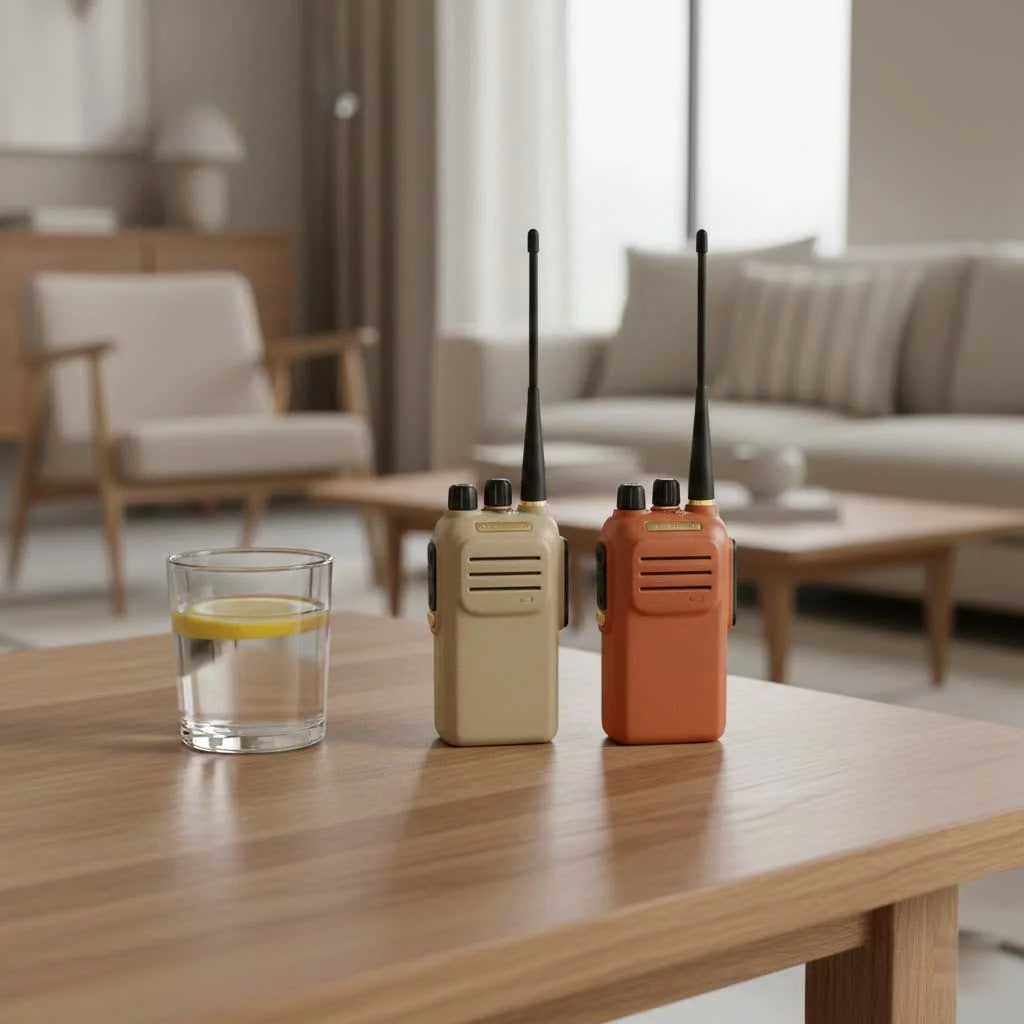
On any dynamic jobsite, whether it’s a high-rise construction project, a sprawling industrial complex, or a bustling event setup, instant and clear communication isn’t just a convenience – it’s a lifeline for safety, efficiency, and productivity. Without the right gear, coordinating teams, managing logistics, and responding to emergencies can quickly devolve into chaos, costing valuable time and even endangering lives. That’s where robust, purpose-built jobsite walkie talkies step in, providing that seamless connection that keeps everything running smoothly. For shop curated reviews on this site.
Why Traditional Communication Fails on the Jobsite?
Traditional communication methods like personal cell phones often fall short on a jobsite due to unpredictable network coverage, fragile designs not meant for harsh environments, and the inherent delays in dialing and waiting for a connection. Construction sites are loud, dusty, and sprawling, environments where consumer electronics just can’t keep up.
Imagine trying to call across a noisy concrete pour or a multi-story building frame. Cell phones are simply not designed for the immediate, one-to-many communication that a jobsite demands. The constant barrage of dust, water, and accidental drops can quickly render a standard smartphone useless. What you need is an instant, push-to-talk solution that can withstand the elements and cut through the din.
What Makes a Walkie Talkie “Jobsite Ready”? Key Features You Can’t Live Without
To truly excel on a construction site, a walkie talkie needs a specific set of robust features that go far beyond what a consumer model offers, ensuring it can handle the demanding environment. These are the non-negotiables.
Durability: Built to Take a Beating (Mil-Spec, IP Ratings)
A jobsite is no place for delicate electronics, which is why durability is paramount for jobsite walkie talkies. These devices must be able to endure drops, vibrations, dust, and water.
Look for radios that meet military standards (Mil-Spec 810), indicating they’ve been tested against extreme temperatures, shocks, and more. Equally important are IP (Ingress Protection) ratings. An IP54 rating, for instance, means it’s protected against dust ingress and splashing water, while IP67 signifies it’s fully dust-tight and can be submerged in water for a short period. This level of protection ensures your communication device keeps working, even when things get messy.
Range and Coverage: Spanning Your Site
|
Our Picks for the Best Walkie Talkies in 2026
As an Amazon Associate I earn from qualifying purchases.
|
||
| Num | Product | Action |
|---|---|---|
| 1 | Retevis RT22 Two Way Radio Long Range Rechargeable,Portable 2 Way Radio, USB-C Charging, Handsfree Walkie Talkies for Adults Cruise Hiking Camping(4 Pack) |

|
| 2 | pxton Walkie Talkies Rechargeable Long Range Two-Way Radios with Earpieces,2-Way Radios UHF Handheld Transceiver Walky Talky with Flashlight Li-ion Battery and Charger(2 Pack) |
|
| 3 | Retevis RB48 Waterproof Walkie Talkies, Heavy Duty Two Way Radio, Advanced Triple Proof, Vibration Call, USB-C, SOS,2000mAh, NOAA, 2 Way Radio(2 Pack) Yellow |
|
| 4 | Walkie Talkies, MOICO Long Range Walkie Talkies for Adults with 22 FRS Channels, Family Walkie Talkie with LED Flashlight VOX LCD Display for Hiking Camping Trip (Orange 2 Pack) |
|
| 5 | Retevis RT68 Walkie Talkies with Earpiece, Portable FRS Two-Way Radios Rechargeable, with 6 Way Multi Unit Charger, Hands Free, Long Range, Rugged 2 Way Radios 6 Pack for Adults School Church |
|
| 6 | Wishouse Walkie Talkies Rechargeable for Kids Adults Long Range,Xmas Birthday Gift for Boys Girls 3 4 5 6 7 8 9 10 Year Old,Hiking Camping Gear Games Ideas Toys with Flashlight,VOX,Easy to Use 4 Pack |
|
| 7 | Retevis RT22 Walkie Talkies Rechargeable Hands Free 2 Way Radios Two-Way Radio(6 Pack) with 6 Way Multi Gang Charger |
|
| 8 | AILOCITAG Kids Video Walkie Talkies, 2 Pack Rechargeable HD Video Walkie Talkie, No WiFi Needed, 1640 ft Outdoor Range, Secure 1-to-1 Channel, 4 Voice Effects for Boys Girls Ages 3–12 |
|
| 9 | LỖI |
|
| 10 | Retevis RB48 Heavy Duty Waterproof Walkie Talkies, Long Range Rechargeable Two Way Radios, Advanced Triple Proof, Vibration Reminder, for Warehousing Construction Contractor(10 Pack) |
|
Effective communication means reaching everyone, everywhere on your site. The range and coverage of your walkie talkie dictate how far your team can spread out while staying connected.
For large construction sites, coverage is critical. You’ll need radios capable of spanning vast square footage or multiple floors. Digital radios often offer extended range and clearer audio compared to analog, especially at the edge of their coverage area, ensuring every instruction is heard. Some top-tier models can cover up to 400,000 square feet or 35 floors, a real major upgrade for large-scale operations.
Battery Life: Powering Through Long Shifts
A dead radio is a useless radio. Long shifts on a jobsite require a battery that can keep up, ensuring your team remains connected from start to finish.
Look for jobsite walkie talkies that offer substantial battery life, typically 12 hours or more, with some advanced models boasting up to 26 hours. Many modern radios also feature power-saving modes and efficient battery technologies, helping you get through those demanding, extended workdays without needing to recharge. For critical roles, swappable batteries or multi-unit chargers are invaluable.
Audio Quality and Noise Suppression: Hear and Be Heard
Jobsites are notoriously loud, with constant machinery, power tools, and general commotion making clear communication a challenge. Superior audio quality and advanced noise suppression are vital.
Advanced radios feature digital signal processing (DSP) and intelligent noise cancellation technologies that filter out background noise, allowing voices to come through crisp and clear. Some models, like the Motorola R2, offer best-in-class noise suppression with loudness ratings up to 101 dB, which is essential for safety and coordination in high-decibel environments. Without this, even the most robust radio is ineffective.
Channel Capacity and Privacy: Keeping Teams Organized
On a busy jobsite, multiple teams often need to communicate simultaneously without interfering with one another. Adequate channel capacity and privacy features are key to organized communication.
Radios with multiple channels (e.g., 16, 64, or even 256 channels) allow you to assign specific channels to different teams—like electricians, plumbers, or site management. Privacy codes (DPL/PL codes) further ensure that only members of your team hear your conversations, reducing confusion and maintaining operational security.
Frequency Bands: UHF or VHF?
Understanding the right frequency band is crucial for optimal performance, as different environments favor different radio waves. This choice significantly impacts your radio’s effectiveness.
For most construction sites, especially those in urban areas with many obstacles like buildings, concrete, and steel, UHF (Ultra High Frequency) radios are generally preferred. UHF signals are better at penetrating or bending around these obstructions, providing more consistent coverage indoors and in built-up environments. VHF (Very High Frequency) works better over open, clear terrain with minimal obstructions.
Choosing the Right Jobsite Walkie Talkie: A Practical Guide
Selecting the perfect jobsite walkie talkie isn’t a one-size-fits-all decision; it requires a careful evaluation of your specific operational needs and environmental challenges. Getting this right means choosing a radio that truly empowers your team.
First and foremost, consider your site size and environment. Are you operating on a sprawling outdoor site with clear lines of sight, or a multi-story building with numerous internal barriers? This will heavily influence your choice between UHF and VHF, as well as the required power output (watts) and antenna type. Larger sites or those with many obstructions will demand more powerful radios, often with digital capabilities for enhanced range and clarity.
Next, assess your team’s specific needs. How many teams need to communicate independently? Do workers need hands-free operation? Are safety features like lone worker or emergency alerts critical for your operations? Radios with multiple channels, programmable buttons for quick access to features, and compatibility with accessories like headsets are important considerations.
Finally, think about future scalability and compatibility. If you already have existing radios, can new ones be programmed to work with them? Will your chosen system accommodate growth in your team or site size? Investing in a flexible system from reputable brands like Motorola or Kenwood often provides better long-term value.
As my colleague, Marcus Thorne, a veteran communications specialist for Oqdos.com often says, “On a jobsite, your walkie talkie isn’t just a gadget; it’s a critical safety tool. Prioritize durability, clear audio, and reliable range. Anything less is a compromise on your team’s well-being and your project’s success.”
Top Contenders in the Jobsite Arena: Models We Trust
Based on years of experience, a few models consistently stand out for their performance and reliability in demanding jobsite conditions. These are the workhorses you can count on.
When it comes to top-tier jobsite walkie talkies, Motorola Solutions often leads the pack. The Motorola EVX-S24 is a compact, durable, and waterproof option, covering up to 300,000 sq. ft. or 20 floors with 256 channels in both analog and digital modes. For those needing a step up, the Motorola CP100D offers up to 19 hours of battery life and 350,000 sq. ft. of coverage, available in UHF and VHF with various display options. The Motorola R2 is engineered for extreme conditions, providing 26 hours of battery life and exceptional noise suppression, covering up to 400,000 sq. ft. or 35 floors. These models exemplify ruggedness, range, and clarity, making them ideal for the toughest environments. Another proven workhorse for the industry is the Motorola CP200d, known for its robust design and superior audio quality. For new setups seeking excellent digital performance, the Kenwood NX-340U16P 5-watt UHF Digital Two Way Radio offers outstanding audio and extended range.
FAQs About Jobsite Walkie Talkies
Why can’t I just use cheap walkie talkies or cell phones?
Cheap FRS/GMRS walkie talkies and cell phones lack the durability, range, and immediate, group-wide communication capabilities required for professional jobsites. They are susceptible to breakage, poor signal, and significant delays, compromising safety and efficiency.
What do IP ratings mean for jobsite walkie talkies?
IP (Ingress Protection) ratings indicate a radio’s resistance to dust and water. For example, IP54 means protection against dust and splashing water, while IP67 means it’s dust-tight and can withstand temporary submersion, crucial for harsh jobsite conditions.
Do I need an FCC license for jobsite walkie talkies?
Most powerful jobsite walkie talkies (business band radios) require an FCC license to operate legally. This ensures proper use of frequencies and prevents interference. Some low-power business radios are license-free, but they typically offer less range and power.
How important is noise cancellation?
Noise cancellation is extremely important on loud jobsites. It filters out background noise, ensuring that critical messages are heard clearly by the receiver, improving safety, coordination, and overall communication efficiency in noisy environments.
Can new walkie talkies work with my old ones?
Often, yes! Many business-band radios can be programmed to work with existing radios, especially if they operate on the same frequency band (UHF or VHF) and support the same analog or digital protocols. Professional radio dealers can usually assist with compatibility and programming.
Stay Connected, Stay Safe, Stay Productive
Choosing the right jobsite walkie talkies is more than just buying a gadget; it’s an investment in your team’s safety, efficiency, and the overall success of your project. We’ve explored why robust, feature-rich two-way radios are non-negotiable for demanding environments, highlighting key aspects like durability, range, battery life, and crystal-clear audio. By prioritizing these features and understanding your specific jobsite needs, you can ensure seamless communication that keeps your operations running like a well-oiled machine.
Ready to upgrade your jobsite communication or have more questions about specific models? Don’t hesitate to dive deeper into our resources at Oqdos.com. We’re here to help you find the perfect communication solution to tackle any challenge and keep your team connected, safe, and productive.
Frequently Asked Questions
Why are specialized jobsite walkie talkies better than cell phones?
Specialized jobsite walkie talkies offer superior durability, extended range, and instant group communication, which cell phones and cheap FRS/GMRS radios lack. They are built to withstand harsh environments, provide reliable signals across large areas, and enable immediate, one-to-many communication crucial for safety and efficiency on a jobsite.
What do IP ratings like IP54 or IP67 signify for these radios?
IP (Ingress Protection) ratings indicate a radio's resistance to dust and water. For example, an IP54 rating means the device is protected against dust ingress and splashing water, while an IP67 rating signifies it is fully dust-tight and can be submerged in water for a short period, making it suitable for demanding jobsite conditions.
Is an FCC license required to operate powerful jobsite walkie talkies?
Yes, most powerful business-band jobsite walkie talkies require an FCC license for legal operation. This licensing ensures proper frequency use and prevents interference with other communication systems. Some low-power business radios are license-free but typically offer reduced range and power compared to licensed models.
How crucial is noise cancellation for walkie talkies used on construction sites?
Noise cancellation is extremely important on loud jobsites, where machinery and tools create constant background noise. Features like digital signal processing (DSP) and intelligent noise cancellation filter out this din, ensuring critical messages are heard clearly, which significantly improves safety, coordination, and overall communication efficiency.
Can new jobsite walkie talkies be programmed to work with older models?
Yes, new business-band radios can often be programmed to work with existing radios, provided they operate on the same frequency band (UHF or VHF) and support compatible analog or digital protocols. Professional radio dealers can typically assist with programming and ensuring compatibility between different models.
Get our weekly buyer guide
Practical specs, not advice. Unsubscribe anytime.
Fantastic radios! We needed something super reliable for a high-rise construction project, and these delivered. The Mil-Spec 810 durability means we don’t have to worry about drops or rough handling. Communication is crystal clear, which is essential when you’re working across multiple levels. Highly recommend for any demanding jobsite.
I picked up a few of these for our event setup team, and they’ve been really solid. The extended range is great for our larger venues, covering up to 35 floors without a hitch. My only minor gripe is that the battery life could be a little better on continuous use, but they still last most of the day.
We got these for a new industrial complex project. They’re definitely durable and the IP-rated protection is a must for our dusty environment. However, I found the menu system a bit clunky to navigate initially, which slowed down setup for a couple of our newer guys. Once you get the hang of it, they work fine, but it could be more intuitive.
These jobsite walkie talkies are a game changer for our construction crew. The noise suppression is seriously impressive; we can hear each other perfectly even with heavy machinery running right next to us. It’s made a huge difference in our daily coordination and safety protocols. Definitely worth the investment for any busy site.