General Electric (GE) walkie-talkies, though largely vintage today, played a pivotal role in the development of two-way radio communication, pioneering innovations like early AM and FM systems, solid-state components, and modular designs from the 1930s until their mobile radio business was acquired by Ericsson in the late 1980s. These devices laid the groundwork for modern walkie-talkies, establishing core principles of clear and robust communication.
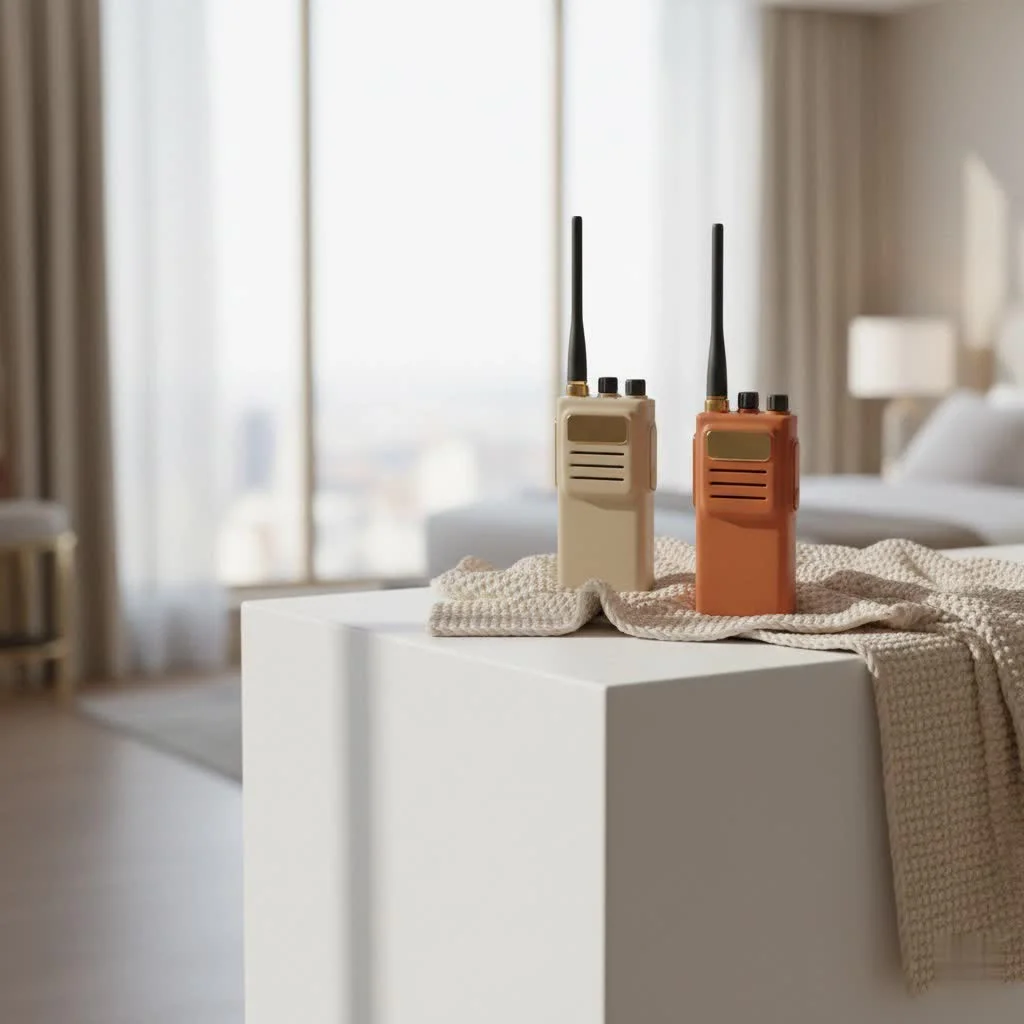
A Glimpse into General Electric’s Radio Heritage
General Electric (GE) was a leader in the burgeoning electronics industry, establishing itself as a significant player in two-way communication for over six decades until Ericsson acquired their mobile radio business in the late 1980s. For see our reviews recommendations on this site.
The Dawn of Two-Way Communication: Early Innovations
GE installed its first two-way AM equipment for the Boston Police Department in 1934, operating in the 30 Megacycle band under an experimental license. This marked the genesis of land mobile radio. By the late 1930s, GE actively experimented with VHF FM two-way systems in collaboration with Maj. Edwin Armstrong, demonstrating the clear advantages of FM to the FCC in September 1939.
GE introduced many industry “firsts,” including successfully demonstrating FM on previously AM channels. Other advancements included the first single-unit-housing mobile unit in 1947, pioneering receivers with high front-end RF selectivity, and being the first to employ Quartz crystals as front-end filters in the early 1950s. These foundational leaps improved clarity, reliability, and channel separation, qualities still paramount in walkie-talkies today.
Iconic General Electric Walkie Talkie Models Through the Decades
Over the years, GE produced a fascinating array of two-way radios and walkie-talkies, reflecting the technological advancements of each era. They shaped what was possible, from large mobile setups to compact handhelds.
One of their most successful lines from the vacuum tube era was the Progress Line, introduced in the mid-1950s. These robust, modular units were housed in a single chassis and were highly adaptable for various applications, including mobile and base stations.
As technology advanced, GE rolled out more portable options. The Voice Commander, introduced in July 1961, was GE’s initial foray into handheld VHF FM two-way radios. Models like the Voice Commander II and III were fully solid-state, marking a significant step towards miniaturization.
For those who grew up in the 1970s and 80s, vintage General Electric walkie talkies like the Model Y7040 or the 3-5954A might spark fond memories. The 3-5954A from the 1980s was known for its inclusion of a Morse code feature and a “Starcode key,” allowing users to practice or transmit Morse code. These units typically operated on frequencies around 49.860 MHz, featuring flexible whip antennas, belt clips, and running on standard 9-volt batteries. Other models like the 1976 Recon-2 (Model 3-5961B) and the Ranger 3-5943 49 MHz also appear in collector circles, showcasing the diversity of their consumer-grade offerings.
What Made General Electric Walkie Talkies Stand Out?
|
Our Picks for the Best Walkie Talkies in 2026
As an Amazon Associate I earn from qualifying purchases.
|
||
| Num | Product | Action |
|---|---|---|
| 1 | Retevis RT22 Two Way Radio Long Range Rechargeable,Portable 2 Way Radio, USB-C Charging, Handsfree Walkie Talkies for Adults Cruise Hiking Camping(4 Pack) |

|
| 2 | Retevis RT22 Walkie Talkies Rechargeable Hands Free 2 Way Radios Two-Way Radio(6 Pack) with 6 Way Multi Gang Charger |
|
| 3 | LỖI |
|
| 4 | pxton Walkie Talkies Rechargeable Long Range Two-Way Radios with Earpieces,2-Way Radios UHF Handheld Transceiver Walky Talky with Flashlight Li-ion Battery and Charger(2 Pack) |
|
| 5 | AILOCITAG Kids Video Walkie Talkies, 2 Pack Rechargeable HD Video Walkie Talkie, No WiFi Needed, 1640 ft Outdoor Range, Secure 1-to-1 Channel, 4 Voice Effects for Boys Girls Ages 3–12 |
|
| 6 | Retevis RB48 Waterproof Walkie Talkies, Heavy Duty Two Way Radio, Advanced Triple Proof, Vibration Call, USB-C, SOS,2000mAh, NOAA, 2 Way Radio(2 Pack) Yellow |
|
| 7 | Retevis RB48 Heavy Duty Waterproof Walkie Talkies, Long Range Rechargeable Two Way Radios, Advanced Triple Proof, Vibration Reminder, for Warehousing Construction Contractor(10 Pack) |
|
| 8 | Walkie Talkies, MOICO Long Range Walkie Talkies for Adults with 22 FRS Channels, Family Walkie Talkie with LED Flashlight VOX LCD Display for Hiking Camping Trip (Orange 2 Pack) |
|
| 9 | Wishouse Walkie Talkies Rechargeable for Kids Adults Long Range,Xmas Birthday Gift for Boys Girls 3 4 5 6 7 8 9 10 Year Old,Hiking Camping Gear Games Ideas Toys with Flashlight,VOX,Easy to Use 4 Pack |
|
| 10 | Retevis RT68 Walkie Talkies with Earpiece, Portable FRS Two-Way Radios Rechargeable, with 6 Way Multi Unit Charger, Hands Free, Long Range, Rugged 2 Way Radios 6 Pack for Adults School Church |
|
The enduring appeal of General Electric walkie talkies stemmed from several key factors:
- Pioneering Technology: For many years, GE was at the modern, consistently pushing boundaries with features like solid-state components in their handhelds and modular construction in their larger mobile units. They innovated in areas critical for clear and reliable communication.
- Durability and Build Quality: Vintage GE units often boast robust construction, allowing them to survive decades. Their mobile radio products, in particular, were designed for demanding professional use.
- Collectibility and Nostalgia: For enthusiasts today, owning a General Electric walkie talkie is about connecting with a piece of radio history. These units represent a simpler time in personal communication and are prized for their vintage aesthetic and historical significance. Many collectors seek out models complete with their original boxes and accessories.
“While the technology might have evolved dramatically,” says Eleanor ‘Ellie’ Vance, a seasoned radio communications specialist at Oqdos.com, “the core principles of clear, robust communication that GE pioneered are still fundamental to every walkie-talkie we use today. Their early advancements truly set the stage for modern two-way radios.”
Are General Electric Walkie Talkies Still Relevant Today?
For collectors and enthusiasts, vintage General Electric walkie-talkies are absolutely relevant as treasured artifacts of communication history, offering a tangible link to the past and fascinating restoration projects. However, for practical, everyday communication, they are generally not ideal due to outdated technology.
Why Vintage GE Units Aren’t Ideal for Modern Use:
- Outdated Frequencies: Many older GE walkie-talkies operated on frequencies like 49 MHz, which are now largely unmonitored or prone to interference. Professional two-way radios today utilize specific licensed or license-free bands with much tighter regulations.
- Limited Range and Clarity: Compared to today’s digital radios, vintage analog units often have significantly shorter effective range and can suffer from static and interference, especially in urban or challenging terrains.
- Battery Life and Power: Older units typically rely on less efficient battery technologies, often requiring frequent battery changes (e.g., 9-volt batteries) or large power draws, which is impractical for extended use.
- Lack of Modern Features: Modern walkie-talkies offer an array of features like multiple channels, privacy codes (CTCSS/DCS), VOX (voice-activated transmission), weather alerts, GPS, and often digital signal processing for superior audio quality. These were simply not available on older GE models.
Modern Alternatives: What to Look for in Today’s Walkie Talkies
If you’re looking for reliable two-way communication in the modern era, explore contemporary options that build on the foundations laid by pioneers like General Electric. When choosing a walkie-talkie today, consider these key aspects:
- Frequency Bands:
- FRS/GMRS (Family Radio Service/General Mobile Radio Service): Popular for recreational and family use. FRS is license-free; GMRS requires a license for higher power and more channels.
- UHF/VHF: Professional and commercial radios often use these licensed bands for greater range and reliability in specific environments.
- Digital Radios: Offer superior audio quality, enhanced privacy features, and often better range in noisy environments compared to analog.
- Range: While advertised range can be optimistic, look for models with higher power output (within legal limits) and good antenna design for better performance in your intended environment.
- Durability: Many modern walkie-talkies are built to withstand tough conditions, with features like water resistance (IP ratings) and ruggedized casings.
- Battery Life: Lithium-ion batteries offer long operational times and are rechargeable, a significant improvement over the disposable batteries of yesteryear.
- Advanced Features: Consider privacy codes, hands-free operation (VOX), multiple channels, call alerts, and scanning capabilities based on your needs.
Conclusion
The journey of General Electric walkie talkies reflects a significant chapter in the history of portable communication. From their foundational innovations in early two-way radio to the iconic consumer models that brought basic communication to the masses, GE’s legacy is undeniable. While these devices have largely transitioned from practical tools to cherished collector’s items, the spirit of clear, reliable communication they embodied continues to drive the innovation in today’s sophisticated walkie-talkies. So, whether you’re admiring a vintage GE model or relying on a top-tier digital radio, you’re tapping into a lineage of communication excellence that General Electric helped define.
Get our weekly buyer guide
Practical specs, not advice. Unsubscribe anytime.
I’ve always been fascinated by the history of communication, and it’s cool to see how much GE contributed. My grandpa used to talk about the old GE radios he had for work. It’s amazing to think their early AM and FM systems really set the stage for what we use today. Definitely makes me appreciate the tech more.
My dad was a radio enthusiast, and he always spoke highly of the modular designs GE introduced. He said it made repairs and upgrades so much easier back in the day. It’s clear they were ahead of their time, laying the groundwork for robust communication. Really insightful to read about their impact before Ericsson took over.
It’s interesting to learn about GE’s legacy in two-way radios, especially their work with the Boston Police Department back in 1934. I was hoping for a bit more info on how to actually get one of these vintage units working again, or if there are any modern equivalents that capture that old-school feel. Still, good historical overview.
I picked up a vintage GE walkie-talkie at a flea market last year, mostly for display. It’s a solid piece of equipment, and you can really see the quality. While it’s not practical for daily use now, understanding its role in pioneering solid-state components makes it even more interesting. It’s a testament to their engineering.