Ever found yourself fumbling for your walkie talkie when your hands are full, or wished for a more discreet way to communicate on the go? Enter wrist walkie talkies, a brilliant solution for hands-free, on-the-spot communication that has been quietly revolutionizing how we stay connected in various scenarios. These compact devices strap comfortably to your wrist, offering the convenience of a traditional two-way radio without the bulk. Whether you’re coordinating an event, exploring the great outdoors, or just keeping tabs on the kids, understanding what makes these wearable wonders tick can dramatically enhance your communication strategy.
What Exactly Are Wrist Walkie Talkies?
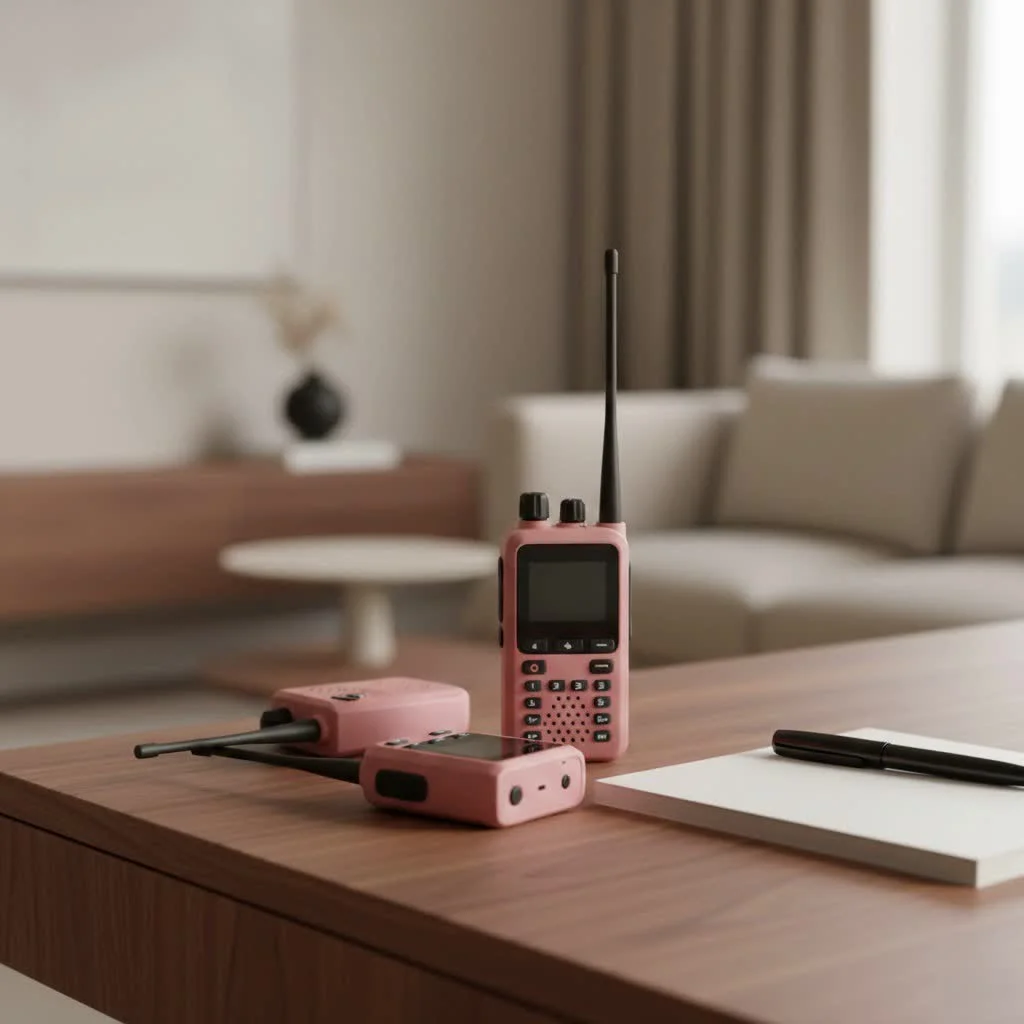
At their core, wrist walkie talkies are miniature two-way radios designed for maximum portability and ease of use. Unlike their handheld counterparts, which you might clip to your belt or carry in a pocket, these devices are worn like a watch. This simple design choice is a game-changer, as it frees up your hands entirely, making them incredibly practical for activities where grip and dexterity are crucial. They operate on standard walkie talkie frequencies, allowing for clear, real-time voice communication over short to medium distances. Think of them as your personal, always-accessible communication hub, right on your arm.
How do wrist walkie talkies differ from traditional handhelds?
The primary difference lies in form factor and intended use. Traditional handhelds often boast greater power, longer range, and a wider array of advanced features like multiple power settings, weather alerts, or even GPS. Wrist walkie talkies, by contrast, prioritize compactness, lightweight design, and immediate accessibility. They typically offer more basic functionalities, focusing on the core purpose of reliable voice transmission. While a handheld might be the choice for serious long-range expeditions, a wrist unit excels in situations demanding quick, casual, and unobtrusive communication.
Who Can Benefit from Wrist Walkie Talkies?
The versatility of wrist walkie talkies makes them suitable for a surprisingly diverse range of users and activities. Their hands-free nature is a universal appeal, but specific groups find them particularly indispensable.
Kids: Adventure and Play
For children, wrist walkie talkies are more than just communication tools; they’re instruments of adventure. They foster imaginative play, allowing kids to role-play secret agents, explorers, or backyard commanders. They also provide parents with a simple, reliable way to keep in touch with their children during playdates in the park or when exploring a large museum, without the need for a cell phone.
Outdoor Enthusiasts: Hiking, Camping, Cycling, Skiing
|
Our Picks for the Best Walkie Talkies in 2026
As an Amazon Associate I earn from qualifying purchases.
|
||
| Num | Product | Action |
|---|---|---|
| 1 | AILOCITAG Kids Video Walkie Talkies, 2 Pack Rechargeable HD Video Walkie Talkie, No WiFi Needed, 1640 ft Outdoor Range, Secure 1-to-1 Channel, 4 Voice Effects for Boys Girls Ages 3–12 |

|
| 2 | Walkie Talkies, MOICO Long Range Walkie Talkies for Adults with 22 FRS Channels, Family Walkie Talkie with LED Flashlight VOX LCD Display for Hiking Camping Trip (Orange 2 Pack) |
|
| 3 | Retevis RT68 Walkie Talkies with Earpiece, Portable FRS Two-Way Radios Rechargeable, with 6 Way Multi Unit Charger, Hands Free, Long Range, Rugged 2 Way Radios 6 Pack for Adults School Church |
|
| 4 | pxton Walkie Talkies Rechargeable Long Range Two-Way Radios with Earpieces,2-Way Radios UHF Handheld Transceiver Walky Talky with Flashlight Li-ion Battery and Charger(2 Pack) |
|
| 5 | Retevis RT22 Walkie Talkies Rechargeable Hands Free 2 Way Radios Two-Way Radio(6 Pack) with 6 Way Multi Gang Charger |
|
| 6 | Retevis RB48 Waterproof Walkie Talkies, Heavy Duty Two Way Radio, Advanced Triple Proof, Vibration Call, USB-C, SOS,2000mAh, NOAA, 2 Way Radio(2 Pack) Yellow |
|
| 7 | Wishouse Walkie Talkies Rechargeable for Kids Adults Long Range,Xmas Birthday Gift for Boys Girls 3 4 5 6 7 8 9 10 Year Old,Hiking Camping Gear Games Ideas Toys with Flashlight,VOX,Easy to Use 4 Pack |
|
| 8 | Retevis RT22 Two Way Radio Long Range Rechargeable,Portable 2 Way Radio, USB-C Charging, Handsfree Walkie Talkies for Adults Cruise Hiking Camping(4 Pack) |
|
| 9 | Retevis RB48 Heavy Duty Waterproof Walkie Talkies, Long Range Rechargeable Two Way Radios, Advanced Triple Proof, Vibration Reminder, for Warehousing Construction Contractor(10 Pack) |
|
| 10 | LỖI |
|
When you’re out in the wilderness, every ounce and every free hand counts. Hikers can keep in touch with their group without breaking stride, cyclists can coordinate routes without reaching into their packs, and skiers can communicate with friends on the slopes even when gloved hands make phone use impractical. The convenience of a PTT (Push-to-Talk) button right on your wrist is invaluable in these dynamic environments.
Event Staff and Security: Light Communications
For event coordinators, ushers, or security personnel managing smaller venues or specific zones, wrist walkie talkies offer a discreet and efficient way to coordinate. They allow for quick updates and instructions without drawing undue attention, perfect for maintaining a smooth flow or responding to minor incidents swiftly.
Families: Amusement Parks and Malls
Navigating crowded places like amusement parks or large shopping malls can be a challenge, especially with children or multiple family members. Wrist walkie talkies provide an easy way to stay connected, allowing family members to split up and explore, then quickly reunite. They bypass spotty cell service and save on roaming charges during vacations.
Airsoft/Paintball Players
In tactical games like airsoft or paintball, hands are constantly engaged. Wrist-mounted communication allows players to strategize and relay crucial information to teammates without dropping their equipment, giving them a significant edge in fast-paced scenarios.
Key Features to Look for in Wrist Walkie Talkies
Choosing the right wrist walkie talkies involves weighing several factors. Given their compact size, understanding the realistic expectations for their performance is vital.
Range: Realistic Expectations
While some manufacturers might claim impressive “up to X miles” ranges, these figures are almost always tested under optimal, line-of-sight conditions (e.g., across an open lake). In real-world environments—especially with obstructions like buildings, hills, or dense foliage—the effective range of wrist walkie talkies is typically much shorter, often between 0.5 to 2 miles. Prioritize models that deliver consistent performance in your anticipated environment rather than chasing exaggerated maximums.
Channels and Privacy Codes
Most wrist walkie talkies offer multiple channels (e.g., 20 or 22 FRS/GMRS channels in North America, 8 PMR446 channels in Europe). To ensure private conversations and avoid interference from other users, look for models that include Continuous Tone-Coded Squelch System (CTCSS) or Digitally Coded Squelch (DCS) privacy codes. These sub-codes filter out unwanted transmissions, allowing you to only hear those using the same channel and code.
Battery Life and Power Source
Battery life is crucial for any portable device. Many wrist walkie talkies use rechargeable Li-ion batteries, which are convenient and environmentally friendly. Others might rely on standard AAA batteries. Consider the expected usage time on a single charge and whether the device offers easy charging options, such as micro-USB. A battery indicator is a helpful feature to avoid unexpected power loss.
Durability and Water Resistance
If your adventures take you outdoors, durability and water resistance are non-negotiable. Look for rugged designs that can withstand minor drops and bumps. While fully submersible wrist walkie talkies are rare, models with an IPX-rated splash-proof or water-resistant design (e.g., IPX4 or IPX5) can survive light rain or splashes, which is essential for most outdoor activities.
Ease of Use: PTT Button and Display
The design of the PTT button is paramount for a wrist-mounted device. It should be easily accessible and tactile enough to operate without looking. A simple, backlit LCD display can provide useful information like channel number, battery status, and privacy code, making operation intuitive even in low light.
VOX (Voice-Activated Transmission)
Some advanced wrist walkie talkies offer VOX functionality. This feature allows you to transmit by simply speaking, without needing to press the PTT button. While convenient for completely hands-free operation, it requires careful adjustment of sensitivity to avoid accidental transmissions or missing the beginning of your speech.
Ergonomics and Comfort
Since you’ll be wearing these on your wrist, comfort is key. Look for adjustable straps made from breathable, skin-friendly materials. The device itself should be lightweight and low-profile, so it doesn’t become a hindrance during activity.
How Do Wrist Walkie Talkies Work?
The fundamental principle behind wrist walkie talkies is the same as any two-way radio: they send and receive radio waves. When you press the PTT button and speak, your voice is converted into electrical signals, which are then modulated onto a radio frequency carrier wave. This radio wave is broadcast through the air by the device’s antenna. Any other wrist walkie talkie (or compatible two-way radio) tuned to the same channel and privacy code within range will pick up this radio wave, convert it back into an electrical signal, and then into audible sound.
They typically operate on license-free bands such as FRS (Family Radio Service) in the US and Canada, or PMR446 (Personal Mobile Radio 446 MHz) in Europe. These bands are specifically allocated for short-range personal and recreational use, ensuring that anyone can use them without needing special permits or licenses. Setting them up is usually straightforward: just select the same channel and, if desired, the same privacy code on all units, and you’re ready to communicate.
Wrist Walkie Talkies vs. Traditional Handhelds: A Quick Comparison
While both types serve the purpose of two-way communication, their strengths and weaknesses cater to different needs.
| Feature | Wrist Walkie Talkies | Traditional Handheld Walkie Talkies |
|---|---|---|
| Portability | Excellent; hands-free, worn on wrist | Good; clips to belt, can be bulky in hand |
| Range | Shorter; typically 0.5-2 miles in real-world | Longer; 1-5+ miles in real-world (depending on model) |
| Features | Basic; channels, privacy codes, simple display | More advanced; weather alerts, GPS, stronger speakers |
| Durability | Varies; some rugged, often lighter duty | Often more rugged and built for tougher conditions |
| Battery Life | Generally good for size; rechargeable common | Typically longer; larger battery capacity |
| Cost | Often more affordable, especially for recreational | Wider range, from budget to professional-grade |
| Target User | Kids, casual outdoor, events, close-range teams | Professionals, serious outdoor, extended range needed |
Maximizing Performance: Tips for Using Your Wrist Walkie Talkies
To get the most out of your wrist walkie talkies, a few simple practices can make a world of difference in clarity and range.
Line of Sight is Your Friend
Radio waves travel best in a straight line. The fewer obstructions between you and the person you’re communicating with, the better your range and clarity will be. Try to find open areas or elevate your position for optimal performance.
Battery Care for Extended Use
Always fully charge your wrist walkie talkies before an outing. For rechargeable units, avoid completely draining the battery frequently, as this can shorten its overall lifespan. If using disposable batteries, carry spares, especially on longer trips.
Practice Clear Communication
Speak clearly and at a normal volume, holding the device relatively close to your mouth. Wait for a moment after pressing the PTT button before speaking to ensure the transmission is fully engaged, and release the button only after you’ve finished your message.
Understand Limitations
Accept that wrist walkie talkies are designed for convenience and close-to-medium range. Don’t expect them to perform like high-power professional radios or cell phones. Understanding and working within these limitations will prevent frustration and ensure you choose the right tool for the job.
Expert Insight
“Many people overlook the incredible utility of wrist walkie talkies, especially for groups needing to stay synchronized without distraction,” says Daniel O’Connell, a seasoned communications specialist with Oqdos.com. “Their true value lies in their hands-free simplicity, allowing you to focus on the task at hand while staying perfectly connected with your team or family.”
Frequently Asked Questions About Wrist Walkie Talkies
Are wrist walkie talkies good?
Yes, wrist walkie talkies are excellent for specific use cases where hands-free, short-to-medium range communication is paramount. They offer unparalleled convenience for activities like hiking, cycling, skiing, and for families or event staff needing quick, discreet contact. Their compact size and ease of use make them a popular choice.
What is the range of wrist walkie talkies?
In real-world conditions, the effective range of wrist walkie talkies typically falls between 0.5 to 2 miles (approximately 0.8 to 3.2 kilometers). While manufacturers might advertise longer “up to X miles” ranges, these are usually achieved only under ideal, line-of-sight circumstances with no obstructions.
Can wrist walkie talkies talk to other walkie talkies?
Yes, most wrist walkie talkies can communicate with other walkie talkies, including traditional handheld models, provided they operate on the same frequency band (e.g., FRS/GMRS or PMR446) and are set to the identical channel and privacy code (if used). This interoperability makes them versatile.
Are they waterproof?
Many wrist walkie talkies offer some level of water resistance, often rated as splash-proof (e.g., IPX4 or IPX5), meaning they can withstand light rain or splashes. However, very few are truly waterproof (i.e., designed for submersion). Always check the specific IPX rating of the model you’re considering for its water resistance capabilities.
How long do wrist walkie talkie batteries last?
Battery life varies significantly depending on the model, battery type (rechargeable Li-ion vs. disposable AA/AAA), and usage patterns. On average, you can expect a full charge to last anywhere from 8 to 24 hours of standby time with intermittent use. Consistent transmission will naturally reduce battery life more quickly.
What’s the best frequency for wrist walkie talkies?
The “best” frequency depends on your geographic location. In North America, wrist walkie talkies commonly use the FRS/GMRS bands (Family Radio Service/General Mobile Radio Service), while in Europe, they typically use PMR446 (Personal Mobile Radio 446 MHz). These are license-free bands, meaning you can use them without specific permits, making them ideal for personal communication.
Ready to Strap On Your Communication?
Wrist walkie talkies are more than just novel gadgets; they’re incredibly practical tools that bring hands-free communication right to your fingertips, or rather, your wrist. From coordinating with your adventure buddies on a mountain trail to keeping an eye on the kids at a bustling fair, their convenience and ease of use are undeniable. By understanding their features, realistic limitations, and how to maximize their performance, you can confidently choose a pair that perfectly fits your lifestyle and communication needs. So, next time you’re planning an outing where staying connected is key but your hands need to be free, remember the power of the wrist walkie talkie – it might just be the communication solution you’ve been looking for. Explore the world, stay connected, and keep your hands free for whatever comes your way!
Get our weekly buyer guide
Practical specs, not advice. Unsubscribe anytime.