In a world overflowing with smartphones and constant digital connectivity, you might wonder if walkie talkies still have a place in an adult’s life. As someone who’s spent over 15 years knee-deep in two-way radio technology, from coordinating rescue teams to ensuring smooth operations at massive events, I can confidently tell you: absolutely. Walkie Talkies For Adults are more relevant and vital than ever, offering a unique blend of reliability, immediacy, and simplicity that no app can replicate. At Oqdos.com, we believe in empowering you with the knowledge to make confident choices, and today, we’re diving deep into why these unsung heroes of communication deserve a spot in your gear bag.
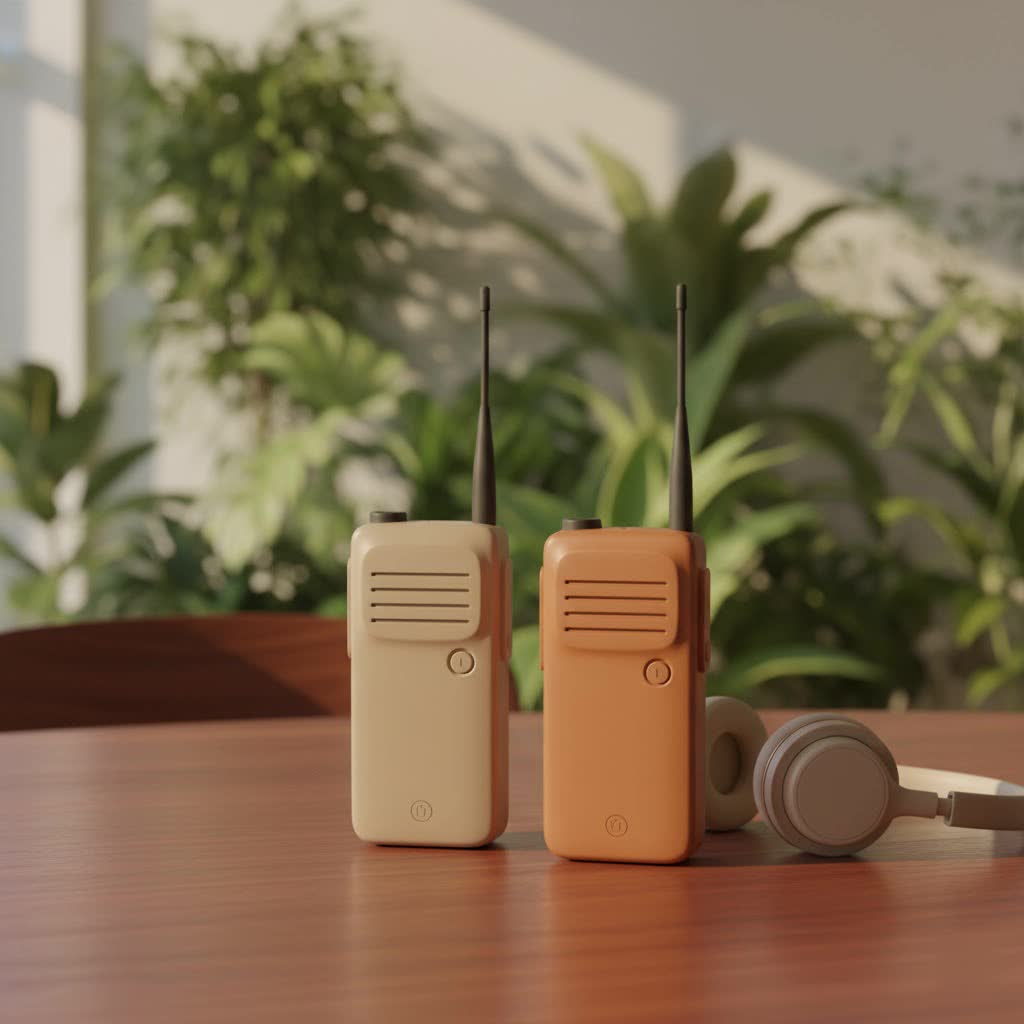
Why Walkie Talkies Remain Indispensable for Adults Today
Forget the flimsy toys of your childhood; modern walkie talkies for adults are robust communication tools designed for serious use. They shine brightest in situations where smartphones often fall short.
- Instant, Reliable Group Communication in Any Situation: Imagine hiking with friends in a dense forest or coordinating a team across a busy construction site. A quick press of a button and everyone hears you, simultaneously and without delay. There’s no dialing, no waiting for calls to connect, and no dropped calls due to network congestion. This “push-to-talk” simplicity is incredibly efficient when every second counts.
- Independence from Cellular Networks: This is perhaps their greatest superpower. Venture into the backcountry, remote work sites, or disaster zones, and your smartphone quickly becomes an expensive paperweight. Walkie talkies operate on radio frequencies, requiring no cell towers or internet. They are your lifeline when off-grid, ensuring you stay connected when it matters most.
- Cost-Effectiveness and No Monthly Fees: Unlike cell phones that come with hefty monthly bills, most walkie talkies offer communication without ongoing costs. Once you buy the devices, you’re free to communicate within their range, making them a budget-friendly solution for consistent, reliable communication over time.
Key Features to Consider When Selecting Your Adult Walkie Talkies
Choosing the right walkie talkie means understanding the features that truly impact performance. Let’s break down what to look for.
Understanding Range and Signal Clarity
“How far do walkie talkies for adults really work?” That’s the million-dollar question, isn’t it? The advertised “up to 35 miles” on the box is often a best-case scenario, usually achieved only from mountaintop to mountaintop with no obstructions. In the real world, several factors dramatically influence your walkie talkie’s effective range and signal clarity.
- Realistic vs. Advertised Range: Expect a practical range of 1 to 5 miles in most outdoor or urban environments. For example, while a walkie talkie might boast a 35-mile reach in open line-of-sight, you’re more likely to get 1 to 5 miles in mountainous areas, 0.5 to 3 miles in forests, and less than a mile in urban settings with dense buildings.
- Factors Influencing Range:
- Terrain and Obstructions: Hills, mountains, dense forests, and urban buildings are notorious signal blockers. Radio waves struggle to penetrate or bend around large objects. Even a small rise in elevation can significantly improve your signal.
- Power Output (Wattage): Higher wattage generally means greater range. FRS radios typically transmit at 0.5 to 2 watts, while GMRS radios can go up to 5 watts for handhelds, with some able to reach up to 50 watts.
- Antenna Quality: A better antenna can significantly boost your walkie talkie’s performance, allowing for clearer transmissions over longer distances. Some GMRS and amateur radios even allow for removable, higher-gain antennas.
|
Our Picks for the Best Walkie Talkies in 2026
As an Amazon Associate I earn from qualifying purchases.
|
||
| Num | Product | Action |
|---|---|---|
| 1 | Retevis RB48 Heavy Duty Waterproof Walkie Talkies, Long Range Rechargeable Two Way Radios, Advanced Triple Proof, Vibration Reminder, for Warehousing Construction Contractor(10 Pack) |

|
| 2 | LỖI |
|
| 3 | Wishouse Walkie Talkies Rechargeable for Kids Adults Long Range,Xmas Birthday Gift for Boys Girls 3 4 5 6 7 8 9 10 Year Old,Hiking Camping Gear Games Ideas Toys with Flashlight,VOX,Easy to Use 4 Pack |
|
| 4 | Walkie Talkies, MOICO Long Range Walkie Talkies for Adults with 22 FRS Channels, Family Walkie Talkie with LED Flashlight VOX LCD Display for Hiking Camping Trip (Orange 2 Pack) |
|
| 5 | pxton Walkie Talkies Rechargeable Long Range Two-Way Radios with Earpieces,2-Way Radios UHF Handheld Transceiver Walky Talky with Flashlight Li-ion Battery and Charger(2 Pack) |
|
| 6 | Retevis RT22 Two Way Radio Long Range Rechargeable,Portable 2 Way Radio, USB-C Charging, Handsfree Walkie Talkies for Adults Cruise Hiking Camping(4 Pack) |
|
| 7 | Retevis RT22 Walkie Talkies Rechargeable Hands Free 2 Way Radios Two-Way Radio(6 Pack) with 6 Way Multi Gang Charger |
|
| 8 | Retevis RT68 Walkie Talkies with Earpiece, Portable FRS Two-Way Radios Rechargeable, with 6 Way Multi Unit Charger, Hands Free, Long Range, Rugged 2 Way Radios 6 Pack for Adults School Church |
|
| 9 | Retevis RB48 Waterproof Walkie Talkies, Heavy Duty Two Way Radio, Advanced Triple Proof, Vibration Call, USB-C, SOS,2000mAh, NOAA, 2 Way Radio(2 Pack) Yellow |
|
| 10 | AILOCITAG Kids Video Walkie Talkies, 2 Pack Rechargeable HD Video Walkie Talkie, No WiFi Needed, 1640 ft Outdoor Range, Secure 1-to-1 Channel, 4 Voice Effects for Boys Girls Ages 3–12 |
|
Battery Life and Flexible Power Options
Running out of juice in the middle of a critical conversation is a non-starter. Adult walkie talkies come with various battery types and features to ensure you stay powered up.
- Types of Batteries:
- Alkaline (AA/AAA): Affordable and easily replaceable, offering 12-24 hours of use depending on the model and usage. Great for emergencies where you can swap out batteries.
- NiMH (Nickel-Metal Hydride): Rechargeable, offering similar life to alkaline (12-24 hours). Some dual-fuel radios can use both NiMH packs and AAAs.
- Lithium-ion (Li-ion): Often lighter, with a longer life per charge (up to 48 hours for some, but typically 24-48 hours depending on use) and no “memory effect,” meaning you can charge them anytime. They are also more resilient in cold weather than NiMH.
- Strategies for Extending Battery Life: Use power-saving modes, reduce transmitter power when maximum range isn’t needed, and consider carrying a portable power bank for USB-chargeable models.
- Convenient Charging Methods: Look for models with USB-C charging ports for modern convenience, or charging docks for easy tabletop power-ups.
Durability and Weather Resistance: Built for the Real World
Your walkie talkie needs to be as tough as your adventures or your work environment. Durability ratings help you understand what a device can withstand.
- Explaining IP Ratings: An Ingress Protection (IP) rating indicates a device’s resistance to dust and water.
- IP55: Offers protection against dust and low-pressure water jets, good for general outdoor use.
- IP56: Splashproof, meaning it can handle light rain or splashes.
- IP67: Fully dustproof and waterproof, capable of immersion in up to 3 feet of water for 30 minutes. Ideal for kayaking, boating, or extremely wet conditions.
- MIL-STD-810H: This military standard denotes testing against extreme conditions like shock, vibration, dust, and moisture, ensuring reliability in harsh environments.
- Importance of Rugged Construction: Rubberized casings and sturdy designs absorb impacts from drops, while sealed ports prevent ingress of dirt and moisture.
Channels and Privacy Codes: Keeping Your Conversations Clear
When you’re communicating with a group, you want to ensure your messages are heard only by your team and free from external chatter.
- Role of Channels: Walkie talkies operate on a set number of channels (typically 22 for FRS/GMRS). These act like different “lanes” on a highway, allowing multiple groups to communicate without constantly talking over each other.
- CTCSS and DCS Privacy Codes: These “privacy codes” or “interference eliminator codes” are sub-audible tones (CTCSS) or digital signals (DCS) that filter out transmissions not using the same code. If you and your group set a specific channel and privacy code, you’ll only hear transmissions from radios using that exact combination, greatly reducing unwanted interference. However, it’s important to remember that these codes don’t encrypt your conversation; anyone on the same main channel without a code can still listen in.
FRS vs. GMRS: Navigating Frequencies and Licensing
Understanding the difference between Family Radio Service (FRS) and General Mobile Radio Service (GMRS) is crucial for choosing the right walkie talkie, especially regarding power and legal use.
- Family Radio Service (FRS):
- License-Free: Anyone can use FRS radios without a license.
- Lower Power: Channels 1-7 and 15-22 transmit at a maximum of 2 watts, while channels 8-14 are limited to 0.5 watts.
- Ideal For: Casual use, short to mid-range communication, family outings, and small groups where simplicity is key.
- General Mobile Radio Service (GMRS):
- Requires FCC License: To legally operate a GMRS radio in the U.S., you need a license from the FCC. Don’t let this deter you; it’s a straightforward online application, costs around $35, and is valid for 10 years, covering your entire immediate family.
- Higher Power: GMRS radios can transmit at up to 50 watts (though handhelds typically max out at 5 watts), offering significantly greater range and clarity than FRS models. They also have access to repeater channels, which can extend range even further by bouncing signals off ground-based antennas.
- Ideal For: Serious outdoor adventures, professional use, longer-range communication, and when maximum reliability is needed.
- Amateur/Ham Radio: For the ultimate in power and versatility, amateur radios (VHF/UHF bands) require passing a knowledge test to obtain a license. These can transmit at 8 watts or more and access repeaters for truly long-distance communication, even worldwide with the right setup. However, they often have a steeper learning curve.
Beyond the Basics: Smart Features That Enhance Your Walkie Talkie Experience
Modern walkie talkies for adults come packed with additional features that elevate their utility beyond simple push-to-talk.
- NOAA Weather Alerts: Essential for outdoor safety, many walkie talkies can tune into NOAA (National Oceanic and Atmospheric Administration) weather channels, providing real-time updates on severe storms and changing conditions, even without cell service.
- VOX (Voice-Activated Transmission): This hands-free feature automatically activates the microphone when you speak, allowing you to communicate without pressing the “push-to-talk” button. It’s perfect for activities where your hands are busy, like climbing, biking, or operating machinery.
- Bluetooth Connectivity: Some advanced models can pair with Bluetooth headsets or earpieces, offering truly hands-free, private communication. This is a game-changer for motorcycling, noisy environments, or simply when a wire would be cumbersome.
- Built-in Flashlights and Emergency Alarms: Simple yet effective, an integrated flashlight can be invaluable in low-light conditions or emergencies. Emergency alarms (like an SOS function) can transmit a loud alert on your current frequency, signaling distress.
- Dual-Watch/Channel Monitoring: This feature allows the radio to monitor two channels simultaneously, letting you keep tabs on two different groups or a main channel and a weather channel without constantly switching.
Choosing the Best Walkie Talkies for Your Specific Adult Lifestyle
Your perfect walkie talkie depends entirely on how you plan to use it.
For Outdoor Enthusiasts (Hikers, Campers, Hunters, Skiers)
If you’re constantly seeking adventure in the wilderness, reliability is paramount. Look for:
- Long-range capabilities: GMRS radios are often preferred for their extended reach in challenging terrain.
- Durability and high IP ratings: IP67 waterproof and dustproof is ideal for unpredictable weather.
- Long battery life: Lithium-ion batteries with high mAh ratings and options for external charging.
- NOAA weather alerts: A crucial safety feature for backcountry travel.
For Professional Use (Events, Construction, Security)
In demanding work environments, clear, consistent communication is vital. Consider:
- Rugged, MIL-STD rated designs: To withstand daily abuse.
- Multiple channels and privacy codes: For coordinating different teams without interference.
- VOX and Bluetooth connectivity: For hands-free operation while working.
- Integrated accessories: Like remote speaker microphones or specialized headsets.
For Everyday Family Coordination & Travel
For keeping track of family at a theme park, on a road trip, or around a large property, simplicity and ease of use are key.
- FRS radios: License-free and typically very user-friendly.
- Good battery life: Rechargeable options with simple charging cradles.
- Compact and lightweight designs: Easy for anyone to carry.
- Basic durability: Splashproof (IP56) is often sufficient for casual outdoor use.
“The magic of a walkie talkie isn’t just in its ability to connect two points, but in its unwavering reliability when every other communication method fails. That’s the peace of mind every adult deserves, whether they’re tackling a mountain or a busy weekend.” – Marcus Chen, Oqdos.com Senior Radio Specialist.
Frequently Asked Questions (FAQ)
Q: How far can walkie talkies for adults realistically communicate?
A: In real-world conditions, most walkie talkies for adults provide a practical communication range of 1 to 5 miles, depending on the terrain and obstructions. While manufacturers advertise much greater distances (e.g., 35 miles), this is typically only achievable under ideal, line-of-sight conditions like mountaintop to mountaintop.
Q: Do I need a license to operate adult walkie talkies?
A: It depends on the type. Family Radio Service (FRS) walkie talkies are license-free and generally operate at lower power. General Mobile Radio Service (GMRS) radios, which offer higher power and range, require a simple and affordable license from the FCC in the U.S., valid for 10 years and covering your immediate family.
Q: What’s the main difference between FRS and GMRS radios?
A: The primary differences lie in power output and licensing. FRS radios are license-free and limited to 0.5-2 watts, making them suitable for shorter-range, casual use. GMRS radios can transmit at up to 5 watts (for handhelds) and can access repeaters for extended range, but require an FCC license.
Q: How important is an IP rating for a walkie talkie?
A: An IP (Ingress Protection) rating is very important if you plan to use your walkie talkie in outdoor or demanding environments. It tells you how well the device is protected against dust and water. For light rain, an IP56 (splashproof) rating might suffice, but for full immersion or dusty conditions, an IP67 rating (waterproof and dustproof) offers superior protection.
Q: Can walkie talkies work where cell phones don’t?
A: Yes, absolutely! Walkie talkies operate using radio waves, meaning they do not rely on cellular towers or internet access. This makes them ideal for communication in remote areas, wilderness, during power outages, or in disaster scenarios where cell phone service is unavailable.
Conclusion: Your Next Steps to Confident Communication
Choosing the right walkie talkie for adults doesn’t have to be a complex task. By understanding your specific needs and focusing on key features like realistic range, robust battery life, impressive durability, and appropriate frequency bands (FRS or GMRS), you can confidently select a communication tool that truly enhances your safety, efficiency, and connection with others. These reliable devices offer instant, cost-free communication when smartphones falter, proving their timeless value.
Ready to explore the perfect walkie talkie for your next adventure or project? Head over to Oqdos.com for more in-depth reviews, expert guides, and the latest in two-way radio technology. Empower yourself with the best tools for confident communication.
