For many of us, the phrase “Radio Shack Walkie Talkies” conjures up a wave of nostalgia, painting vivid pictures of childhood adventures, secret missions in the backyard, or even connecting with truckers on the open road. Radio Shack was a household name for electronics for decades, and their walkie-talkies, especially the Citizens Band (CB) handhelds, were a significant part of that story. While the landscape of two-way communication has evolved dramatically, understanding the history and capabilities of these iconic devices offers valuable insight into the world of radio.
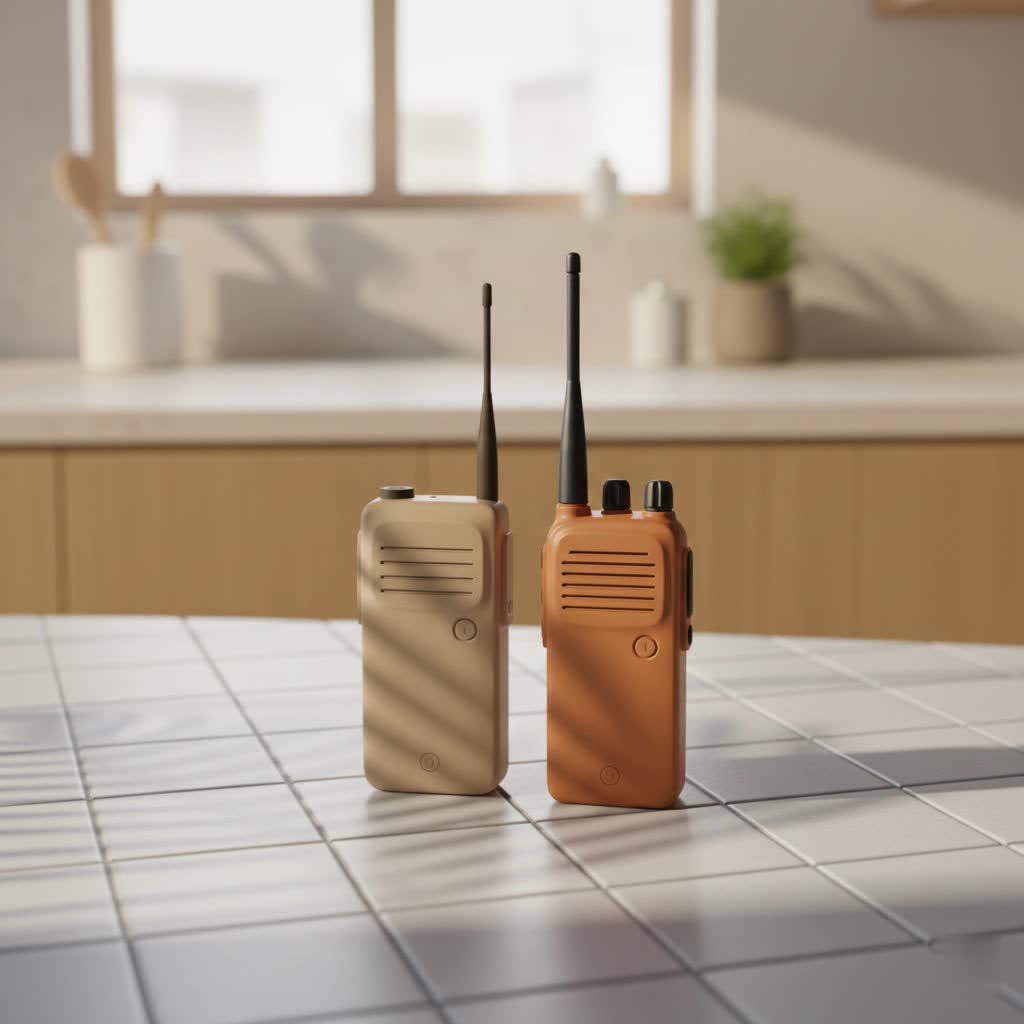
As someone who’s spent over 15 years immersed in the practical realities of walkie-talkies, from coordinating rescue teams to managing event communications, I’ve seen firsthand how communication technology shapes our lives. And when it comes to Radio Shack, it’s more than just electronics; it’s a piece of American ingenuity and a testament to the thrill of connecting over the airwaves. This article isn’t just a trip down memory lane; it’s a deep dive into what made these Radio Shack walkie talkies special, how they stacked up then and now, and what modern alternatives offer today.
The Golden Age: Radio Shack and CB Walkie Talkies
Back in the day, especially from the 1970s through the 1990s, when you thought of a “walkie talkie” from Radio Shack, you were often thinking of a handheld CB radio. These weren’t just toys; they were legitimate communication tools that allowed individuals to connect over short to medium distances. Radio Shack, under its own brand and the well-known “Realistic” label, offered a variety of these units, making two-way radio accessible to the general public.
Popular Models and Their Features
Many enthusiasts still fondly recall models from the “TRC” series, such as the TRC-222, TRC-205, and TRC-221. These devices often featured:
- Robust, Chunky Designs: They were typically large and quite substantial, a far cry from today’s sleek, miniature devices. You definitely felt like you were holding a piece of serious equipment!
- Multiple Channels: Most boasted 40 channels, allowing users to find clear frequencies for communication.
- External Antenna Options: While they had built-in whip antennas, many models allowed for external antennas, significantly boosting their range and performance. This was a game-changer for extending your reach beyond a few blocks.
- Significant Battery Consumption: Let’s be honest, these things were battery hungry! Many units required anywhere from 8 to 12 AA batteries, making a fresh pack a necessity for any extended use.
|
Our Picks for the Best Walkie Talkies in 2026
As an Amazon Associate I earn from qualifying purchases.
|
||
| Num | Product | Action |
|---|---|---|
| 1 | Retevis RB48 Waterproof Walkie Talkies, Heavy Duty Two Way Radio, Advanced Triple Proof, Vibration Call, USB-C, SOS,2000mAh, NOAA, 2 Way Radio(2 Pack) Yellow |

|
| 2 | AILOCITAG Kids Video Walkie Talkies, 2 Pack Rechargeable HD Video Walkie Talkie, No WiFi Needed, 1640 ft Outdoor Range, Secure 1-to-1 Channel, 4 Voice Effects for Boys Girls Ages 3–12 |
|
| 3 | Walkie Talkies, MOICO Long Range Walkie Talkies for Adults with 22 FRS Channels, Family Walkie Talkie with LED Flashlight VOX LCD Display for Hiking Camping Trip (Orange 2 Pack) |
|
| 4 | pxton Walkie Talkies Rechargeable Long Range Two-Way Radios with Earpieces,2-Way Radios UHF Handheld Transceiver Walky Talky with Flashlight Li-ion Battery and Charger(2 Pack) |
|
| 5 | Retevis RB48 Heavy Duty Waterproof Walkie Talkies, Long Range Rechargeable Two Way Radios, Advanced Triple Proof, Vibration Reminder, for Warehousing Construction Contractor(10 Pack) |
|
| 6 | Wishouse Walkie Talkies Rechargeable for Kids Adults Long Range,Xmas Birthday Gift for Boys Girls 3 4 5 6 7 8 9 10 Year Old,Hiking Camping Gear Games Ideas Toys with Flashlight,VOX,Easy to Use 4 Pack |
|
| 7 | Retevis RT68 Walkie Talkies with Earpiece, Portable FRS Two-Way Radios Rechargeable, with 6 Way Multi Unit Charger, Hands Free, Long Range, Rugged 2 Way Radios 6 Pack for Adults School Church |
|
| 8 | Retevis RT22 Two Way Radio Long Range Rechargeable,Portable 2 Way Radio, USB-C Charging, Handsfree Walkie Talkies for Adults Cruise Hiking Camping(4 Pack) |
|
| 9 | LỖI |
|
| 10 | Retevis RT22 Walkie Talkies Rechargeable Hands Free 2 Way Radios Two-Way Radio(6 Pack) with 6 Way Multi Gang Charger |
|
The CB Craze and Radio Shack’s Role
The 1970s saw a massive “CB radio craze” sweep the nation, fueled by pop culture phenomena like movies and music. Truckers used them, hobbyists experimented, and families found new ways to stay in touch. Radio Shack was at the forefront, providing affordable and accessible CB radios, including their popular handheld walkie talkie versions. They essentially democratized two-way radio communication for the masses.
How Radio Shack Walkie Talkies Worked (and Their Quirks)
Understanding the mechanics of these vintage units helps appreciate how far technology has come.
Frequencies and Channels
Radio Shack’s CB walkie talkies operated on the Citizens Band Radio Service, typically utilizing 40 channels. Some older models were even “crystal-controlled,” meaning you needed specific quartz crystals to tune into different channels. Imagine having to buy new components just to change your channel – quite different from today’s digital tuning! [cite: 4 (Reddit)]
Range and Performance
So, how far could these classic Radio Shack walkie talkies reach? In ideal, line-of-sight conditions, you might get a couple of miles, perhaps 1 to 2 miles on average for handheld units. [cite: 3 (review)] However, factors like terrain, buildings, and antenna quality heavily influenced this. Hooking up an external antenna, especially a well-placed one on a vehicle, could dramatically improve range, sometimes up to 15-20 miles or even more with optimal conditions. [cite: 5 (CB radio)]
Power Needs
As mentioned, these radios were known for their thirst for batteries. Ten or even twelve AA batteries were not uncommon, and “keying the mic” (transmitting) would draw significant current, draining them quickly. Carrying a bag of spare batteries was just part of the experience!
From Nostalgia to Modernity: Why Old Radio Shack Walkie Talkies Are Different Today
While the charm of vintage Radio Shack walkie talkies is undeniable, their practical application has largely been superseded by newer technologies.
Technological Evolution: FRS and GMRS
The mid-1990s saw a significant leap with the introduction of the Family Radio Service (FRS), a standard that RadioShack itself successfully petitioned the FCC to create. [cite: 3 (Wikipedia)] FRS, and later the General Mobile Radio Service (GMRS), offered smaller, more efficient, and often clearer communication over similar or even greater ranges, without the bulk or battery demands of older CB units. These modern handhelds operate on UHF frequencies, which are generally better for communication in urban and cluttered environments than the VHF frequencies often used by older CBs.
Limitations of Vintage Units in a Modern World
Today, using a vintage Radio Shack CB walkie talkie has some clear drawbacks:
- Efficiency: They are far less efficient in terms of power consumption and antenna design compared to modern handhelds. [cite: 3 (review)]
- Size and Weight: Their substantial size and weight make them less convenient for casual use.
- Clarity: While functional, the audio quality on older CB units might not be as clear as modern digital or even analog FRS/GMRS radios.
- Band Congestion: CB channels can still be busy, leading to interference, especially on popular channels.
Are They Still Useful?
Absolutely! For collectors and hobbyists, vintage Radio Shack walkie talkies are treasures. They’re excellent for:
- Nostalgia and Collecting: Owning and operating a piece of radio history is a joy for many.
- Short-Range Fun: They can still provide reliable short-range communication for local adventures or between close-by vehicles.
- Learning and Experimentation: They offer a tangible way to understand basic radio principles.
- Backup Communication: In a pinch, an old, functional CB can still provide a lifeline. As Oqdos.com expert, Dr. Elara Vance notes, “Vintage Radio Shack walkie-talkies might be old school, but they represent a foundational era in personal communication. Understanding their quirks helps us truly appreciate the innovations we enjoy today.”
Modern Alternatives to Consider
If you’re looking for practical, reliable two-way communication today, here are the top alternatives that have largely replaced the role of the vintage Radio Shack walkie talkie:
1. FRS/GMRS Radios
- FRS (Family Radio Service): These are license-free, low-power, short-range radios perfect for families, campers, or anyone needing basic communication. They are compact, affordable, and offer decent range in open areas.
- GMRS (General Mobile Radio Service): Stepping up from FRS, GMRS radios offer higher power, longer range, and the ability to use repeaters to extend coverage even further. A single, inexpensive license covers an entire family. For many, GMRS is the sweet spot for recreational and semi-professional use, offering a significant upgrade over FRS without the complexities of amateur radio. [cite: 5 (alternatives)]
2. Amateur (Ham) Radio
For those truly passionate about radio communication and willing to invest time in learning and getting a license, amateur radio offers unparalleled flexibility and range. With a ham license, you can transmit across states, continents, and even communicate with the International Space Station! While it requires passing an exam, the possibilities are virtually limitless.
3. Push-to-Talk (PTT) Apps and Cellular-based Devices
Modern technology has also brought new contenders:
- Smartphone Apps: Apps like Zello or Voxer turn your smartphone into a walkie-talkie, using cellular data or Wi-Fi for communication. This offers global reach as long as you have an internet connection. [cite: 4 (modern alternatives)]
- Dedicated PTT Devices: Newer devices like the Relay combine cellular data and Wi-Fi to create a Wi-Fi walkie-talkie experience, offering features similar to traditional radios but with broader network coverage. [cite: 3 (modern alternatives)] These are excellent for teams needing secure, wide-area communication without the need for traditional radio infrastructure.
Choosing the Right Walkie Talkie for Today’s Needs
Picking the best walkie-talkie boils down to your specific needs. It’s not about finding a “Radio Shack walkie talkie replacement” but rather identifying the modern solution that fits your lifestyle.
Factors to Consider:
- Range: How far do you need to communicate? (Short-range: FRS; Medium-range: GMRS; Long-range: Ham, cellular PTT).
- Terrain: Open country, dense forest, or urban jungle will impact range differently. UHF radios (FRS/GMRS) generally perform better in obstructed environments than VHF (some CBs, some Ham).
- Battery Life: Modern units are far more efficient.
- Features: Do you need weather alerts, privacy codes, hands-free operation (VOX), or GPS?
- Budget: FRS radios are very affordable; GMRS and Ham can be more of an investment.
- Licensing: FRS is license-free; GMRS requires a family license; Ham radio requires individual licenses.
Brief Comparison: Vintage CB vs. Modern FRS/GMRS Handhelds
| Feature | Vintage Radio Shack CB Handheld | Modern FRS/GMRS Handheld |
|---|---|---|
| Frequency Band | CB (27 MHz – VHF) | FRS/GMRS (462/467 MHz – UHF) |
| Typical Range | 1-2 miles (handheld) | 1-5+ miles (handheld) |
| Power Output | Up to 4-5 Watts | FRS: 0.5-2 Watts; GMRS: 0.5-5 Watts |
| Battery Life | Very high consumption (10-12 AA batteries) | Moderate consumption (rechargeable batteries common) |
| Size/Weight | Large, heavy | Compact, lightweight |
| Licensing | License-free (for CB) | FRS: License-free; GMRS: Family license required |
| Efficiency | Lower | Higher |
Frequently Asked Questions
Are Radio Shack walkie talkies still legal to use?
Yes, vintage Citizens Band (CB) walkie talkies from Radio Shack are generally still legal to operate on the CB band, which remains a license-free service in the US. However, ensure your specific model complies with current FCC regulations regarding power output and modifications.
Can I get parts for old Radio Shack walkie talkies?
Finding new parts can be challenging given Radio Shack’s changing corporate status. However, hobbyists and collectors often source parts from online marketplaces like eBay or specialized vintage electronics forums. Sometimes, compatible generic components can be found.
What’s the best modern equivalent to a Radio Shack CB walkie talkie?
For general recreational use without a license, modern FRS radios are a good, compact choice. If you want more power and range for a family, GMRS radios (with a simple license) are an excellent step up, often providing better performance than old CB handhelds. For dedicated long-range communication, licensed amateur (ham) radio is the superior option.
Do I need a license for modern walkie talkies?
It depends on the type. FRS (Family Radio Service) radios are license-free. GMRS (General Mobile Radio Service) radios require a single license that covers an entire family, but there’s no test. Amateur (Ham) radio requires passing an exam to obtain a license.
How far can walkie talkies communicate?
The advertised range on walkie-talkie packaging is often under ideal, line-of-sight conditions. In reality, factors like terrain, buildings, weather, antenna quality, and power output significantly impact range. FRS radios typically offer 1-2 miles in urban areas, GMRS 2-5+ miles, and powerful ham radios can communicate across vast distances.
The Airwaves Call: A Journey Through Time and Technology
From the bulky, battery-hungry CB handhelds that defined an era to the sleek, efficient FRS/GMRS units of today, Radio Shack walkie talkies represent a fascinating journey in personal communication. They taught us the joy of connecting, the thrill of the airwaves, and the importance of reliable two-way communication. While the “shack” itself has transformed, the spirit of connecting lives through radio lives on. So, whether you’re dusting off a classic TRC model for a dose of nostalgia or investing in a cutting-edge GMRS radio for your next adventure, remember the legacy. Get out there, explore, and keep those lines of communication open!
