As a seasoned veteran in the world of two-way radios with over 15 years of hands-on experience, and as a content creator for Oqdos.com, I’ve heard countless questions about walkie talkie range. One of the most ambitious, and perhaps mythical, inquiries often revolves around achieving a “1000-mile walkie talkie” range. It’s a fascinating thought, isn’t it? Imagine a handheld device that could keep you connected across an entire state or even several countries with a simple push of a button. While the allure of a device offering 1000-mile walkie talkie capabilities is undeniable, the reality of radio physics tells a different story for conventional walkie talkies. Let’s delve into what’s truly possible for long-range communication and explore the technologies that can indeed bridge vast distances.
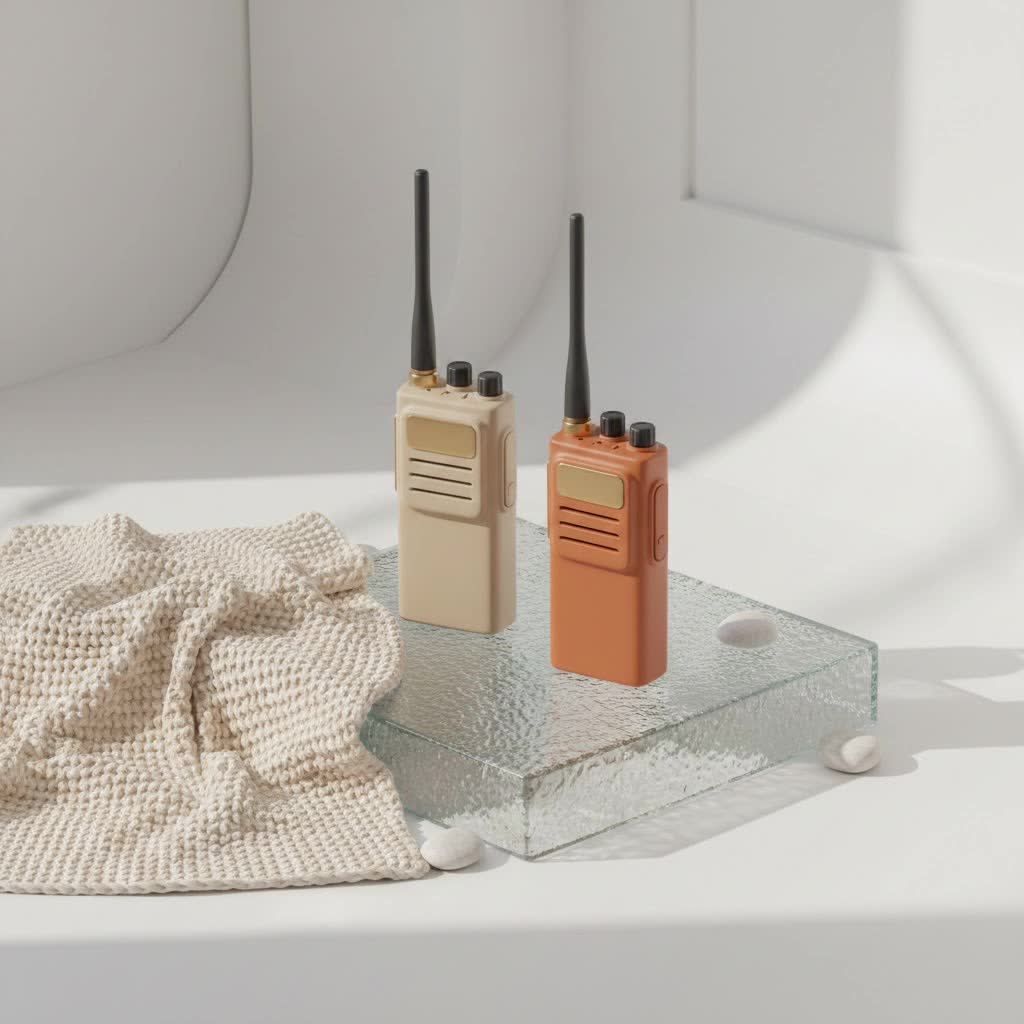
The Truth About Walkie Talkie Range: Why 1000 Miles Is a Tall Order
When we talk about traditional walkie talkies, like the Family Radio Service (FRS) or General Mobile Radio Service (GMRS) units you might buy for camping or casual use, their range is primarily governed by a fundamental principle: line of sight. Think of it like a flashlight beam; the light can only travel as far as it’s not obstructed. Radio waves behave similarly.
For a standard handheld walkie talkie, even under ideal conditions (mountain peak to mountain peak with absolutely no obstructions), you might realistically achieve ranges of 20 to 30 miles. In urban environments, with buildings, hills, and dense foliage, that range often plummets to a mere 1 to 5 miles. So, the idea of a handheld 1000-mile walkie talkie using conventional technology is, simply put, a misconception.
What Factors Really Affect Walkie Talkie Range?
Several critical elements dictate how far your walkie talkie signal can travel:
- Transmit Power (Wattage): Higher wattage generally means a stronger signal. FRS radios are limited to 0.5-2 watts, while GMRS can go up to 50 watts (though handhelds are typically 5-8 watts). More power helps overcome some obstacles but doesn’t magically create a 1000-mile walkie talkie.
- Antenna Quality and Type: A longer, more efficient antenna can significantly improve reception and transmission compared to a stubby, fixed antenna. External antennas on vehicles or base stations are even better.
- Terrain and Obstructions: Hills, mountains, dense forests, and concrete buildings are radio signal killers. Every obstruction absorbs or reflects the signal, reducing its strength and range.
- Frequency Band: Different frequency bands (VHF vs. UHF) have different propagation characteristics. VHF (Very High Frequency) signals tend to travel further in open, clear areas and around gentle terrain, while UHF (Ultra High Frequency) is better for penetrating buildings and urban environments. Neither is designed for 1000-mile distances on its own.
- Weather Conditions: Heavy rain, snow, or even dense fog can slightly attenuate radio signals, though this is less significant for typical walkie talkie ranges.
Beyond Conventional Limits: Technologies for True Long-Range Communication
If a traditional walkie talkie won’t get you 1000 miles, what will? Fortunately, advancements in communication technology offer compelling solutions for truly extensive ranges, far beyond what any handheld, license-free radio can achieve. These aren’t your grandpa’s walkie talkies, but they fulfill the need for communication over vast distances.
Push-to-Talk Over Cellular (PoC): Your Global Walkie Talkie
Imagine a walkie talkie that works anywhere your cell phone does. That’s essentially what Push-to-Talk Over Cellular (PoC) devices offer. These devices look and feel like rugged two-way radios, but instead of transmitting directly via radio waves, they utilize existing cellular networks (4G, 5G) or Wi-Fi to send your voice.
- How it Works: Your voice is digitized, sent over the cellular network to a server, and then routed to the intended recipient’s PoC device.
- Range Benefits: The range of a PoC device is limited only by the coverage of the cellular network. This means you can communicate across towns, states, continents, or even globally, easily surpassing the 1000-mile walkie talkie aspiration, as long as there’s a mobile signal.
- Pros: Incredible range, clear digital audio, often includes GPS tracking, group calling, and dispatch features. No FCC licensing needed for the radio operation itself (though a data plan is required).
- Cons: Requires cellular network coverage (won’t work in dead zones), involves a monthly subscription fee, and depends on a third-party infrastructure.
|
Our Picks for the Best Walkie Talkies in 2026
As an Amazon Associate I earn from qualifying purchases.
|
||
| Num | Product | Action |
|---|---|---|
| 1 | Retevis RB48 Waterproof Walkie Talkies, Heavy Duty Two Way Radio, Advanced Triple Proof, Vibration Call, USB-C, SOS,2000mAh, NOAA, 2 Way Radio(2 Pack) Yellow |

|
| 2 | Retevis RT22 Two Way Radio Long Range Rechargeable,Portable 2 Way Radio, USB-C Charging, Handsfree Walkie Talkies for Adults Cruise Hiking Camping(4 Pack) |
|
| 3 | AILOCITAG Kids Video Walkie Talkies, 2 Pack Rechargeable HD Video Walkie Talkie, No WiFi Needed, 1640 ft Outdoor Range, Secure 1-to-1 Channel, 4 Voice Effects for Boys Girls Ages 3–12 |
|
| 4 | Walkie Talkies, MOICO Long Range Walkie Talkies for Adults with 22 FRS Channels, Family Walkie Talkie with LED Flashlight VOX LCD Display for Hiking Camping Trip (Orange 2 Pack) |
|
| 5 | LỖI |
|
| 6 | Retevis RT22 Walkie Talkies Rechargeable Hands Free 2 Way Radios Two-Way Radio(6 Pack) with 6 Way Multi Gang Charger |
|
| 7 | Wishouse Walkie Talkies Rechargeable for Kids Adults Long Range,Xmas Birthday Gift for Boys Girls 3 4 5 6 7 8 9 10 Year Old,Hiking Camping Gear Games Ideas Toys with Flashlight,VOX,Easy to Use 4 Pack |
|
| 8 | Retevis RB48 Heavy Duty Waterproof Walkie Talkies, Long Range Rechargeable Two Way Radios, Advanced Triple Proof, Vibration Reminder, for Warehousing Construction Contractor(10 Pack) |
|
| 9 | Retevis RT68 Walkie Talkies with Earpiece, Portable FRS Two-Way Radios Rechargeable, with 6 Way Multi Unit Charger, Hands Free, Long Range, Rugged 2 Way Radios 6 Pack for Adults School Church |
|
| 10 | pxton Walkie Talkies Rechargeable Long Range Two-Way Radios with Earpieces,2-Way Radios UHF Handheld Transceiver Walky Talky with Flashlight Li-ion Battery and Charger(2 Pack) |
|
As Elias Vance, a senior telecommunications engineer at Oqdos, puts it, “PoC radios have redefined ‘long-range’ for professional users. They provide the instant communication feel of a walkie talkie, but with a geographical reach that was once unimaginable for a handheld device.”
Satellite Communication: The Ultimate Wilderness Link
When you venture far beyond cellular towers, into remote wilderness, oceans, or mountains, satellite communication becomes your lifeline. While dedicated “satellite walkie talkies” aren’t a common product category in the same way traditional walkie talkies are, satellite phones often incorporate Push-to-Talk features or can be used for two-way voice communication over satellite networks.
- How it Works: These devices send signals directly to orbiting satellites, which then relay them back to ground stations or other satellite devices.
- Range Benefits: Satellite communication offers truly global coverage. Whether you’re in the Sahara desert or the middle of the Pacific Ocean, as long as you have a clear view of the sky, you can communicate. This easily covers any 1000-mile walkie talkie requirement.
- Pros: Unparalleled global coverage, critical for emergency communication in remote areas.
- Cons: Higher cost for devices and service plans, potential for latency (slight delay in conversation), requires a clear line of sight to the satellite, devices can be bulkier than traditional walkie talkies.
Amateur Radio (Ham Radio) and Repeater Networks: For the Dedicated Enthusiast
For those with a passion for radio and a willingness to learn, amateur radio offers incredible long-distance communication possibilities. Ham radio operators use a variety of equipment, from handheld transceivers to powerful base stations, to communicate across vast distances.
- The Role of Repeaters: A key to extending range in amateur radio (and professional LMR) is the use of repeaters. A repeater is essentially a high-gain receiver and transmitter system, usually located on a tall tower or mountain, that receives a weak signal on one frequency and re-transmits it on another, much stronger, and further-reaching. Networks of linked repeaters, sometimes connected via the internet (known as VoIP-linked repeaters), can provide coverage over hundreds or even thousands of miles, effectively creating a 1000-mile walkie talkie network for licensed operators.
- Pros: Can achieve truly impressive ranges, a rewarding hobby, extensive community support, valuable for emergency preparedness.
- Cons: Requires an FCC license (in the US) and significant technical knowledge to operate effectively, equipment can be complex and costly.
High-Power VHF/UHF Land Mobile Radios (LMR) with Repeaters: Professional Grade Solutions
Beyond the FRS/GMRS realm, professional and commercial businesses utilize licensed Land Mobile Radio (LMR) systems. These systems often employ higher power radios (up to 100 watts or more for base stations) and strategically placed repeater systems to cover large operational areas. While a single LMR system typically won’t cover 1000 miles directly, integrated networks of repeaters and trunking systems can connect users across large regions, vital for industries like public safety, transportation, and utilities.
Choosing the Right Solution for Your Needs: What Truly Matters
So, while the dream of a “1000-mile walkie talkie” in a conventional sense remains a dream, the real-world options for extreme long-range communication are robust and diverse. Your choice depends entirely on your specific requirements:
- Environment: Are you operating in a dense urban area, rugged wilderness, or open water?
- Required Coverage Area: Do you need communication across a few miles, a hundred miles, or genuinely global reach?
- Budget: What are you willing to spend on equipment, subscriptions, and potential licensing?
- Ease of Use vs. Technical Expertise: Do you need a simple, plug-and-play solution, or are you comfortable with more technical setups and licensing?
- Regulatory Compliance: Are you aware of and willing to comply with licensing requirements for certain radio types?
Expert Insight: Bridging the Distance with Smart Choices
“When clients come to Oqdos asking about a 1000-mile walkie talkie, my first step is always to clarify their actual operational needs,” explains Sarah Jenkins, lead communications strategist at Oqdos. “Understanding whether they need global reach, regional coverage in remote areas, or seamless communication across cellular zones helps us guide them to the right technology, be it PoC, satellite, or a well-designed repeater-based LMR system. The key isn’t a magical walkie talkie, but a smart, tailored communication strategy.”
Frequently Asked Questions
Q: Can I really get a 1000-mile range from a standard walkie talkie?
A: No, a standard handheld walkie talkie cannot achieve a 1000-mile range. Their range is limited by line of sight and transmit power, typically reaching only a few miles in most real-world scenarios.
Q: What is the most reliable way to communicate over hundreds of miles?
A: For communication over hundreds or even thousands of miles, Push-to-Talk Over Cellular (PoC) devices, satellite communication systems, or well-established amateur radio repeater networks are the most reliable options, each suited to different environments and user needs.
Q: Are PoC devices expensive?
A: The initial cost of PoC devices can vary, often comparable to professional-grade two-way radios. However, they also require a monthly data subscription, similar to a cell phone plan, to operate on cellular networks.
Q: Do I need a license for long-range walkie talkies?
A: For truly long-range solutions like professional LMR systems or amateur (ham) radio, a license is required. Push-to-Talk Over Cellular (PoC) devices do not require a radio license for the end-user, as they use existing cellular infrastructure.
Q: What’s the difference between a satellite phone and a satellite walkie talkie?
A: A satellite phone is primarily designed for two-way voice calls and data over satellite networks, similar to a mobile phone but with global reach. While some satellite phones may offer Push-to-Talk features, a dedicated “satellite walkie talkie” as a distinct product category is less common, with most long-range satellite communication falling under satellite phone functionality.
Conclusion
The quest for a “1000-mile walkie talkie” opens the door to understanding the incredible capabilities and limitations of modern communication technology. While the traditional handheld walkie talkie will never span such vast distances on its own, the landscape of extreme long-range communication is rich with innovative solutions. From the global reach of Push-to-Talk Over Cellular devices to the essential lifeline of satellite communication and the dedicated networks of amateur radio, bridging the distance is more achievable than ever before. At Oqdos, we’re dedicated to helping you navigate these options, ensuring you choose the right tools to stay connected, no matter how far your journey takes you. Explore our resources and empower your communication capabilities today!
