Stepping into the world of two-way radios, especially with popular brands like Cobra, often brings with it an exciting promise: “Up to 30 Miles!” or even “38 Miles!” emblazoned on the packaging. It’s a compelling claim, suggesting limitless communication in the wild, at events, or simply keeping tabs on family. However, if you’ve ever unboxed a new set of Cobra walkie talkies, tested them out, and found your expectations falling short, you’re certainly not alone. The actual Cobra Walkie Talkies Range in practical, everyday scenarios is a topic ripe for a deeper dive, and understanding it is key to successful communication.
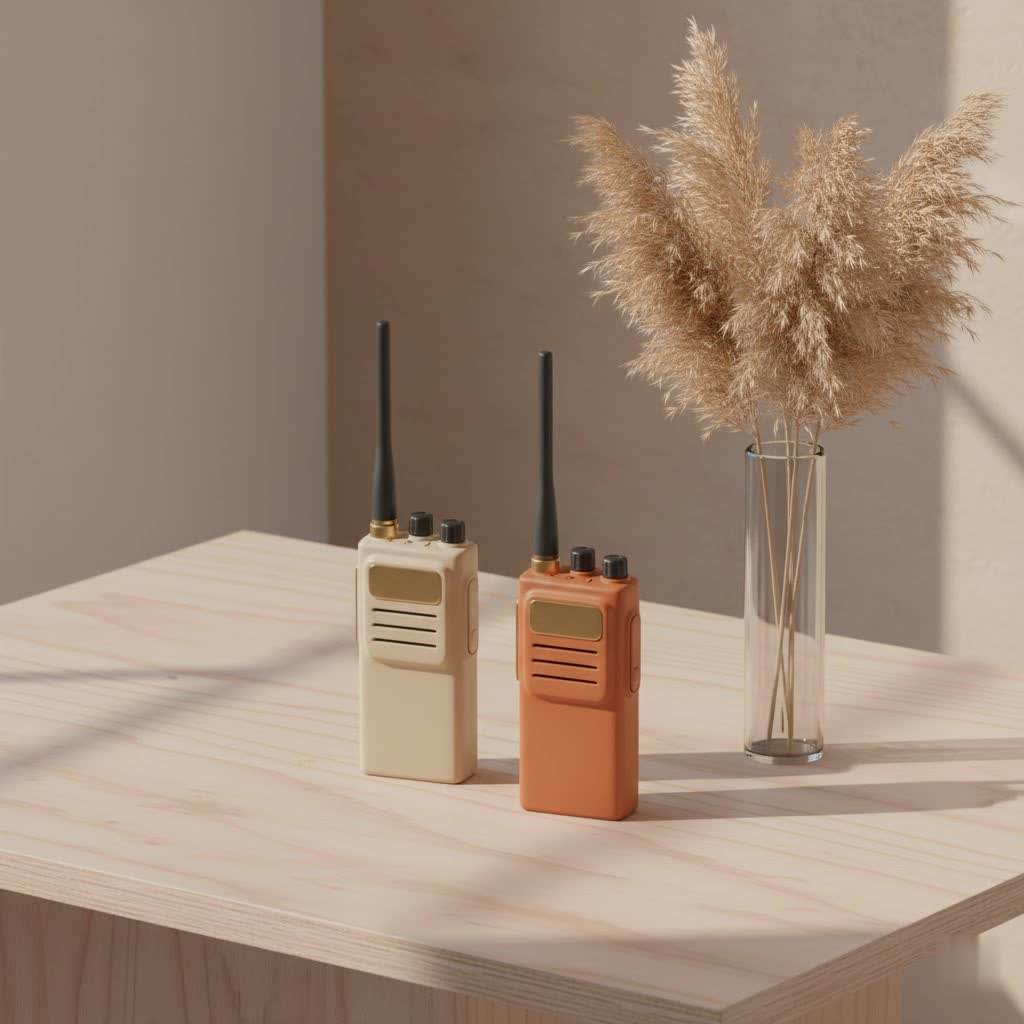
At Oqdos.com, with over 15 years in the field, we’ve seen countless scenarios where the advertised range of consumer walkie talkies leads to confusion. Our goal is to peel back the layers and equip you with the knowledge to truly understand what your Cobra walkie talkies can achieve, where, and why. Let’s separate the marketing marvel from the operational reality.
The Truth About Advertised Cobra Walkie Talkie Range
When you see those impressive “up to X miles” figures on Cobra walkie talkie boxes, it’s crucial to understand the context. These ranges are almost always measured under “ideal conditions” – think a clear line of sight, like from the top of a mountain to a valley below, with no obstructions whatsoever and zero radio interference. It’s a theoretical maximum, not a typical operating distance.
“Many people are surprised by the actual range of consumer walkie talkies compared to what’s printed on the box,” says Alex Thorne, a senior communications specialist at Oqdos. “It’s not about false advertising, but about understanding that those ‘up to X miles’ claims refer to absolute perfect, often unreachable, conditions. Real-world usage paints a very different picture.”
For instance, a Cobra MicroTALK CXT85 might advertise a 16-mile range, yet real-world tests often show it performing at less than a mile in urban settings, sometimes barely reaching 0.75 miles in suburban environments. Similarly, models like the Cobra RX680, boasting 38 miles, tend to deliver around 5 miles in complex terrains. The Cobra ACXT1035R FLT, with an advertised 37-mile range in open areas, will likely give you 4-5 miles in standard urban environments.
This significant discrepancy arises because radio signals, especially those used by common FRS (Family Radio Service) and GMRS (General Mobile Radio Service) walkie talkies, are highly susceptible to their surroundings.
What Factors Really Impact Your Cobra Walkie Talkie Range?
So, if those impressive numbers are ideal, what truly dictates the effective communication range of your Cobra walkie talkies? A multitude of factors, all interacting in complex ways, contribute to your actual reach.
Line of Sight and Obstacles: The Unseen Barriers
Walkie talkies operating on UHF (Ultra High Frequency) bands, typical for Cobra FRS/GMRS units, send signals that primarily travel in straight lines. Imagine a laser beam: if something blocks it, the light doesn’t just bend around it. Radio waves behave similarly.
- Buildings and Urban Density: In cities, concrete, steel, and even dense building materials can block, reflect, or significantly weaken your signal, drastically reducing range. You might expect less than a mile in a bustling city, even with a powerful radio.
- Natural Barriers: Hills, mountains, and even dense forests are formidable foes for radio waves. A single hill can completely block your signal, and thick foliage can absorb and scatter waves, diminishing their strength over distance.
- Terrain Geometry: A flat, open field or a large body of water provides the fewest obstructions, allowing signals to travel much further. This is why tests from mountaintop to valley often yield exceptional results – true line of sight.
|
Our Picks for the Best Walkie Talkies in 2026
As an Amazon Associate I earn from qualifying purchases.
|
||
| Num | Product | Action |
|---|---|---|
| 1 | Retevis RB48 Waterproof Walkie Talkies, Heavy Duty Two Way Radio, Advanced Triple Proof, Vibration Call, USB-C, SOS,2000mAh, NOAA, 2 Way Radio(2 Pack) Yellow |

|
| 2 | Retevis RT22 Two Way Radio Long Range Rechargeable,Portable 2 Way Radio, USB-C Charging, Handsfree Walkie Talkies for Adults Cruise Hiking Camping(4 Pack) |
|
| 3 | LỖI |
|
| 4 | Retevis RB48 Heavy Duty Waterproof Walkie Talkies, Long Range Rechargeable Two Way Radios, Advanced Triple Proof, Vibration Reminder, for Warehousing Construction Contractor(10 Pack) |
|
| 5 | Walkie Talkies, MOICO Long Range Walkie Talkies for Adults with 22 FRS Channels, Family Walkie Talkie with LED Flashlight VOX LCD Display for Hiking Camping Trip (Orange 2 Pack) |
|
| 6 | AILOCITAG Kids Video Walkie Talkies, 2 Pack Rechargeable HD Video Walkie Talkie, No WiFi Needed, 1640 ft Outdoor Range, Secure 1-to-1 Channel, 4 Voice Effects for Boys Girls Ages 3–12 |
|
| 7 | Retevis RT22 Walkie Talkies Rechargeable Hands Free 2 Way Radios Two-Way Radio(6 Pack) with 6 Way Multi Gang Charger |
|
| 8 | Retevis RT68 Walkie Talkies with Earpiece, Portable FRS Two-Way Radios Rechargeable, with 6 Way Multi Unit Charger, Hands Free, Long Range, Rugged 2 Way Radios 6 Pack for Adults School Church |
|
| 9 | Wishouse Walkie Talkies Rechargeable for Kids Adults Long Range,Xmas Birthday Gift for Boys Girls 3 4 5 6 7 8 9 10 Year Old,Hiking Camping Gear Games Ideas Toys with Flashlight,VOX,Easy to Use 4 Pack |
|
| 10 | pxton Walkie Talkies Rechargeable Long Range Two-Way Radios with Earpieces,2-Way Radios UHF Handheld Transceiver Walky Talky with Flashlight Li-ion Battery and Charger(2 Pack) |
|
Power Output (Wattage): The Engine of Your Signal
Simply put, more power generally means more range. The power output of your walkie talkie is measured in watts (W).
- FRS Radios: These are license-free and typically limited to 0.5 to 2 watts maximum. This lower power output naturally restricts their range.
- GMRS Radios: Handheld GMRS radios can operate up to 5 watts on certain channels, offering a noticeable boost over FRS. GMRS mobile radios and base stations can even reach up to 50 watts, significantly extending their reach, especially with external antennas and repeaters.
Cobra offers both FRS and GMRS compatible radios. Choosing a GMRS-capable unit, especially one that allows for higher power output (and requires an FCC license in the US), will inherently give you a better chance at longer distances.
Antenna Design and Elevation: The Signal’s Gateway
The antenna is your radio’s gateway to the airwaves. Its quality, length, and even its orientation play a significant role.
- Integrated Antennas: Most consumer Cobra walkie talkies have fixed, relatively short antennas, designed for portability. While convenient, they are not optimized for maximum range.
- External Antennas (GMRS): Some advanced GMRS radios allow for external, larger antennas, which can greatly improve signal transmission and reception.
- Height is Might: Elevating your antenna, whether by holding your radio higher or operating from a hilltop or tall building, creates a better line of sight and dramatically extends your potential range. It’s why repeaters are often placed on towers or mountains.
Frequency Band and Its Role: Different Waves, Different Paths
Cobra walkie talkies primarily use the UHF (Ultra High Frequency) band. UHF signals (400-520MHz) are generally better at penetrating obstacles like walls and buildings, making them suitable for urban environments or inside structures, albeit with reduced overall range. However, they struggle to “bend” over hills or around large obstructions as effectively as lower frequency bands (like CB radio’s HF band, which can even “skip” off the ionosphere for extremely long distances).
Environmental Conditions: More Than Just a Sunny Day
Nature itself can be a spoiler for your radio signal.
- Weather: Rain, fog, snow, and high humidity can absorb or scatter radio waves, leading to weaker signals and reduced clarity.
- Solar Activity: While less common for everyday users, intense solar flares can interfere with radio communication over vast distances, primarily affecting HF bands but sometimes impacting others.
Battery Life and Interference: Hidden Saboteurs
Two often-overlooked factors can chip away at your range:
- Low Battery: As your walkie talkie’s battery drains, its power output can diminish, directly impacting its effective range and signal clarity. Always start with a full charge.
- Electromagnetic Interference: Other electronic devices, Wi-Fi networks, and even crowded radio frequencies can create noise that interferes with your walkie talkie’s signal, making clear communication difficult or impossible over distance.
Getting the Most Out of Your Cobra Walkie Talkies: Practical Tips for Maximizing Range
Knowing the science is one thing, but how do you apply it to squeeze every last drop of range out of your Cobra walkie talkies?
- Charge Up! Always start with fully charged batteries. A strong power source ensures your radio can transmit at its maximum wattage.
- Go High, Go Clear: Whenever possible, seek higher ground. A hilltop, a ridge, or even the top floor of a building can give you that crucial line of sight.
- Mind Your Surroundings: If you’re in a dense forest or urban canyon, accept that your range will be limited. Try to move to a more open area if communication is critical.
- Orient Your Antenna: Keep your walkie talkie’s antenna pointed vertically. This ensures optimal signal propagation.
- Understand Your Channels: If your Cobra radio is GMRS-enabled, use the higher-power GMRS channels (which require an FCC license) for potentially longer distances. FRS channels 8-14 are typically low power, further limiting range.
- Avoid Interference: Steer clear of large electrical equipment, metal structures, and other sources of electromagnetic noise that can degrade your signal.
- Consider GMRS Repeaters: For true long-distance communication with GMRS radios, repeaters can be a game-changer. These devices re-transmit your signal from a high vantage point, extending your range significantly. Cobra’s TrailBlazer series, for example, is designed with repeater capability for extended range.
Cobra Models and Their Real-World Range Expectations
While specific models vary, here’s a general idea of what to expect from Cobra walkie talkies:
| Cobra Series/Model (Example) | Advertised “Max” Range | Realistic Urban/Wooded Range | Open Terrain/Line-of-Sight Range | Key Feature |
|---|---|---|---|---|
| MicroTALK (e.g., CXT85) | 16-23 Miles | 0.5 – 1 Mile | 1-3 Miles | Entry-level FRS/GMRS |
| RX Series (e.g., RX680) | 38 Miles | 1-2 Miles | 3-5+ Miles | Rugged, Weather alerts |
| ACXT Series (e.g., ACXT1035R) | 37 Miles | 1-2 Miles | 3-5+ Miles | Waterproof, Floating |
| TrailBlazer Series | “Extended Range” (GMRS) | 2-5+ Miles (with power/antenna) | 5-10+ Miles (with repeaters) | Higher power, Repeater capable |
Note: These are approximate values. Actual performance will always depend on the environment and operating conditions.
Conclusion
The allure of “long-range” communication from Cobra walkie talkies is undeniable, but the reality is more nuanced. While Cobra produces reliable and feature-rich two-way radios perfect for countless applications, it’s essential to approach the advertised range figures with a clear understanding of the environmental and technical factors at play. From dense cityscapes to rugged wilderness, the line-of-sight principle reigns supreme for UHF radios.
By understanding how factors like obstacles, power output, antenna quality, and even weather influence your signal, you can set realistic expectations and, more importantly, employ strategies to maximize your Cobra walkie talkies range. So, next time you grab your Cobra, remember: it’s not just about the numbers on the box, but about smart usage and knowing your terrain. Get out there, test your radios in your typical environments, and truly master your communication. We’re here to help you stay connected, reliably and effectively.
