In the world of outdoor adventures, professional operations, or just keeping tabs on your family across a sprawling property, reliable communication is non-negotiable. We’ve all seen those walkie talkie packages promising “up to 50 miles” range, and if you’re like most folks, you’re probably wondering: is that even possible? As someone who’s lived and breathed two-way radios for over 15 years, from coordinating search and rescue teams to ensuring smooth operations at massive events, I can tell you the truth about those claims and guide you toward the Best Long Range Walkie Talkies 50 Miles (or as close as you can realistically get!) that actually deliver when it counts. At Oqdos, we’re all about cutting through the marketing hype and giving you the straight facts, so let’s dive in.
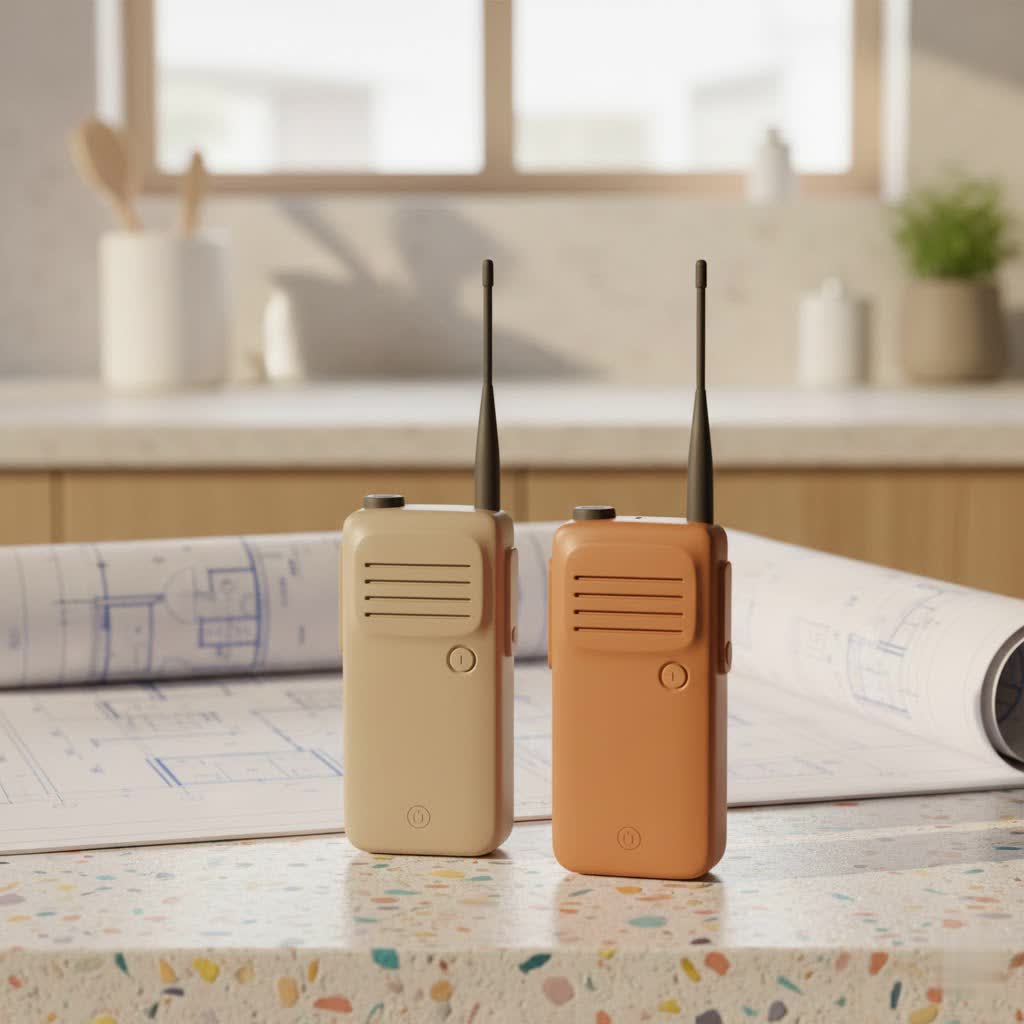
The quest for truly long-range walkie talkies often begins with a specific need: staying connected when cell signals vanish. Whether you’re deep in the wilderness, managing a large construction site, or preparing for emergencies, a robust two-way radio system is your lifeline. But achieving those impressive distances requires understanding a bit more than just picking up the first radio you see with a big number on the box. It’s about power, frequency, terrain, and even the air itself.
Decoding the “50 Miles” Myth: What Does Long Range Really Mean?
Let’s address the elephant in the room: “50 miles” on a walkie talkie package is typically the absolute maximum theoretical range under perfect, unobstructed line-of-sight conditions. Think mountaintop to mountaintop with nothing in between. In the real world, with hills, trees, buildings, and even just the curvature of the Earth, that number shrinks dramatically.
So, what factors truly affect your walkie talkie’s range?
- Line of Sight (LOS): This is paramount. Radio waves travel in straight lines. Anything that blocks that line – a building, a hill, dense forest – will reduce your range or block the signal entirely. The higher your antenna, the better your LOS.
- Power Output (Watts): More power (measured in watts) generally means more range. FRS (Family Radio Service) walkie talkies are limited to 0.5 to 2 watts, while GMRS (General Mobile Radio Service) radios can go up to 50 watts for mobile units and 5 watts for handhelds. This power difference is a game-changer for distance.
- Antenna Quality and Type: A longer, more efficient antenna can significantly improve your radio’s ability to transmit and receive signals. Stock stubby antennas are often a compromise; upgrading can make a big difference.
- Frequency Band (UHF vs. VHF):
- UHF (Ultra High Frequency) waves are better at penetrating obstacles like buildings and dense foliage, making them ideal for urban areas, forests, and indoor use. However, their range is shorter in open, flat areas compared to VHF.
- VHF (Very High Frequency) waves travel farther in open, flat terrain with fewer obstructions, making them great for marine use, large open fields, or mountain-to-mountain communication. They tend to be blocked more easily by solid objects.
- Terrain and Obstacles: This is perhaps the biggest real-world limiter. A flat, open plain will give you far more range than a dense urban environment or heavily forested hills.
- Atmospheric Conditions: Believe it or not, humidity, weather, and even solar activity can have minor impacts on radio wave propagation.
Understanding these factors is crucial for setting realistic expectations and choosing the right gear. “Getting 50 miles consistently with a handheld walkie talkie is incredibly challenging, bordering on impossible in most real-world scenarios,” advises Dr. Anya Sharma, a seasoned radio communications engineer. “Focus on maximizing your effective range through smart equipment choices and strategic use.”
GMRS vs. FRS: The Crucial Difference for Extended Reach
When you’re serious about extended communication, the distinction between FRS and GMRS becomes vital.
FRS (Family Radio Service):
- License-free: Anyone can use them right out of the box.
- Low power: Typically 0.5 to 2 watts.
- Fixed antennas: You can’t upgrade them.
- Shorter range: Due to power limitations, expect a few miles at best in most conditions.
GMRS (General Mobile Radio Service):
- Requires a license: A single, affordable license covers your entire family for 10 years, no test required.
- Higher power: Handhelds can transmit up to 5 watts, and mobile/base stations up to 50 watts.
- Detachable antennas: Allows for upgrades and external antennas, significantly boosting range.
- Repeater capability: This is the game-changer for truly long distances.
The Power of GMRS Repeaters for Truly Long Distances
|
Our Picks for the Best Walkie Talkies in 2026
As an Amazon Associate I earn from qualifying purchases.
|
||
| Num | Product | Action |
|---|---|---|
| 1 | Retevis RB48 Waterproof Walkie Talkies, Heavy Duty Two Way Radio, Advanced Triple Proof, Vibration Call, USB-C, SOS,2000mAh, NOAA, 2 Way Radio(2 Pack) Yellow |

|
| 2 | Walkie Talkies, MOICO Long Range Walkie Talkies for Adults with 22 FRS Channels, Family Walkie Talkie with LED Flashlight VOX LCD Display for Hiking Camping Trip (Orange 2 Pack) |
|
| 3 | Retevis RT22 Two Way Radio Long Range Rechargeable,Portable 2 Way Radio, USB-C Charging, Handsfree Walkie Talkies for Adults Cruise Hiking Camping(4 Pack) |
|
| 4 | AILOCITAG Kids Video Walkie Talkies, 2 Pack Rechargeable HD Video Walkie Talkie, No WiFi Needed, 1640 ft Outdoor Range, Secure 1-to-1 Channel, 4 Voice Effects for Boys Girls Ages 3–12 |
|
| 5 | LỖI |
|
| 6 | pxton Walkie Talkies Rechargeable Long Range Two-Way Radios with Earpieces,2-Way Radios UHF Handheld Transceiver Walky Talky with Flashlight Li-ion Battery and Charger(2 Pack) |
|
| 7 | Wishouse Walkie Talkies Rechargeable for Kids Adults Long Range,Xmas Birthday Gift for Boys Girls 3 4 5 6 7 8 9 10 Year Old,Hiking Camping Gear Games Ideas Toys with Flashlight,VOX,Easy to Use 4 Pack |
|
| 8 | Retevis RB48 Heavy Duty Waterproof Walkie Talkies, Long Range Rechargeable Two Way Radios, Advanced Triple Proof, Vibration Reminder, for Warehousing Construction Contractor(10 Pack) |
|
| 9 | Retevis RT22 Walkie Talkies Rechargeable Hands Free 2 Way Radios Two-Way Radio(6 Pack) with 6 Way Multi Gang Charger |
|
| 10 | Retevis RT68 Walkie Talkies with Earpiece, Portable FRS Two-Way Radios Rechargeable, with 6 Way Multi Unit Charger, Hands Free, Long Range, Rugged 2 Way Radios 6 Pack for Adults School Church |
|
If you need to cover tens of miles reliably, especially in challenging terrain, GMRS repeaters are your best friend. A repeater is essentially a high-gain radio receiver and transmitter placed in a strategic, elevated location (like a mountaintop or tall building). Your walkie talkie transmits to the repeater, which then re-transmits your signal over a much wider area. This effectively multiplies your communication range, making those 50-mile (or more!) connections a real possibility, provided you have access to a suitable repeater. Many GMRS walkie talkies are repeater-capable, allowing you to tap into these powerful networks.
Key Features to Look For in Your Next Long Range Walkie Talkie
Choosing the best long range walkie talkies 50 miles capable (or maximizing their potential) involves scrutinizing a few critical specifications:
- Power Output (Watts): As discussed, higher wattage is key. Look for GMRS radios that offer 5 watts of power for handheld units. Some specialized radios might push this further, but 5W is the standard for powerful handhelds.
- Antenna Quality and Detachability: If you can swap out the antenna, you open up a world of range improvement. Look for radios with SMA-Female connectors that allow for aftermarket high-gain antennas.
- Battery Life and Type: Long-range communication often means extended periods away from charging points. Look for radios with large-capacity Lithium-Ion batteries (measured in mAh) and ideally, options for external battery packs or easy-to-find replacements.
- Durability and Weatherproofing: Adventures don’t stop for rain or dust. An IP-rated (e.g., IPX4 for splash resistance, IP67 for dustproof and submersible) radio will survive the elements.
- Channel Options and Privacy Codes: More channels mean less congestion. Privacy codes (DCS/CTCSS) help filter out unwanted chatter, though they don’t encrypt your conversation.
- VOX (Voice Operated eXchange) / Hands-Free Operation: In situations where your hands are busy, VOX allows you to transmit by speaking into the microphone, which is incredibly convenient.
- NOAA Weather Radio / Alert: For outdoor enthusiasts, knowing about incoming storms can be a lifesaver. Many modern walkie talkies include this feature.
- Repeater Capability: If you’re serious about long range, ensure your GMRS radio can connect to repeaters. This is often indicated in the radio’s specifications.
Top Picks: Our Expert Recommendations for Long Range Walkie Talkies
Based on years of practical experience and feedback from users in demanding environments, here are some categories and models that consistently perform well in the pursuit of extended range:
1. Best Overall GMRS Handheld (Power & Versatility):
- Midland GXT1000VP4 / GMRS Radios: While Midland’s FRS/GMRS combo radios market high numbers, their dedicated GMRS models offer better performance. Look for their higher-power GMRS-specific units. The GXT1000VP4 is a popular choice for its feature set, NOAA weather alerts, and solid build. They are robust and a staple for many outdoor groups.
- BTECH GMRS-V1 or Wouxun KG-805G/KG-905G: These are often considered “prosumer” GMRS radios. They offer 5 watts of power, detachable antennas, and excellent programmability, including repeater support. They are incredibly versatile and allow for significant customization, making them fantastic choices for those who want to maximize every bit of range.
2. Best for Budget-Conscious Users (with GMRS License):
- BaoFeng UV-5R (GMRS Version) or BF-F8HP (GMRS Version): While the standard UV-5R is an amateur radio, GMRS-specific versions (like the UV-5R GMRS) are available and offer high power (5W) at a very affordable price point. They are highly customizable but require a bit more technical know-how to program correctly. This is an excellent entry point into high-power GMRS if you’re willing to learn.
3. Best for Rugged Environments & Professional Use:
- Motorola T800 Talkabout / Motorola T Series: Motorola has a strong reputation for durability. Models like the T800 offer decent range (for FRS/GMRS hybrids) and a rugged design. For more professional-grade, genuinely long-range options, look into Motorola’s commercial GMRS models, which offer superior build quality and performance, often at a higher price.
Remember, even the best long range walkie talkies 50 miles capable will benefit from strategic use.
Maximizing Your Walkie Talkie’s Range: Pro Tips
You’ve invested in a great radio; now, let’s make sure you’re getting every possible mile out of it:
- Get High, Stay High: The single biggest factor for range is line of sight. Climb to the highest point available – a hill, a ridge, or even a tall building – to get your signal out.
- Point Your Antenna: For directional antennas (if you’re using them), point them towards your intended receiver. For omnidirectional antennas, just ensure they are vertical and clear of obstructions.
- Check Your Battery: A weak battery can reduce your radio’s transmit power, severely impacting range. Always start with a full charge.
- Know Your Environment: Understand that dense urban areas and heavy forests will dramatically reduce your range. Plan your communication points accordingly.
- Use a Repeater: If available, connecting to a GMRS repeater will instantly extend your range by many miles. Learn how to program and use local repeaters in your area.
- Avoid Obstructions: Try to position yourself so there are as few physical barriers (buildings, hills, large metal structures) between you and the other party as possible.
- Consider an External Antenna: For base station or vehicle use, an external antenna mounted high can provide a massive boost compared to a small handheld antenna.
Frequently Asked Questions (FAQ)
Can walkie talkies really go 50 miles?
In ideal, unobstructed line-of-sight conditions (e.g., mountaintop to mountaintop), some high-power GMRS walkie talkies, especially when connected to repeaters, can achieve distances of 50 miles or more. However, in typical real-world conditions with terrain and obstacles, this range is highly unlikely for a handheld unit without repeater assistance.
What is the best walkie talkie for long distance?
The “best” typically refers to GMRS radios with 5 watts of power, detachable antennas, and repeater capability. Brands like BTECH, Wouxun, and higher-end Midland GMRS models are often recommended for their performance and versatility in achieving longer distances.
Do I need a license for a long-range walkie talkie?
If you’re using a GMRS (General Mobile Radio Service) radio, which is essential for higher power and longer range, yes, you need an FCC GMRS license. It’s a single, affordable license that covers you and your immediate family for 10 years, and no test is required. FRS (Family Radio Service) radios are license-free but offer significantly less power and range.
How does terrain affect walkie talkie range?
Terrain has a massive impact on range. Hills, mountains, valleys, and dense forests all block or absorb radio waves, drastically reducing communication distance. Flat, open terrain with no obstructions allows for the longest range.
What are repeaters and how do they help?
A repeater is a radio system, usually located at a high elevation, that receives a signal on one frequency and re-transmits it on another frequency. This process extends the range of your walkie talkie significantly by bouncing your signal over a wider area, making truly long-distance communication possible, especially with GMRS radios.
What’s the difference between UHF and VHF for range?
UHF (Ultra High Frequency) waves are better at penetrating obstacles like buildings and foliage, making them suitable for urban and forested environments, though their absolute open-field range can be shorter. VHF (Very High Frequency) waves travel farther in open, flat areas but are more easily blocked by solid objects, making them ideal for clear line-of-sight communication over large distances.
Conclusion
The pursuit of the best long range walkie talkies 50 miles capable is a journey of understanding realistic expectations and smart equipment choices. While marketing claims often paint an overly optimistic picture, with the right GMRS radio, proper knowledge of frequency bands, strategic use of repeaters, and a bit of common sense about terrain, you can achieve truly impressive communication distances. Don’t let a lack of cell signal hold you back from staying connected. Explore the world of high-performance GMRS radios, get your license, and experience the freedom of reliable, long-range communication. Your next adventure or critical operation deserves nothing less.
