In a world overflowing with digital distractions and unreliable cell service, the humble walkie talkie remains an indispensable tool for dependable, instant communication. Whether you’re coordinating a sprawling event, navigating backcountry trails, or simply keeping tabs on family during a bustling outing, having the Best Handheld Walkie Talkies at your side can make all the difference. At Oqdos.com, with over 15 years immersed in two-way radio technology, we understand that “best” isn’t a one-size-fits-all answer. It’s about finding the perfect blend of features, reliability, and performance tailored to your specific needs. Let’s cut through the noise and help you choose a device that truly delivers.
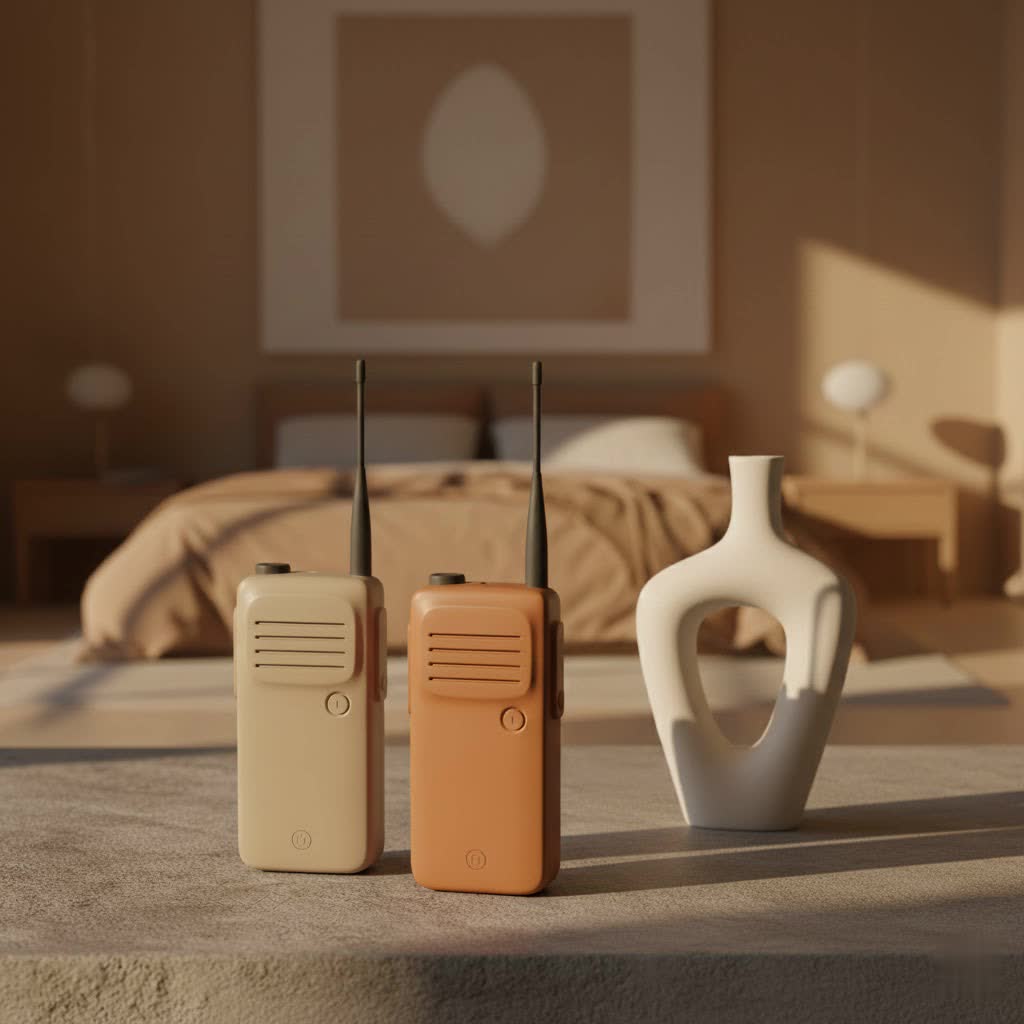
What Makes a Walkie Talkie “The Best” for You?
Choosing the best handheld walkie talkie starts with a simple question: What do you need it for? The demands of a search and rescue team differ vastly from a family camping trip. By defining your primary use case – be it recreational fun, rugged outdoor adventure, or demanding professional coordination – you’ll quickly narrow down your options and focus on the features that truly matter. It’s about aligning the radio’s capabilities with your real-world scenarios.
Understanding Range: Myth vs. Reality
One of the most common misconceptions about walkie talkies revolves around their advertised range. Manufacturers often quote “up to 30 miles” under ideal, line-of-sight conditions – think two hot air balloons communicating across a flat, open desert. In reality, the effective range is significantly impacted by your environment.
What factors truly affect walkie talkie range?
The real-world range of your handheld walkie talkie is a complex interplay of several factors:
- Line of Sight: This is paramount. Any obstacle between you and the other radio, be it a hill, a dense forest, or a concrete building, will reduce your range, sometimes drastically.
- Terrain: Open, flat areas offer the best range. Hills and mountains act as significant barriers, often blocking signals completely. In forested areas, while trees do attenuate the signal, large topographical features are usually the primary range limiter.
- Obstructions: Buildings, especially those made of steel and concrete, can severely disrupt radio waves, reflecting and absorbing signals. In urban environments, expect a much shorter range than in open fields.
- Weather Conditions: Heavy rain, snow, and even dense fog can slightly interfere with signal quality, though their impact is generally less significant than physical obstructions.
- Power Output (Wattage): Higher wattage generally translates to better range. Most consumer FRS radios are limited to 0.5-2 watts, while GMRS radios can go up to 5 watts for handheld units, offering a substantial range boost.
- Antenna Type: A quality, well-designed antenna can significantly improve both signal transmission and reception.
VHF vs. UHF: When to choose which?
Understanding frequency bands is key to maximizing range in your environment:
- VHF (Very High Frequency): These waves are longer and travel further in open, unobstructed spaces, making them ideal for communication across large flat expanses like open fields, over water, or on golf courses. They don’t penetrate obstacles well.
- UHF (Ultra High Frequency): These shorter waves are better at penetrating or navigating around obstacles like buildings, hills, and dense foliage. This makes UHF radios superior for urban environments, indoor use, or heavily wooded areas.
|
Our Picks for the Best Walkie Talkies in 2026
As an Amazon Associate I earn from qualifying purchases.
|
||
| Num | Product | Action |
|---|---|---|
| 1 | Walkie Talkies, MOICO Long Range Walkie Talkies for Adults with 22 FRS Channels, Family Walkie Talkie with LED Flashlight VOX LCD Display for Hiking Camping Trip (Orange 2 Pack) |

|
| 2 | Retevis RT68 Walkie Talkies with Earpiece, Portable FRS Two-Way Radios Rechargeable, with 6 Way Multi Unit Charger, Hands Free, Long Range, Rugged 2 Way Radios 6 Pack for Adults School Church |
|
| 3 | LỖI |
|
| 4 | AILOCITAG Kids Video Walkie Talkies, 2 Pack Rechargeable HD Video Walkie Talkie, No WiFi Needed, 1640 ft Outdoor Range, Secure 1-to-1 Channel, 4 Voice Effects for Boys Girls Ages 3–12 |
|
| 5 | pxton Walkie Talkies Rechargeable Long Range Two-Way Radios with Earpieces,2-Way Radios UHF Handheld Transceiver Walky Talky with Flashlight Li-ion Battery and Charger(2 Pack) |
|
| 6 | Retevis RB48 Heavy Duty Waterproof Walkie Talkies, Long Range Rechargeable Two Way Radios, Advanced Triple Proof, Vibration Reminder, for Warehousing Construction Contractor(10 Pack) |
|
| 7 | Wishouse Walkie Talkies Rechargeable for Kids Adults Long Range,Xmas Birthday Gift for Boys Girls 3 4 5 6 7 8 9 10 Year Old,Hiking Camping Gear Games Ideas Toys with Flashlight,VOX,Easy to Use 4 Pack |
|
| 8 | Retevis RB48 Waterproof Walkie Talkies, Heavy Duty Two Way Radio, Advanced Triple Proof, Vibration Call, USB-C, SOS,2000mAh, NOAA, 2 Way Radio(2 Pack) Yellow |
|
| 9 | Retevis RT22 Two Way Radio Long Range Rechargeable,Portable 2 Way Radio, USB-C Charging, Handsfree Walkie Talkies for Adults Cruise Hiking Camping(4 Pack) |
|
| 10 | Retevis RT22 Walkie Talkies Rechargeable Hands Free 2 Way Radios Two-Way Radio(6 Pack) with 6 Way Multi Gang Charger |
|
For instance, in a dense city, a 2-watt UHF radio might give you less than a mile of street-to-street communication, while in open water, a VHF radio could reach 4-6 miles or more, often limited by the horizon.
Key Features to Look for in Handheld Walkie Talkies
Once you have a handle on your intended use and the basics of range, it’s time to dive into the specific features that elevate a good walkie talkie to one of the best handheld walkie talkies on the market.
Frequency Types: FRS vs. GMRS – Do You Need a License?
This is a critical distinction for users in the United States:
- FRS (Family Radio Service): These are license-free radios, perfect for casual, short-range communication. They typically operate at lower power (0.5 to 2 watts) and have a more limited range, making them great for families, short hikes, or neighborhood watch.
- GMRS (General Mobile Radio Service): GMRS radios offer higher power output (up to 5 watts for handhelds) and can achieve significantly greater range. They often come with more channels and features. However, using a GMRS radio legally in the U.S. requires an FCC license, which is a straightforward application process and covers your entire family. If you need serious range and reliability, GMRS is often the way to go.
Power (Wattage): The Horsepower of Your Radio
As we touched on, wattage directly influences range. While FRS radios are limited, many GMRS handhelds can transmit at up to 5 watts. While a higher wattage is tempting, remember it also consumes more battery. Some of the best handheld walkie talkies offer adjustable power settings, allowing you to conserve battery on short-range communications and boost power when needed for longer distances.
Battery Life & Charging: Staying Connected Longer
A dead radio is just extra weight. Look for handheld walkie talkies with excellent battery life, especially if you’re planning multi-day trips or long shifts. Rechargeable Li-ion batteries are standard for higher-end models, offering convenience and consistent power. Consider units with multiple charging options, such as USB charging (including micro-USB or USB-C), charging docks, or the ability to use standard disposable batteries as a backup.
Durability & Weatherproofing: Built for the Elements
Your walkie talkie needs to withstand the rigors of your environment. For outdoor adventures or professional use, prioritize rugged construction. Look for IP (Ingress Protection) ratings. An IPX4 rating means splash-proof, while IPX7 or IPX8 indicates it can withstand immersion in water for a certain period. For truly demanding environments, seek out models designed to be drop-resistant and dustproof. As Liam O’Connell, Lead Communications Specialist at Oqdos.com, often says, “A great walkie talkie isn’t just about how far it talks, but how tough it is when the going gets rough. You need it to work when you need it most, not just in ideal conditions.”
Channels & Privacy Codes: Keeping Your Conversations Clear
The best handheld walkie talkies offer multiple channels (typically 22 for FRS/GMRS) to help you find a clear frequency. To prevent interference and keep your conversations private, look for radios with privacy codes (also known as sub-channels or CTCSS/DCS tones). These codes filter out transmissions from other groups on the same channel, ensuring you only hear those using the same code.
Ease of Use: Simplicity is Key
While advanced features are great, a complex interface can hinder quick communication in critical moments. The best handheld walkie talkies balance functionality with intuitive design. Look for clear displays, easy-to-locate buttons, and straightforward menu navigation. For casual users, especially families, simplicity is often paramount.
Essential Extras: Boosting Your Communication Experience
Modern handheld walkie talkies come packed with useful additions:
- NOAA Weather Alerts: Crucial for outdoor enthusiasts, these radios receive real-time weather alerts from the National Oceanic and Atmospheric Administration.
- VOX (Voice Activated Exchange): Allows for hands-free operation by automatically transmitting when you speak, ideal for tasks where your hands are occupied.
- Flashlight: A small but useful feature for unexpected darkness.
- Earpiece/Headset Compatibility: Essential for discreet communication or use in noisy environments.
- Keypad Lock: Prevents accidental channel changes.
Top Considerations for Different Users
What are the best walkie talkies for outdoor adventures like hiking and camping?
For hikers, campers, skiers, and other outdoor enthusiasts, reliability, range, and ruggedness are paramount. Look for GMRS radios with 5-watt output for maximum range, excellent battery life (ideally rechargeable with extended duration, even in cold weather), and a high IP waterproof rating (IPX7 or higher). Features like NOAA weather alerts, a sturdy carabiner clip, and simple channel lock are highly beneficial. Brands like Rocky Talkie are often favored for their backcountry performance and durability.
Which handheld walkie talkies are ideal for professional or business use?
Professional environments, such as construction sites, event management, or security teams, demand robust communication. These users need durable, high-power UHF radios (for penetration through structures) with multiple channels and privacy codes for efficient group management. Excellent battery life, clear audio quality, and compatibility with accessories like heavy-duty headsets are key. DeWalt offers models built for tough job sites, while some specialized GMRS units can also fit the bill, especially if combined with app connectivity for advanced coordination.
What’s a good walkie talkie for family trips or casual use?
For keeping tabs on kids at a theme park, coordinating during a family picnic, or short-range communication around the neighborhood, ease of use and value take precedence. FRS radios are generally sufficient, being license-free and user-friendly. Look for lightweight designs, clear, simple buttons (great for little hands), and decent battery life. Models from Midland X-Talker series or Baofeng GT-18 offer great value and reliable communication for casual family adventures.
Expert Insight: Maximizing Your Walkie Talkie’s Performance
Even the best handheld walkie talkies can underperform if not used correctly. Here are a few tips from our years in the field to get the most out of your device:
- Battery Care is Crucial: Always start with a fully charged battery. If using rechargeable batteries, follow the manufacturer’s recommendations for charging and storage to prolong their lifespan.
- Elevate Your Antenna: The higher your antenna, the better your line of sight, and thus, your range. If possible, communicate from a high point.
- Choose Your Channel Wisely: Scan for less congested channels to avoid interference and ensure clearer communication.
- Mind Your Environment: Be aware of large obstructions like hills or metal structures. Sometimes a slight repositioning can make a huge difference in signal quality.
“It’s not just about the gear; it’s how you use it,” notes Liam O’Connell, Lead Communications Specialist at Oqdos.com. “Even with a top-tier walkie talkie, understanding its limitations and optimizing your usage can dramatically enhance your communication capabilities, especially when every word counts.”
Frequently Asked Questions (FAQ)
How far can a handheld walkie talkie realistically reach?
Realistically, in urban environments with obstructions, expect 0.5 to 2 miles. In open, flat terrain with minimal interference, 2 to 5 miles is common for FRS radios, while higher-powered GMRS radios can reach up to 10-15 miles or more under optimal, line-of-sight conditions. Always assume advertised maximums are under perfect conditions.
Do I need a license to use a handheld walkie talkie?
In the US, FRS (Family Radio Service) walkie talkies are license-free and suitable for short-range recreational use. GMRS (General Mobile Radio Service) radios, which offer higher power and range, require a simple FCC license.
What’s the difference between FRS and GMRS walkie talkies?
FRS radios are lower power (0.5-2 watts) and license-free, ideal for casual, close-range use. GMRS radios are higher power (up to 5 watts for handhelds), offer better range and features, but require an FCC license. Many modern radios are FRS/GMRS hybrid devices.
How important is a walkie talkie’s IP rating?
An IP (Ingress Protection) rating indicates a device’s resistance to dust and water. It’s very important for outdoor or professional use. An IPX4 rating means splash-proof, while IPX7 or IPX8 means it can withstand temporary or prolonged immersion in water, respectively. Higher ratings provide greater protection against the elements.
Can I use my handheld walkie talkie with other brands?
Generally, yes, as long as they operate on the same frequency band (FRS, GMRS) and are set to the same channel and privacy code (CTCSS/DCS). All FRS and GMRS radios should be interoperable within their respective services.
Conclusion
Choosing the best handheld walkie talkies is an investment in reliable communication, providing peace of mind whether you’re embarking on an epic adventure or simply managing daily tasks. By understanding your specific needs and focusing on key features like real-world range, battery life, durability, and frequency types, you can confidently select a device that won’t let you down. Remember, the best walkie talkie is the one that performs when and where you need it most.
Ready to explore more or dive deeper into the specifics of two-way radio technology? Visit Oqdos.com, your trusted source for expert insights and practical advice, to confidently choose, use, and maintain your communication gear.
