Staying connected, especially when you’re out with family, coordinating a small team, or exploring the great outdoors, is absolutely essential. While smartphones are ubiquitous, they often fall short in situations without cellular service or when you need instant, group-wide communication. That’s where 3-way walkie talkies shine. Now, before we dive in, let’s clear up a common misconception: “3-way walkie talkies” isn’t a special type of radio with a unique communication mode. It simply refers to a convenient set of three individual two-way radios designed to work together, making them perfect for smaller groups who need reliable, direct communication. Think of it as having your own dedicated comms channel, ready at the push of a button, for three people to interact.
At Oqdos.com, we understand the nuances of two-way radio communication. With over 15 years in the field, working with everyone from search and rescue teams to event organizers, I’ve seen firsthand how crucial clear, dependable communication can be. This guide will cut through the jargon, helping you understand how these devices work, what to look for, and how to maximize their potential, ensuring your group stays effortlessly connected.
What Exactly are “3-Way Walkie Talkies”?
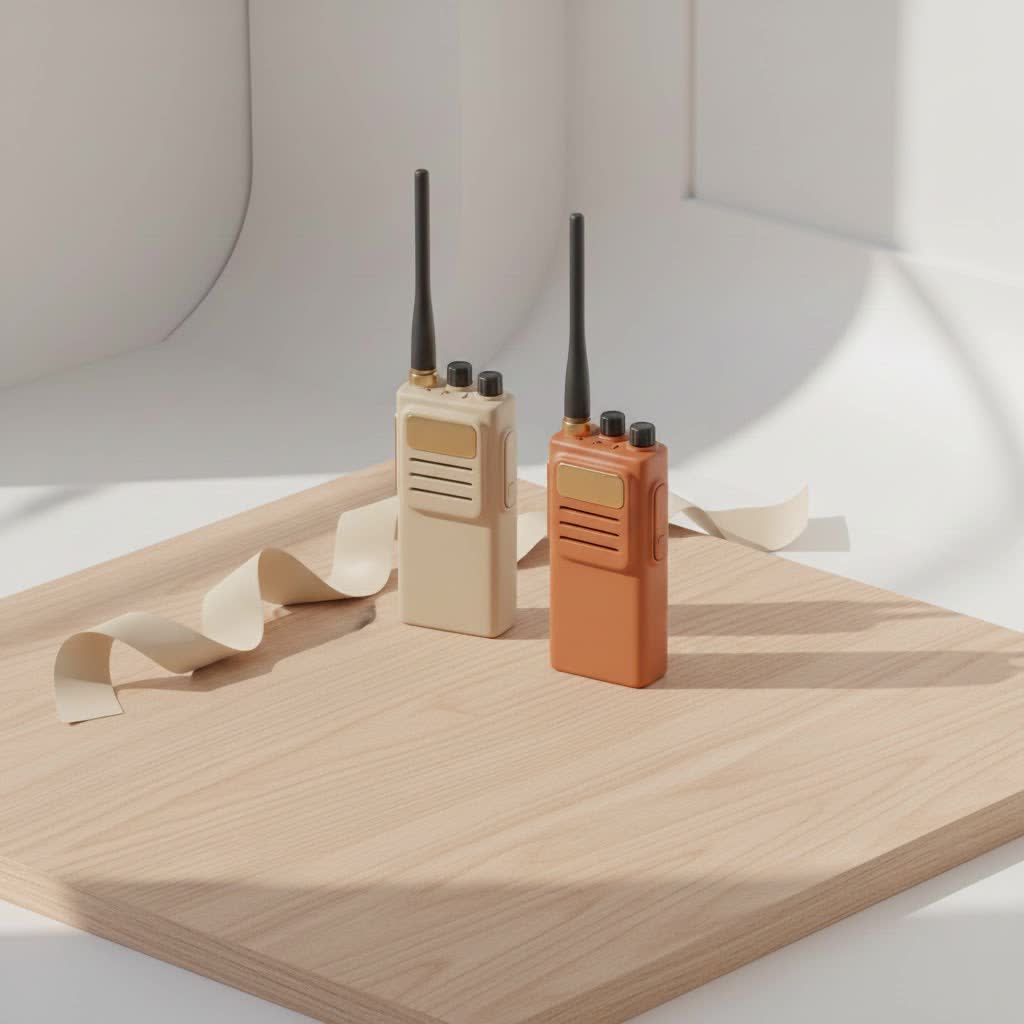
When you hear “3-way walkie talkies,” picture a package containing three independent two-way radio transceivers. Each unit can both transmit and receive radio signals, allowing for instant voice communication between any of the three devices, provided they are on the same channel and within range. Unlike a phone call, which is a one-to-one conversation, walkie talkies operate on a “half-duplex” system. This means only one person can speak at a time while the others listen. Once the speaker finishes, they release the “push-to-talk” (PTT) button, allowing another member of the group to respond. This simple, effective system makes them ideal for various scenarios, from families keeping track of kids at an amusement park to small work crews needing to coordinate tasks efficiently.
The Core Technology: How Walkie Talkies Connect You
Ever wondered what’s truly happening when you press that PTT button? It’s a fascinating blend of physics and engineering that makes these compact devices so powerful.
What are the basic components of a walkie talkie?
At its heart, every walkie talkie contains a few key components:
- Microphone: To capture your voice.
- Speaker: To play incoming messages (often doubling as the microphone).
- Transmitter and Receiver (Transceiver): The brains of the operation, converting sound into radio waves and vice versa.
- Antenna: To send and receive those radio waves.
- Battery: To power the unit.
- Push-to-Talk (PTT) Button: Your control switch for transmitting.
|
Our Picks for the Best Walkie Talkies in 2026
As an Amazon Associate I earn from qualifying purchases.
|
||
| Num | Product | Action |
|---|---|---|
| 1 | pxton Walkie Talkies Rechargeable Long Range Two-Way Radios with Earpieces,2-Way Radios UHF Handheld Transceiver Walky Talky with Flashlight Li-ion Battery and Charger(2 Pack) |

|
| 2 | Retevis RB48 Waterproof Walkie Talkies, Heavy Duty Two Way Radio, Advanced Triple Proof, Vibration Call, USB-C, SOS,2000mAh, NOAA, 2 Way Radio(2 Pack) Yellow |
|
| 3 | Walkie Talkies, MOICO Long Range Walkie Talkies for Adults with 22 FRS Channels, Family Walkie Talkie with LED Flashlight VOX LCD Display for Hiking Camping Trip (Orange 2 Pack) |
|
| 4 | Wishouse Walkie Talkies Rechargeable for Kids Adults Long Range,Xmas Birthday Gift for Boys Girls 3 4 5 6 7 8 9 10 Year Old,Hiking Camping Gear Games Ideas Toys with Flashlight,VOX,Easy to Use 4 Pack |
|
| 5 | Retevis RB48 Heavy Duty Waterproof Walkie Talkies, Long Range Rechargeable Two Way Radios, Advanced Triple Proof, Vibration Reminder, for Warehousing Construction Contractor(10 Pack) |
|
| 6 | Retevis RT68 Walkie Talkies with Earpiece, Portable FRS Two-Way Radios Rechargeable, with 6 Way Multi Unit Charger, Hands Free, Long Range, Rugged 2 Way Radios 6 Pack for Adults School Church |
|
| 7 | Retevis RT22 Walkie Talkies Rechargeable Hands Free 2 Way Radios Two-Way Radio(6 Pack) with 6 Way Multi Gang Charger |
|
| 8 | AILOCITAG Kids Video Walkie Talkies, 2 Pack Rechargeable HD Video Walkie Talkie, No WiFi Needed, 1640 ft Outdoor Range, Secure 1-to-1 Channel, 4 Voice Effects for Boys Girls Ages 3–12 |
|
| 9 | LỖI |
|
| 10 | Retevis RT22 Two Way Radio Long Range Rechargeable,Portable 2 Way Radio, USB-C Charging, Handsfree Walkie Talkies for Adults Cruise Hiking Camping(4 Pack) |
|
How do walkie talkies send and receive messages?
When you press the PTT button and speak, your voice is transformed into electrical signals by the microphone. This electrical signal is then converted into radio waves by the transmitter. These radio waves, which are part of the electromagnetic spectrum, travel at the speed of light from the antenna. Other walkie talkies in your group, tuned to the same frequency (or channel), pick up these radio waves through their antennas. The receiver in their unit then converts the radio waves back into electrical signals, which the speaker transforms into the sound of your voice. This entire process happens almost instantaneously, creating that familiar, immediate communication. Because it’s a half-duplex system, while one person is transmitting, the others can only receive. They wait for the speaker to finish (often indicated by “over”) before they can transmit their own message.
Navigating the Airwaves: Frequencies and Channels for Your 3-Pack
Understanding frequencies and channels is crucial for clear, interference-free communication with your 3-way walkie talkies. Different frequency bands are better suited for different environments, and channels are like dedicated lanes on the radio highway.
What are the main types of walkie talkie frequencies?
Walkie talkies typically operate on two primary frequency types:
- VHF (Very High Frequency): Operating roughly between 136-174 MHz, VHF signals excel in open, unobstructed areas like flat terrain, open fields, or over water. They can travel further with less power in these conditions because their longer wavelengths are less affected by line-of-sight obstacles. However, VHF signals struggle to penetrate solid objects like buildings or dense foliage.
- UHF (Ultra High Frequency): Ranging approximately from 400-512 MHz, UHF signals are your go-to for urban environments, indoor use, or areas with many obstructions. Their shorter wavelengths are better at penetrating walls, concrete, and metal, making them ideal for places like construction sites, warehouses, or crowded event venues. The trade-off is a slightly shorter range in completely open spaces compared to VHF.
What is the difference between FRS and GMRS radios?
For most casual and recreational users of “3-way walkie talkies,” you’ll encounter two main services:
- FRS (Family Radio Service): These radios are license-free and typically have a lower power output (up to 2 watts). They use specific channels around 462 and 467 MHz (UHF band) and are generally suitable for short-range communication, such as within a campground or neighborhood. FRS is perfect for family use.
- GMRS (General Mobile Radio Service): GMRS radios offer higher power output (up to 5 watts for handhelds, more for mobile units) and consequently, a longer communication range. While they share some channels with FRS, GMRS requires a license from the FCC (Federal Communications Commission) in the United States. This license covers an entire family, making it a popular choice for serious outdoor enthusiasts or small businesses needing more robust range.
How do privacy codes (CTCSS/DCS) work?
“Privacy codes,” often labeled as CTCSS (Continuous Tone-Coded Squelch System) or DCS (Digitally Coded Squelch), don’t actually encrypt your conversation. Instead, they act like a filter. When you set a privacy code on your walkie talkie, it only opens the speaker (or “squelch”) when it detects an incoming transmission that also carries the same specific sub-audible tone (CTCSS) or digital code (DCS). This helps to minimize interference and ensures you only hear transmissions from others who are intentionally part of your group, even if other people are using the same main channel nearby. It makes group communication feel more private and less cluttered.
Choosing the Right 3-Pack Walkie Talkie Set: Key Considerations
Selecting the perfect 3-way walkie talkie set depends heavily on your intended use. A child’s toy-grade radio won’t cut it for a search and rescue operation, and vice-versa.
Who is the “3-way walkie talkie” set for?
- Kids (Toy-Grade): Simple, durable, often colorful, and very easy to use. Range is typically limited, focusing on fun and basic backyard communication.
- Outdoor Enthusiasts (Camping, Hiking, Hunting): Look for robust range (often GMRS), excellent battery life, durability, and weather resistance (IP ratings). Features like NOAA weather alerts and hands-free VOX functionality are highly valued.
- Businesses/Professional Use (Construction, Event Management, Security): These demand high power output, superior durability, advanced features like group calling, and potentially licensed frequencies for secure, reliable communication across larger areas.
- Families/Casual Use (Events, Cruise Ships, Neighborhood): Ease of use, decent battery life, and clear audio are paramount. FRS radios are often sufficient, offering a great balance of features without licensing requirements.
What features should you look for?
When evaluating a 3-pack of walkie talkies, consider these crucial features:
- Range: Manufacturer-advertised range (e.g., “up to 38 miles”) is often an optimistic figure for ideal, unobstructed conditions. Real-world range is always less due to terrain, buildings, and other interference. Look for reviews that discuss practical range.
- Battery Life: Opt for models with long-lasting rechargeable batteries (lithium-ion is common) and convenient charging options, like USB-C for charging multiple units simultaneously. Some also offer the flexibility of using standard AA batteries as a backup.
- Durability & Weather Resistance: If you’re going outdoors, look for an IP rating (e.g., IPX4 for splashproof, IP67 for waterproof/dustproof) to ensure your radios can withstand the elements. Rubberized grips and robust casings are a plus.
- VOX Functionality: Voice-activated transmission (VOX) allows for hands-free operation. This is incredibly useful when your hands are busy, such as hiking, cycling, or working on a job site.
- Channel and Privacy Codes: More channels and privacy codes offer greater flexibility to find a clear line of communication, reducing the chance of hearing other groups or interference.
- Additional Features: Built-in flashlights, NOAA weather alerts, call alerts (a unique tone to notify your group), keypad locks, and even app connectivity (for some advanced models that pair with smartphones) can enhance usability.
Mastering Your 3-Way Walkie Talkies: Tips for Effective Communication
Having the right gear is only half the battle; knowing how to use your 3-way walkie talkies effectively makes all the difference.
How can I maximize my walkie talkie’s range?
To get the most out of your radios’ range:
- Line of Sight is King: The fewer obstacles between units, the better. Try to communicate from higher ground whenever possible.
- Choose the Right Frequency: As discussed, VHF works better in open areas, while UHF performs better in cluttered environments. Use the appropriate one for your surroundings.
- Antenna Positioning: Ensure antennas are clear and upright for optimal signal transmission and reception.
What are best practices for group communication?
- Clear and Concise Language: Speak clearly and directly into the microphone. Keep messages brief to conserve battery and allow others to speak.
- Use “Over” and “Out”: “Over” signifies you’ve finished speaking and are awaiting a reply. “Out” means you’re ending the conversation. This traditional radio etiquette prevents people from talking over each other.
- Establish Clear Channels: Before starting, agree on a specific channel and privacy code for your group.
- Test Before Critical Use: Always test your radios with your group in the intended environment before relying on them for critical communication.
Troubleshooting common walkie talkie issues
- Interference: If you hear static or other conversations, try switching to a different channel and privacy code.
- Low Battery: Always start with fully charged units. Carry spares or a portable power bank, especially for longer trips.
- Range Limitations: Remember that claimed range is theoretical. If communication is breaking up, try moving to a more open area or higher ground.
Expert Insights: A Glimpse into the Future of Group Radios
“While many believe traditional walkie talkies are relics, their value for instant, off-grid group communication remains unparalleled,” says Michael Chen, our lead radio specialist at Oqdos.com. “The simplicity and reliability of a 3-way walkie talkie set for a family or small team often surpasses what a complex smartphone system can offer in demanding conditions. We’re seeing innovations in battery life, ruggedness, and even hybrid models that integrate with smartphone apps, further cementing their place as indispensable tools for staying connected.”
Conclusion
Whether you’re coordinating an event, keeping track of loved ones on a busy outing, or navigating challenging terrain, a reliable set of 3-way walkie talkies is an invaluable asset. They cut through the noise of cellular networks and provide direct, instant communication that smartphones simply can’t always match. By understanding how they work, the nuances of frequencies, and what features truly matter for your needs, you can confidently choose and master your walkie talkies. Remember, it’s not just about the device; it’s about the clear, uninterrupted connection that empowers your group to work, play, and explore together, safely and efficiently. So, equip your team, understand your tech, and stay connected wherever your adventures take you.
