In our hyper-connected world, where smartphones often reign supreme, there’s a timeless communication tool that consistently proves its worth: the handheld walkie talkie. From coordinating teams on a bustling construction site to ensuring safety during a remote wilderness adventure, these rugged devices offer instant, reliable communication when traditional networks fall short. At Oqdos.com, we believe that understanding the nuances of Handheld Walkie Talkies empowers you to choose and utilize them effectively, keeping you confidently connected no matter where your journey takes you.
What Exactly Are Handheld Walkie Talkies?
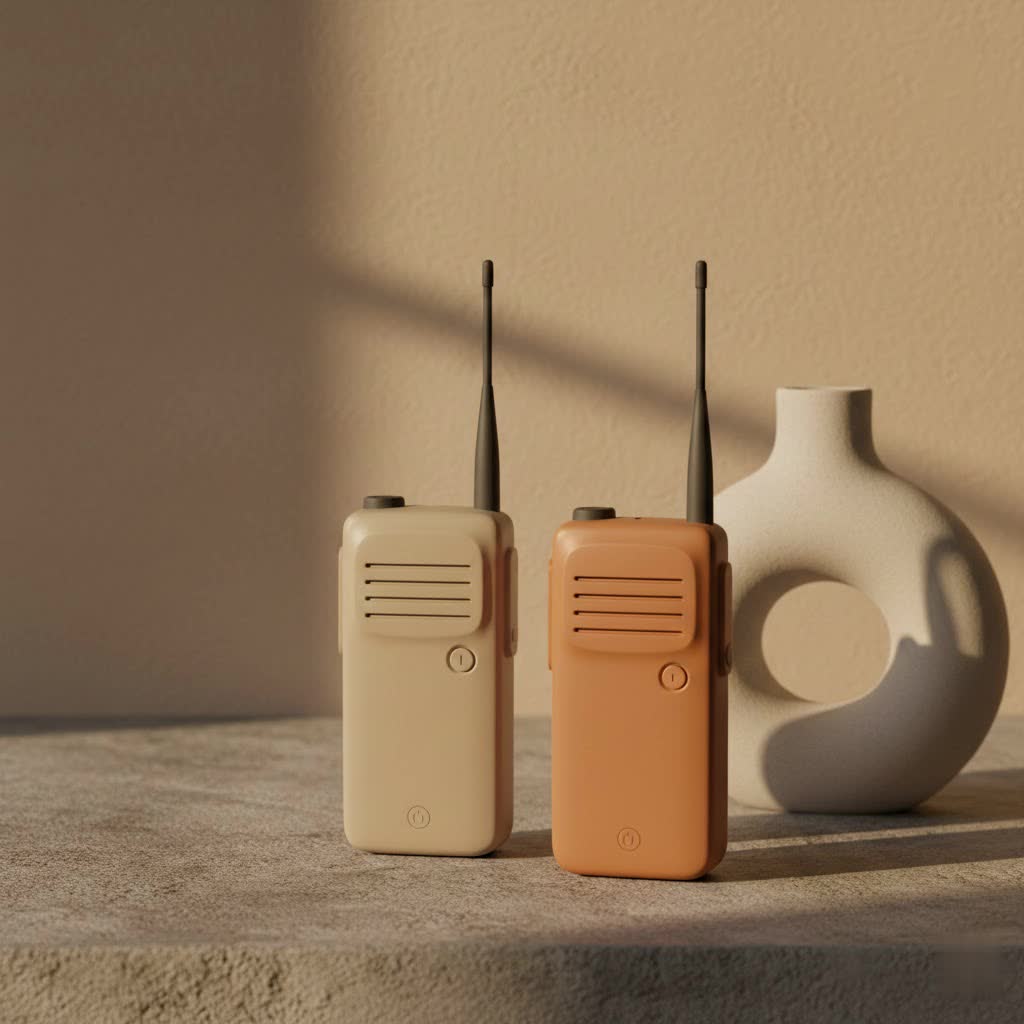
At its core, a handheld walkie talkie is a portable, two-way radio transceiver that allows users to communicate wirelessly over short to medium distances. Simply put, you press a “push-to-talk” (PTT) button, speak into the microphone, and your voice is converted into radio waves, transmitted, and then received by another compatible device. It’s like having a direct line, enabling group communication or one-on-one chats without dialing a number.
While often used interchangeably, it’s worth noting that every walkie talkie is a two-way radio, but not every two-way radio is a walkie talkie. The term “walkie talkie” typically refers to the more portable, self-contained units often found in consumer and some business applications. These devices are designed for mobility and immediate, on-the-go communication.
Why Choose Handheld Walkie Talkies in Today’s Digital World?
You might wonder, with cell phones practically glued to our hands, why would anyone still need handheld walkie talkies? The answer lies in their inherent advantages, especially in situations where other communication methods fail:
- Instant, Reliable Communication: There’s no dialing, no waiting for a network signal. With a walkie talkie, communication is typically immediate and effortless, making them ideal for quick coordination in dynamic environments.
- Independence from Cellular Networks: This is a game-changer for outdoor enthusiasts, emergency responders, and anyone working in remote areas. When cell towers are out of reach or overloaded, handheld walkie talkies remain a steadfast link.
- Cost-Effectiveness: Once you’ve purchased your devices, there are generally no ongoing subscription fees or per-minute charges, which can lead to significant savings, especially for regular or extensive use.
- Group Communication: Many walkie talkies allow for one-to-many communication, broadcasting your message to an entire group simultaneously. This is invaluable for team coordination and safety.
- Durability in Harsh Conditions: Designed for practicality, many handheld walkie talkies boast robust, weather-resistant, or even waterproof builds, standing up to drops, dust, and downpours far better than most smartphones.
Understanding the Different Types of Handheld Walkie Talkies
Choosing the right handheld walkie talkie starts with understanding the various types and their intended uses. It’s not a one-size-fits-all world, and what works for a family camping trip might not cut it for a search and rescue team.
Consumer vs. Business Radios
Broadly, walkie talkies can be categorized into consumer and business-grade units.
- Consumer Radios: These are typically license-free, lower-power devices, often sold in multi-packs, perfect for recreational activities. Think Family Radio Service (FRS) models, great for keeping tabs on kids at the park or coordinating with friends on a short hike.
- Business Radios: These are often more robust, with higher power, better durability, and sometimes requiring licenses. They are tailored for professional environments like construction sites, retail, event management, or security, where reliable and consistent communication is paramount.
|
Our Picks for the Best Walkie Talkies in 2026
As an Amazon Associate I earn from qualifying purchases.
|
||
| Num | Product | Action |
|---|---|---|
| 1 | AILOCITAG Kids Video Walkie Talkies, 2 Pack Rechargeable HD Video Walkie Talkie, No WiFi Needed, 1640 ft Outdoor Range, Secure 1-to-1 Channel, 4 Voice Effects for Boys Girls Ages 3–12 |

|
| 2 | Wishouse Walkie Talkies Rechargeable for Kids Adults Long Range,Xmas Birthday Gift for Boys Girls 3 4 5 6 7 8 9 10 Year Old,Hiking Camping Gear Games Ideas Toys with Flashlight,VOX,Easy to Use 4 Pack |
|
| 3 | Retevis RT68 Walkie Talkies with Earpiece, Portable FRS Two-Way Radios Rechargeable, with 6 Way Multi Unit Charger, Hands Free, Long Range, Rugged 2 Way Radios 6 Pack for Adults School Church |
|
| 4 | Retevis RT22 Two Way Radio Long Range Rechargeable,Portable 2 Way Radio, USB-C Charging, Handsfree Walkie Talkies for Adults Cruise Hiking Camping(4 Pack) |
|
| 5 | Retevis RB48 Waterproof Walkie Talkies, Heavy Duty Two Way Radio, Advanced Triple Proof, Vibration Call, USB-C, SOS,2000mAh, NOAA, 2 Way Radio(2 Pack) Yellow |
|
| 6 | Retevis RB48 Heavy Duty Waterproof Walkie Talkies, Long Range Rechargeable Two Way Radios, Advanced Triple Proof, Vibration Reminder, for Warehousing Construction Contractor(10 Pack) |
|
| 7 | LỖI |
|
| 8 | Walkie Talkies, MOICO Long Range Walkie Talkies for Adults with 22 FRS Channels, Family Walkie Talkie with LED Flashlight VOX LCD Display for Hiking Camping Trip (Orange 2 Pack) |
|
| 9 | Retevis RT22 Walkie Talkies Rechargeable Hands Free 2 Way Radios Two-Way Radio(6 Pack) with 6 Way Multi Gang Charger |
|
| 10 | pxton Walkie Talkies Rechargeable Long Range Two-Way Radios with Earpieces,2-Way Radios UHF Handheld Transceiver Walky Talky with Flashlight Li-ion Battery and Charger(2 Pack) |
|
VHF (Very High Frequency) vs. UHF (Ultra High Frequency)
The frequency band your walkie talkie operates on significantly impacts its performance in different environments.
- VHF (Very High Frequency): Operating between 136-174 MHz, VHF waves are longer and tend to stay closer to the ground. This makes them ideal for open, unobstructed environments like wide-open fields, golf courses, lakes, or mountain ranges with clear lines of sight. They can cover greater distances with less power in these conditions.
- UHF (Ultra High Frequency): Ranging from 400-512 MHz, UHF waves are shorter and more adept at penetrating obstacles. If you’re communicating indoors, in urban areas with many buildings, or in densely wooded or hilly terrain, UHF walkie talkies generally offer superior performance by transmitting through and around dense objects more easily.
FRS (Family Radio Service)
FRS radios are the most common type for casual users. They operate on a specific set of 22 channels (462-467 MHz) and are entirely license-free. They are user-friendly, affordable, and perfect for recreational activities like camping, short hikes, or family outings where communication needs are typically short-range (up to 1-2 miles in real-world conditions) and don’t require extensive penetration. Most FRS channels transmit at 0.5 watts, with channels 1-7 and 15-22 allowing up to 2 watts for slightly extended range.
GMRS (General Mobile Radio Service)
GMRS radios are a step up from FRS in terms of power and capability. They operate on the same 22 FRS channels plus 8 additional “repeater” channels. The key difference is their significantly higher power output, typically up to 5 watts for handheld units, and even up to 50 watts for mobile or base stations. This increased power translates to longer range and better penetration compared to FRS. However, GMRS requires a license from the FCC in the United States, which costs $35 and is valid for 10 years, covering all family members. The ability to use repeaters further extends their range, making them suitable for more serious outdoor adventures or professional uses where extended coverage is needed.
Amateur/HAM Radios
For the most advanced users seeking maximum power and versatility, amateur or HAM radios are the choice. These radios typically operate on both VHF and UHF bands, with handheld models capable of up to 8 watts of power. They offer access to a wider array of frequencies and can utilize repeater networks to achieve communication ranges of hundreds of miles, even worldwide with the right setup and knowledge. Operating an amateur radio legally requires passing an exam to obtain an amateur radio license and a call sign. While they have a steeper learning curve, the capabilities they unlock are unparalleled for serious communication needs, especially in deep backcountry or emergency scenarios.
Key Features to Look for in Your Handheld Walkie Talkie
Once you’ve narrowed down the type of handheld walkie talkie that fits your needs, it’s time to dive into the features that make a real difference in performance and user experience.
Range and Transmission Power
Don’t be fooled by exaggerated “up to X miles” claims often seen on packaging. These figures represent ideal, line-of-sight conditions (like mountain peak to mountain peak). In the real world, factors like terrain (hills, valleys, dense foliage), urban structures, and even weather significantly impact range.
- Wattage: Higher wattage generally means better range and penetration. FRS radios are limited to 0.5W or 2W, while GMRS handhelds can go up to 5W, and amateur radios up to 8W. For FRS, channels 1-7 and 15-22 offer the full 2W power, making them the “strongest” channels.
- Antenna: A good antenna is crucial. Some advanced radios allow for removable antennas, letting you upgrade for better performance.
- Repeaters: GMRS and amateur radios can utilize repeaters, ground-based antennas that amplify and re-transmit your signal, dramatically extending your communication range.
Battery Life and Power Source
A walkie talkie is only useful if it has power. Consider battery capacity (measured in mAh) and charging options.
- Rechargeable Batteries: Most modern handheld walkie talkies come with rechargeable Lithium-ion (Li-ion) or Nickel-Metal Hydride (NiMH) batteries. Li-ion generally offers better performance, especially in colder temperatures, and a longer lifespan. Capacities typically range from 800 mAh to over 3000 mAh.
- Dual-Fuel Capability: Some radios offer the flexibility to use both rechargeable battery packs and standard AA or AAA alkaline batteries as a backup, which is incredibly useful for extended trips where recharging isn’t an option.
- Charging Options: Look for convenient charging methods. USB-C is increasingly common and preferred over older Micro-USB for faster charging and wider compatibility. Charging docks are also standard. For remote use, a portable power bank is a great companion.
Durability and Weatherproofing
Your handheld walkie talkie needs to withstand the rigors of its environment.
- Rugged Construction: Look for sturdy, impact-resistant designs, often with rubberized casing, to protect against drops and bumps.
- IP Ratings: These indicate protection against solids (dust) and liquids (water).
- IP56 Splashproof: Can handle light rain and splashes, but not immersion.
- IP67 Waterproof: Can be immersed in up to 1 meter (3 feet) of water for up to 30 minutes, ideal for paddling or rainy conditions. Some even float!
- Temperature Resistance: Extreme cold or heat can affect battery performance, especially with NiMH cells. Li-ion batteries generally hold up better in cold.
Channels and Privacy Codes
- Channels: FRS has 22 channels, while GMRS has 22 main channels plus 8 repeater channels. Having multiple channels is essential to find a clear frequency free from interference.
- Privacy Codes (CTCSS/DCS): Also known as “interference eliminator codes” or “sub-codes,” these are tones or digital bitstreams that piggyback on your transmission. Your radio will only open its speaker to receive messages from other radios using the same channel AND privacy code. It’s important to understand these don’t offer true privacy, as anyone on the same main channel without a privacy code can still hear your conversation. They simply help reduce unwanted chatter.
Ease of Use
While advanced features are great, a walkie talkie should be intuitive to operate, especially in stressful situations.
- Button Layout: Large, glove-friendly buttons and a clear, easy-to-read display are crucial.
- Menu Navigation: Simple, straightforward menus are always a plus. Some advanced radios, particularly amateur ones, can have complex menu systems that require patience or even programming cables.
Additional Features
Many handheld walkie talkies come with handy extra functionalities:
- NOAA Weather Alerts: Essential for outdoor activities, providing real-time weather warnings.
- VOX (Voice-Activated Transmission): Allows hands-free operation by automatically transmitting when you speak.
- Keypad Lock: Prevents accidental channel changes or settings adjustments.
- Silent Operation: Mutes all tones and alerts for discreet use.
- Built-in Flashlight: A useful emergency feature.
- Headphone Jack: For discreet listening or improved audio clarity in noisy environments.
- Bluetooth Connectivity: Found on some modern units, allowing connection to headsets or even smartphone apps for messaging and location sharing.
- Integrated Hand Mics: For radios worn on a pack or belt, a remote hand mic offers convenient access to PTT and speaker.
- SOS Siren: A feature to broadcast an alert tone on your current frequency and audibly from the radio.
Mastering Effective Walkie Talkie Communication
Having the right handheld walkie talkie is only half the battle; knowing how to use it effectively ensures your messages are always heard loud and clear. Here are some pro tips:
- Choose a Clear Channel: Before you start talking, scan for an empty channel or agree on a specific one with your group. For closer communications, the lower-power FRS channels (8-14) can be fine, but for range, stick to full-power FRS channels (1-7, 15-22) or GMRS channels.
- Perform a Radio Check: Especially before venturing out, put a little distance between users and do a quick “radio check” to confirm everyone can hear each other clearly. “Radio check, one two three, copy?”
- Pause Before Speaking: Many radios have a slight latency when transmitting. Pause for a second after pressing PTT before you start talking to ensure your message isn’t cut off.
- Speak Clearly and Concisely: Enunciate your words. If your signal is weak or garbled, repeat important words or spell them out.
- Use Clear Language: Adopt simple, unambiguous phrases. Instead of “yes” or “no,” use “affirmative” or “negative.” End your transmission with “clear” to signal you’re finished, and confirm receipt with “copy.”
- Phonetic Alphabet: In exceptionally poor conditions, use the NATO phonetic alphabet (e.g., “Alpha, Bravo, Charlie”) to relay critical information like names or coordinates.
As Alex Thorne, Chief Communications Engineer at Oqdos.com, often reminds us: “The most advanced handheld walkie talkie is only as good as the operator behind it. Clear communication is a skill, not just a feature.”
Choosing the Right Handheld Walkie Talkie for Your Adventures
The “best” handheld walkie talkie isn’t about the most features or highest price tag; it’s about the one that perfectly matches your specific needs.
- For Casual Family Outings or Short Hikes: An FRS radio with basic weather resistance and decent battery life (like the Midland X-Talker T51VP3) will likely be more than sufficient. Simplicity and affordability are key here.
- For Serious Outdoor Enthusiasts (Camping, Hiking, Skiing): Consider durable FRS or GMRS radios with IP56/IP67 waterproofing, robust battery life (or dual-fuel options), and NOAA weather alerts. Models like the Rocky Talkie Mountain Radio (FRS) or Rocky Talkie Expedition (GMRS) are popular for their ruggedness.
- For Professional Use (Construction, Events, Security): UHF radios are often preferred due to their superior performance in built-up areas. Look for extreme durability, long battery life, and advanced privacy features (like enhanced CTCSS/DCS or digital scrambling). Business-band GMRS radios with repeater access can also be ideal.
- For Extreme Backcountry or Emergency Preparedness: An amateur (HAM) radio offers unparalleled range and versatility, especially when paired with repeater access. While requiring a license and a learning curve, the ability to communicate over vast distances can be life-saving. GMRS radios capable of reaching repeaters also fit this bill for many.
- For Water Sports or Rainy Environments: IP67 waterproof radios that float (like the Cobra ACXT1035R FLT or Motorola Talkabout T600) are non-negotiable to prevent loss and ensure functionality even after a dunk.
Frequently Asked Questions About Handheld Walkie Talkies
What is the typical real-world range of a handheld walkie talkie?
The real-world range of a handheld walkie talkie can vary significantly, often falling between 0.5 to 5 miles, depending heavily on terrain, obstacles, and power output. While manufacturers advertise much higher maximums, these are typically theoretical ranges under perfect conditions with a clear line of sight.
Do I need a license to operate handheld walkie talkies?
It depends on the radio type. FRS (Family Radio Service) handheld walkie talkies are license-free for personal use. GMRS (General Mobile Radio Service) radios require an FCC license, which costs $35 for 10 years and covers your entire family. Amateur (HAM) radios require passing an exam to obtain a license.
What’s the difference between FRS and GMRS walkie talkies?
FRS radios are lower power (0.5W to 2W) and license-free, ideal for short-range recreational use. GMRS radios offer higher power (typically 5W handheld) and longer range, including access to repeater channels, but require an FCC license.
Are waterproof walkie talkies necessary?
If you plan to use your handheld walkie talkie near water, in rainy conditions, or for activities like kayaking, rafting, or backcountry skiing, a waterproof rating (like IP67) is highly recommended. It protects your device from damage and ensures reliable communication when it matters most.
How important is battery life for a handheld walkie talkie?
Battery life is crucial, especially for extended trips or professional use without access to charging. Look for models with high mAh capacities, rechargeable batteries, and consider those with dual-fuel options (rechargeable plus standard AA/AAA batteries) for maximum operational time.
Can handheld walkie talkies communicate with different brands or types of radios?
Generally, FRS and GMRS radios can communicate with each other if they are set to the same channel and privacy code, provided they operate on compatible frequencies. However, FRS radios won’t communicate with amateur radios unless the amateur radio is specifically tuned to FRS frequencies, and even then, legal operating power limits must be observed.
Conclusion
Handheld walkie talkies are more than just gadgets; they are vital tools for maintaining communication, enhancing safety, and fostering teamwork across countless scenarios. From the simplicity of a family adventure to the complexities of a professional operation, choosing the right device can make all the difference. By understanding the different types, key features, and best communication practices, you can confidently select and wield your handheld walkie talkies, ensuring you’re always connected when it truly counts. Stay informed, stay prepared, and keep those lines of communication open!
