The fascination with miniaturized technology is universal. We marvel at smartphones that fit in our pockets, powerful computers tucked into tiny cases, and even drones that perch on a fingertip. So, when it comes to “world’s smallest walkie talkies,” the intrigue is immediate. Are these pint-sized communicators merely whimsical toys, or do they offer genuine utility for discreet, on-the-go communication? As a long-time expert in two-way radio systems and a content creator for Oqdos.com, I’ve seen countless innovations, but the challenge of squeezing reliable communication into the smallest possible form factor is one that always sparks lively debate.
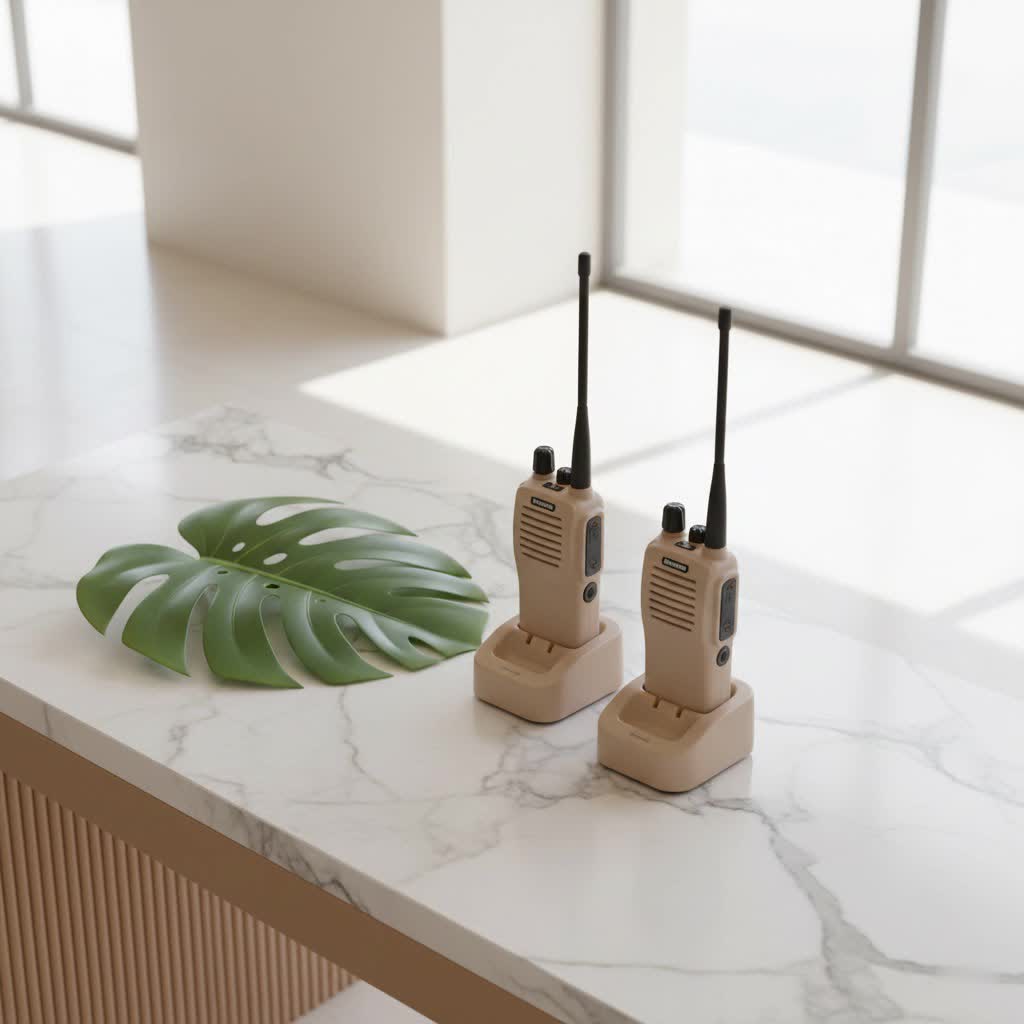
For over 15 years, I’ve worked with everyone from emergency rescue teams to event organizers, guiding them through the complexities of choosing the right communication tools. And while robust, long-range radios have their indispensable place, there’s a growing niche for ultra-compact devices. But before we dive into the nitty-gritty, let’s set some expectations: the term “world’s smallest walkie talkies” often conjures images of devices barely larger than a postage stamp, and while such novelties exist, their practical communication capabilities are typically quite limited. Our journey here is to explore both the charmingly tiny and the genuinely compact, functional two-way radios available today, understanding where their strengths lie and what compromises miniaturization inevitably demands.
What Exactly Defines a “Small” Walkie Talkie?
The concept of “small” can be subjective, especially in the world of walkie talkies. On one end of the spectrum, you have novelty items, often marketed as the “world’s smallest”. These are typically designed for amusement, with basic push-to-talk functionality and a very limited range, sometimes as little as 100-150 feet (30-45 meters). They often come with features like flexible antennas and a Morse code function, leaning heavily into their toy-like appeal. While they can be a fun gift, their communication quality is frequently described as poor, making them impractical for any serious use.
On the other end, we have genuinely compact two-way radios. These are not just toys; they are engineered for practical, short-range communication in professional or recreational settings where size and discretion are paramount. Think of units designed for retail staff, restaurant teams, event coordinators, or even families needing to stay connected within a confined area. These radios prioritize a balance between a small footprint, decent range, clear audio, and essential features, rather than simply achieving the absolute minimum size at all costs.
The Allure of Ultra-Compact Designs
|
Our Picks for the Best Walkie Talkies in 2026
As an Amazon Associate I earn from qualifying purchases.
|
||
| Num | Product | Action |
|---|---|---|
| 1 | Retevis RT22 Two Way Radio Long Range Rechargeable,Portable 2 Way Radio, USB-C Charging, Handsfree Walkie Talkies for Adults Cruise Hiking Camping(4 Pack) |

|
| 2 | Retevis RB48 Waterproof Walkie Talkies, Heavy Duty Two Way Radio, Advanced Triple Proof, Vibration Call, USB-C, SOS,2000mAh, NOAA, 2 Way Radio(2 Pack) Yellow |
|
| 3 | AILOCITAG Kids Video Walkie Talkies, 2 Pack Rechargeable HD Video Walkie Talkie, No WiFi Needed, 1640 ft Outdoor Range, Secure 1-to-1 Channel, 4 Voice Effects for Boys Girls Ages 3–12 |
|
| 4 | Wishouse Walkie Talkies Rechargeable for Kids Adults Long Range,Xmas Birthday Gift for Boys Girls 3 4 5 6 7 8 9 10 Year Old,Hiking Camping Gear Games Ideas Toys with Flashlight,VOX,Easy to Use 4 Pack |
|
| 5 | pxton Walkie Talkies Rechargeable Long Range Two-Way Radios with Earpieces,2-Way Radios UHF Handheld Transceiver Walky Talky with Flashlight Li-ion Battery and Charger(2 Pack) |
|
| 6 | Retevis RT68 Walkie Talkies with Earpiece, Portable FRS Two-Way Radios Rechargeable, with 6 Way Multi Unit Charger, Hands Free, Long Range, Rugged 2 Way Radios 6 Pack for Adults School Church |
|
| 7 | Retevis RB48 Heavy Duty Waterproof Walkie Talkies, Long Range Rechargeable Two Way Radios, Advanced Triple Proof, Vibration Reminder, for Warehousing Construction Contractor(10 Pack) |
|
| 8 | Walkie Talkies, MOICO Long Range Walkie Talkies for Adults with 22 FRS Channels, Family Walkie Talkie with LED Flashlight VOX LCD Display for Hiking Camping Trip (Orange 2 Pack) |
|
| 9 | LỖI |
|
| 10 | Retevis RT22 Walkie Talkies Rechargeable Hands Free 2 Way Radios Two-Way Radio(6 Pack) with 6 Way Multi Gang Charger |
|
There’s an undeniable appeal to gadgets that disappear into a pocket or clip discreetly onto a lapel. For individuals who need to communicate without drawing attention, or where bulky equipment is a hindrance, smaller walkie talkies are a godsend. Imagine a waiter coordinating with the kitchen, a security guard maintaining a low profile, or a tour guide keeping track of their group without a noticeable device. The benefits of easy portability, lightweight design, and subtle operation make compact walkie talkies highly desirable for many specific applications.
The Reality Check: Toy vs. Tool
It’s crucial to distinguish between a walkie talkie that is small and one that is genuinely a useful tool. The “world’s smallest” moniker often applies to devices that sacrifice nearly all performance for size. These might be fun for kids playing in the backyard, but they won’t cut through the noise of a busy event or reliably connect across multiple floors in a building. As Alex Chen, Senior Communications Consultant at Oqdos.com, often reminds us, “While the allure of a truly ‘world’s smallest’ walkie talkie is undeniable, my 15 years in the field have taught me that true utility in miniaturized communications lies in balancing size with core performance—especially range and battery life.” For serious users, a “mini” or “compact” professional radio, even if not technically the “world’s smallest,” offers a far more reliable experience.
The Engineering Behind Miniaturization: Pushing the Limits
Creating a functional two-way radio involves a complex interplay of components, and shrinking them down without compromising performance is an engineering marvel. Every element, from the antenna to the battery, has a direct impact on the device’s capabilities.
How Small Can They Go?
The primary physical constraints for walkie talkies, regardless of size, are the antenna, the battery, and the speaker/microphone. A longer antenna generally correlates with better range and signal reception, especially for VHF (Very High Frequency) signals, which are great for open, outdoor areas [1, 4 in search 2]. Shrinking the antenna significantly impacts how far and how clearly the radio can transmit and receive. Batteries also present a challenge; smaller batteries mean less power and shorter operating times. And of course, for effective communication, you need a speaker loud enough to be heard and a microphone sensitive enough to pick up your voice clearly. The truly “world’s smallest” devices often compromise heavily on all these fronts, leading to their often-reported poor performance.
Key Components: What Shrinks and What Doesn’t
Modern manufacturing techniques allow for incredible miniaturization of internal circuitry. Processors, transceivers, and other electronic components can be packed into incredibly tiny spaces. However, the laws of physics still apply to radio waves. The size of the antenna, while it can be made flexible or retractable, has a fundamental relationship with the wavelengths it needs to transmit and receive. UHF (Ultra High Frequency) signals, typically used in more compact radios, are better at penetrating obstacles like buildings and walls, making them suitable for indoor or urban environments, even with shorter antennas [1, 4 in search 2]. The battery, too, remains a significant size factor, as chemical energy storage hasn’t seen the same exponential size reduction as silicon chips.
Performance Paradox: Range and Clarity in a Tiny Package
The biggest question surrounding tiny walkie talkies is always: how well do they actually perform? The answer, as you might expect, is “it depends.”
Understanding the Inherent Trade-offs
Miniaturization is a game of compromises. To make a walkie talkie incredibly small, engineers must often reduce the size of the antenna, the power output of the transmitter, and the capacity of the battery.
- Antenna Size: A smaller antenna is less efficient at capturing and transmitting radio waves, directly impacting range and signal clarity.
- Power Output (Wattage): Radios with lower power output (measured in watts) inherently have a shorter transmission distance [4 in search 2]. Many compact, license-free FRS (Family Radio Service) radios are limited to 0.5 or 2 watts, significantly less than professional licensed radios [2 in search 2].
- Battery Capacity: A smaller physical footprint usually means a smaller battery, leading to shorter operational times between charges.
These trade-offs are why the “world’s smallest” novelty walkie talkies often deliver a mere 100-150 feet of range and poor audio. They are simply not built for robust communication.
Expected Range: Setting Realistic Expectations
Advertised ranges for walkie talkies can be misleading, often calculated under ideal, line-of-sight conditions (e.g., mountain peak to mountain peak) [4 in search 2]. In real-world scenarios, obstacles like buildings, trees, and terrain drastically reduce effective range [1, 3, 4 in search 2]. For truly tiny, toy-grade walkie talkies, expect a very short range – perhaps a few dozen yards at best. For more functional, compact FRS or PMR446 radios (which are license-free in many regions), a realistic range in urban areas might be 0.5 to 1 mile, extending to 1-2 miles in rural settings, and up to 3-4 miles in wide-open spaces [1 in search 3]. If you need significantly more range, you’re likely looking at larger, higher-wattage GMRS (General Mobile Radio Service) radios (which require a license in the US) or professional licensed equipment, often utilizing repeaters for extended coverage [1, 2 in search 2].
Audio Quality: A Common Sacrifice?
With tiny speakers and microphones packed into a small casing, audio quality can indeed be a casualty of miniaturization. Many reviews of ultra-small walkie talkies lament muffled, unclear, or barely audible transmissions. While some compact professional radios offer surprisingly clear audio thanks to advanced digital signal processing, it’s a feature you’ll need to research carefully when choosing a miniature device for practical use.
Who Needs a Miniature Marvel? Practical Applications and Use Cases
Despite the inherent limitations, “world’s smallest walkie talkies” and their more robust, compact cousins do have their place. It’s all about matching the tool to the task.
Fun for Kids: The Toy Factor
For children, the allure of the “world’s smallest walkie talkies” is undeniable. They are fantastic for imaginative play, communicating across bedrooms, or coordinating backyard adventures [4 in search 1, 5 in search 3]. The low cost and simple operation make them an excellent first introduction to two-way radio communication, without the need for smartphones or complex setups [1 in search 3, 5 in search 3]. Even with their limited range and clarity, for kids, the sheer novelty and independence they offer are a huge draw.
Discreet Communication: Event Staff and Retail
Beyond toys, compact walkie talkies shine in environments where discretion and instant, short-range communication are crucial. Think of an event planner needing to coordinate staff across a venue, a retail team communicating inventory needs on a sales floor, or a hotel concierge staying in touch with maintenance. In these scenarios, a bulky radio would be cumbersome and conspicuous. Slim, lightweight models, often with earpiece compatibility, allow for quick, private conversations without disturbing customers or guests [3 in search 2]. “For teams needing to stay connected in close quarters without being obtrusive, a well-chosen compact radio is invaluable,” says Alex Chen.
Short-Range Tasks and Back-up Comms
For specific short-range tasks, such as coordinating movement on a small construction site, directing traffic in a parking lot, or staying in touch with a partner during a local hike, compact walkie talkies can be perfectly adequate. They also serve well as a reliable backup communication method when cellular networks are unavailable or unreliable, offering instant, direct communication without reliance on external infrastructure [3 in search 3, 5 in search 3].
Choosing Your Compact Communicator: Beyond Just Size
If you’re considering a “world’s smallest” or simply a very compact walkie talkie, don’t let size be your only guiding factor. A truly effective miniature communication device balances its small stature with essential performance metrics.
Battery Life: Powering Your Pocket-Sized Partner
A tiny device usually means a tiny battery. While some compact professional radios can offer a decent day’s worth of use, many of the ultra-small novelty items have very short battery lives [5 in search 3]. Look for models that offer rechargeable batteries or use common, easily replaceable battery types. Consider the radio’s “standby time” and “talk time” specifications, and whether it supports charging via a universal port like USB-C for convenience. Longer battery life, even with a slightly larger device, often proves more practical in the long run.
Frequency Bands and Legality: FRS, PMR446, and Beyond
Understanding frequency bands is vital, as it dictates compatibility and legality.
- FRS (Family Radio Service): In the US, FRS radios are license-free and typically low-power (0.5 to 2 watts). They are ideal for personal use and short-range communication [1, 2 in search 2]. Many compact walkie talkies fall into this category.
- PMR446: In Europe and other regions, PMR446 offers similar license-free, short-range communication.
- GMRS (General Mobile Radio Service): In the US, GMRS radios offer higher power (up to 5 watts) and longer range but require a license from the FCC [1, 2 in search 2]. While typically larger, some compact GMRS options exist for those who need more power and are willing to get a license.
- VHF vs. UHF: As discussed, UHF (Ultra High Frequency) is generally better for penetrating buildings and urban environments, making it a common choice for compact radios. VHF (Very High Frequency) excels in open, outdoor areas with clear line of sight [1, 4, 5 in search 2]. Ensure your chosen radios operate on the same frequency band to communicate with each other.
Always verify the legal requirements for radio operation in your specific location to ensure compliance.
Essential Features Not to Overlook
Even in a miniature package, certain features can significantly enhance usability:
- VOX (Voice Operated Exchange): Allows hands-free operation by transmitting when you speak [3 in search 3].
- Channel Scan: Automatically scans for active channels, helping you find your group or monitor for calls.
- Privacy Codes (CTCSS/DCS): While not truly private, these codes filter out unwanted conversations on shared channels, reducing interference [4 in search 2].
- Durability and Water Resistance: Even if it’s small, it should be able to withstand everyday bumps, drops, and perhaps a splash or two, especially for outdoor or active use [1 in search 3].
- Headset Jack: Essential for discreet use or noisy environments.
Oqdos Expert Insights: Maximizing Your Mini Walkie Talkie Experience
From my years working with various organizations, I’ve gathered some insights that can help you get the most out of your compact walkie talkies:
- Test in Your Environment: Don’t rely solely on advertised range. Test your miniature walkie talkies in the exact environment you plan to use them – indoors, outdoors, urban, open field – to understand their real-world capabilities.
- Keep Them Charged: Small batteries drain faster. Make a habit of charging them regularly, especially before critical use. Consider portable power banks for extended trips.
- Use Privacy Codes: While not foolproof, privacy codes can significantly reduce chatter from other users on shared FRS/PMR446 channels, making your conversations clearer and less interrupted.
- Consider Earpieces/Headsets: For discreet or hands-free operation, a compatible earpiece or headset is a game-changer, especially for compact radios used in professional settings.
- Educate Your Users: Brief everyone on the radio’s limitations, especially regarding range and audio quality. Clear communication protocols are even more important with smaller devices.
- Maintain Line of Sight Where Possible: While UHF signals can penetrate obstacles, maintaining as much line of sight as possible between units will always yield the best performance, even for mini radios.
FAQ
Q1: What is the actual range of the “world’s smallest walkie talkies”?
A1: The actual range of novelty “world’s smallest walkie talkies” is typically very limited, often only 100-150 feet (30-45 meters) or less, with poor audio quality. More functional, compact walkie talkies (like FRS radios) can offer 0.5 to 3 miles depending on terrain and obstacles [1 in search 3].
Q2: Are “world’s smallest walkie talkies” suitable for professional use?
A2: Generally, no. The novelty “world’s smallest walkie talkies” lack the range, clarity, and reliability needed for professional communication. However, genuinely compact professional-grade two-way radios are excellent for short-range, discreet communication in settings like retail, hospitality, or events [3 in search 2].
Q3: Do miniature walkie talkies require a license?
A3: Most “world’s smallest” and many compact walkie talkies operate on license-free frequencies like FRS (Family Radio Service) in the US or PMR446 in Europe, so they do not require a personal license [1, 2, 5 in search 2]. Higher-power GMRS radios in the US, however, do require an FCC license [1, 2 in search 2].
Q4: What are the main disadvantages of using a very small walkie talkie?
A4: The primary disadvantages include limited range, often poor audio quality, shorter battery life due to smaller batteries, and potentially reduced durability compared to larger, more robust models [3, 5 in search 3].
Q5: Can different brands of compact walkie talkies communicate with each other?
A5: Yes, generally, if they operate on the same frequency band (e.g., FRS to FRS) and are set to the same channel and privacy code (if used), different brands of compatible radios can communicate [1 in search 2].
Q6: What should I look for when buying a compact walkie talkie for practical use?
A6: Beyond size, prioritize clear audio, decent battery life, appropriate range for your intended use, essential features like VOX or scanning, and ensure it operates on a legal frequency band for your region (e.g., FRS/PMR446) [1 in search 3].
Q7: How do obstacles affect the range of small walkie talkies?
A7: Obstacles like buildings, hills, dense foliage, and even vehicle bodies can significantly block or degrade radio signals, reducing the effective range of any walkie talkie, especially compact ones with lower power and smaller antennas [1, 3, 4 in search 2]. UHF signals generally perform better through obstructions than VHF [1, 4 in search 2].
Conclusion
The journey into the realm of the “world’s smallest walkie talkies” reveals a fascinating landscape where novelty meets genuine utility. While the absolute smallest devices are often more about amusement than serious communication, the demand for compact, efficient two-way radios is very real. These miniature marvels, when chosen wisely, offer unparalleled portability and discretion, making them indispensable for specific tasks and environments where larger, more powerful radios would be overkill or impractical.
As a seasoned expert at Oqdos.com, I encourage you to look beyond the “smallest” label and focus on the balance of size, range, battery life, and audio clarity that best suits your needs. Whether it’s for a child’s adventurous play, a team requiring discreet coordination, or simply a reliable backup, a well-selected compact walkie talkie can be an incredibly powerful tool. By understanding the inherent trade-offs and prioritizing real-world performance over mere dimensions, you can confidently choose, utilize, and maintain your pocket-sized communication partner effectively. Embrace the convenience, but never compromise on the connection—that’s the true spirit of walkie talkie technology, no matter how small it gets.
